Ningbo Travel Guide 2026: The Tianyi Pavilion, the Old Bund and the Port City
Ningbo is the working port of the Yangtze delta — the city behind the world's busiest harbour, and one of the oldest trading cities in China. The old town keeps the Tianyi Pavilion, the 450-year-old private library that is the oldest of its kind still standing; the Old Bund on the north bank, whose foreign settlement predates Shanghai's; the Song-dynasty wooden hall of the Baoguo Temple; and the mountain hometown of Chiang Kai-shek at Xikou, an hour southwest. Below: the best time, the history, the food, where to stay, every major sight with its own guide, transport, and 1/2/3-day plans.

History & culture
The Ningbo plain is one of the cradles of Chinese farming — the Hemudu site, 20 km downstream, turned up 7,000-year-old rice paddies and stilt houses. The city itself was founded as Mingzhou in the Tang, and under the Song it became one of the great ports of the empire: the Song set up one of China's earliest maritime trade offices here in 999, and Japanese, Korean and Arab ships tied up at the river mouth.
That maritime character made it one of the five treaty ports opened by the Treaty of Nanjing in 1842 — and the foreign settlement on the north bank, the Old Bund, was established in 1844, before Shanghai's. The bund banks, guild halls and the Gothic cathedral date from that era, when Ningbo's merchants also built Shanghai's banks and shops: the 'Ningbo bang' ran much of the treaty-port economy.
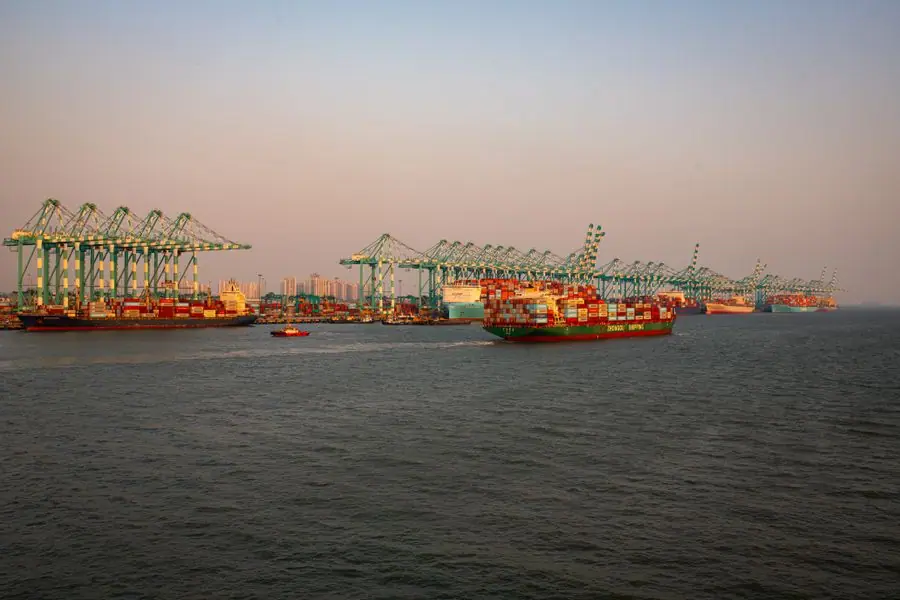
The port has always been the city's engine. Ningbo-Zhoushan is today the busiest port in the world by cargo tonnage — the container terminals at Beilun and the ship channel past Zhenhai are the modern face of a trade that has run for a thousand years.
Republic-era Ningbo left one more great site: Xikou, the mountain town 40 km southwest that was Chiang Kai-shek's hometown, with his family house, the salt shop where he was born and the Xuedou Mountain temple complex above it.
For visitors the city works on two levels: the old town around the Drum Tower and the Bund, and the harbour-and-mountain edges — Dongqian Lake, Taibai Mountain, Xikou — that take half a day each.
Best time to visit Ningbo
Ningbo sits on the Hangzhou Bay coast in a humid subtropical zone: hot, wet summers, mild damp winters and a long green shoulder season on both sides.
Budget for Ningbo: hotels from $16 a night, average ticket $$11.17 — see the full cost breakdown, or start from a ready-made route.
Cuisine of Ningbo
Signature dishes worth seeking out — prices are typical per-person or per-dish ranges, not fixed quotes.
-
Ningbo tangyuan (sweet rice balls)
The city's signature: glutinous rice balls with a black-sesame-and-lard filling, poached in a light ginger syrup — eaten by the bowl from breakfast on, and the one dish every Ningbo family argues about. The old Gang Ya Gou shop by the Drum Tower is the institution.
-
Red-crab marinated raw (Hong gao qiang xie)
The local rite: swimming crab cured raw in its own red roe and salt — the 'drunk crab' of the coast, eaten cold with ginger vinegar and rice wine, at its best in the winter crab season.
-
Yellow croaker with pickled greens (Xue cai da huang yu)
The Ningbo home-cooking benchmark: the great yellow croaker of the East China Sea braised with sour potherb-mustard greens — a fish-and-pickle dish that is the plainest and most local thing on the table.
-
Ningbo rice cakes (Ning bo nian gao)
The Cicheng specialty: white rice cakes sliced and stir-fried with greens, shellfish or pork — chewy, plain and the city's everyday starch, sold in slabs at the old-town markets.
-
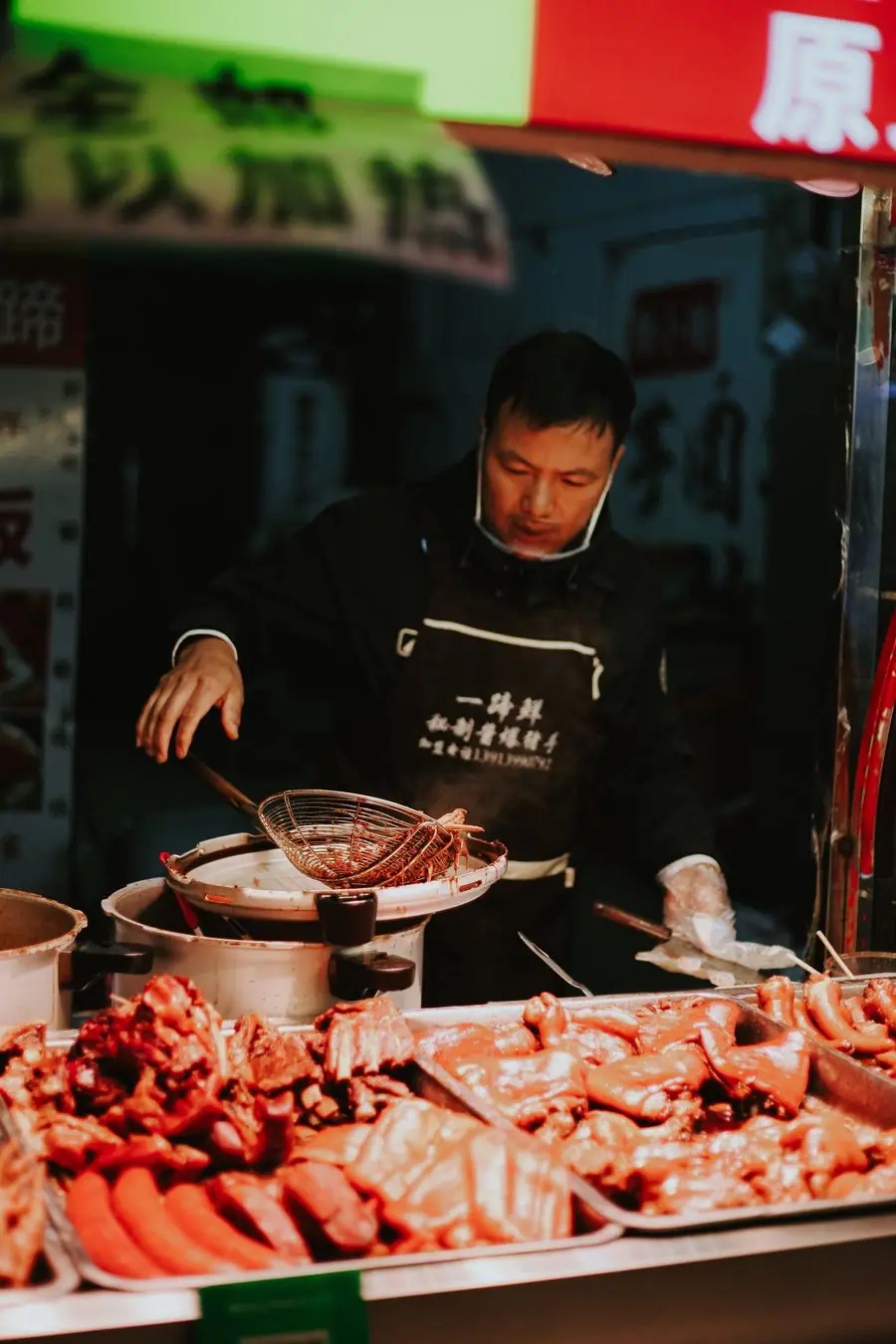
Cangqiao noodle knots (Cang qiao mian jie)
The old-town breakfast: thin noodles in a clear broth with 'noodle knots' — tofu skin wrapped around minced pork — plus a slick of shallot oil; the Cangqiao lane shops by the Moon Lake are the originals.
Every major sight — with its own guide
Right after the food above, here are the sights — each one links to its own full guide (what to see, how to get there, facilities and the best season). Names follow each sight's official English signage.
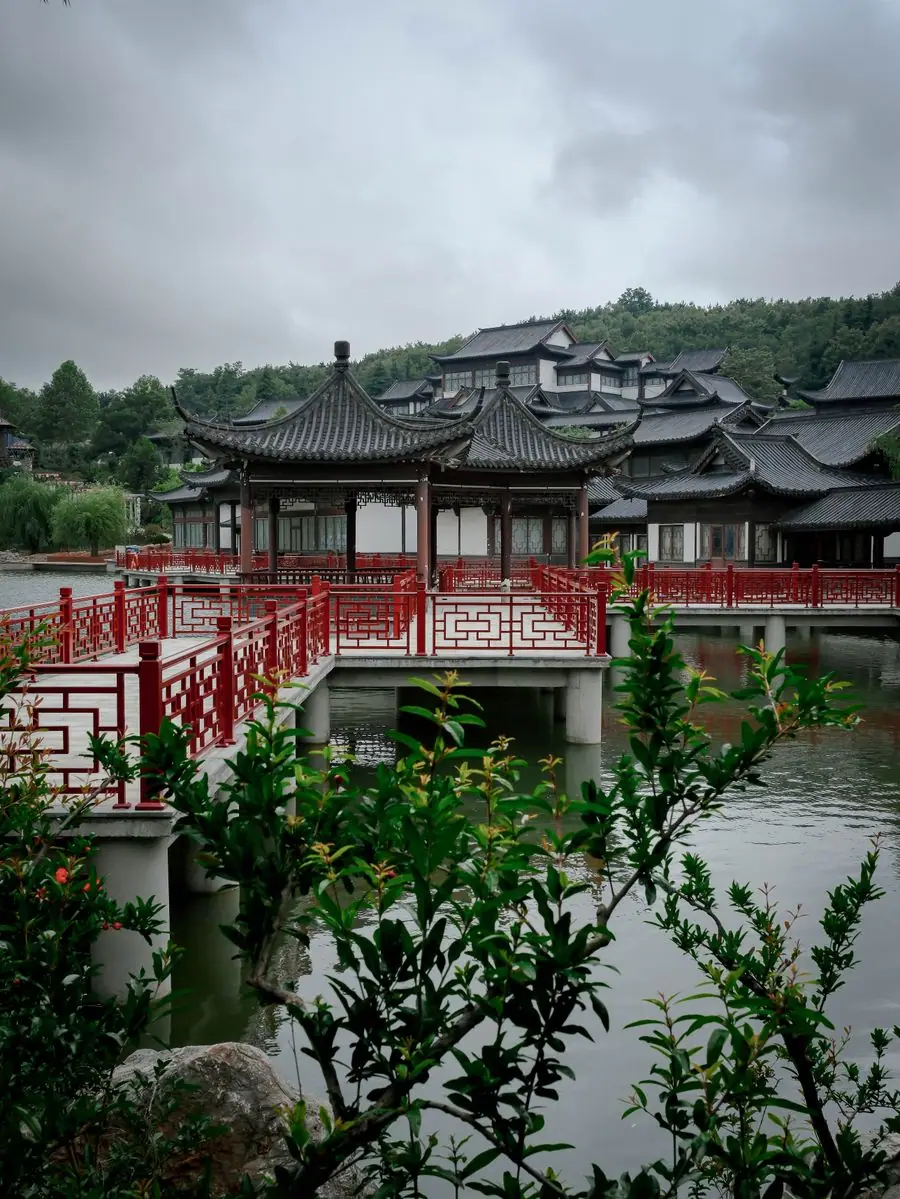

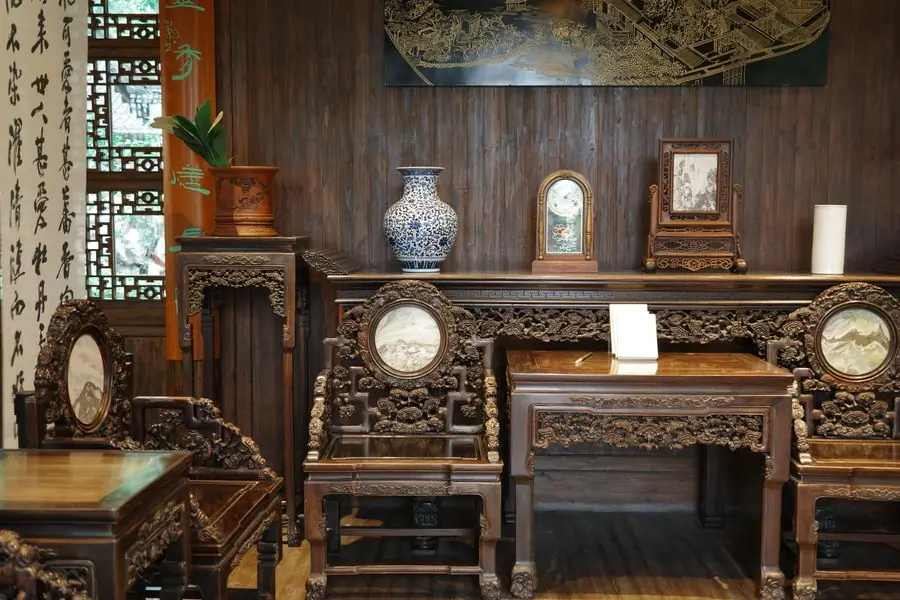
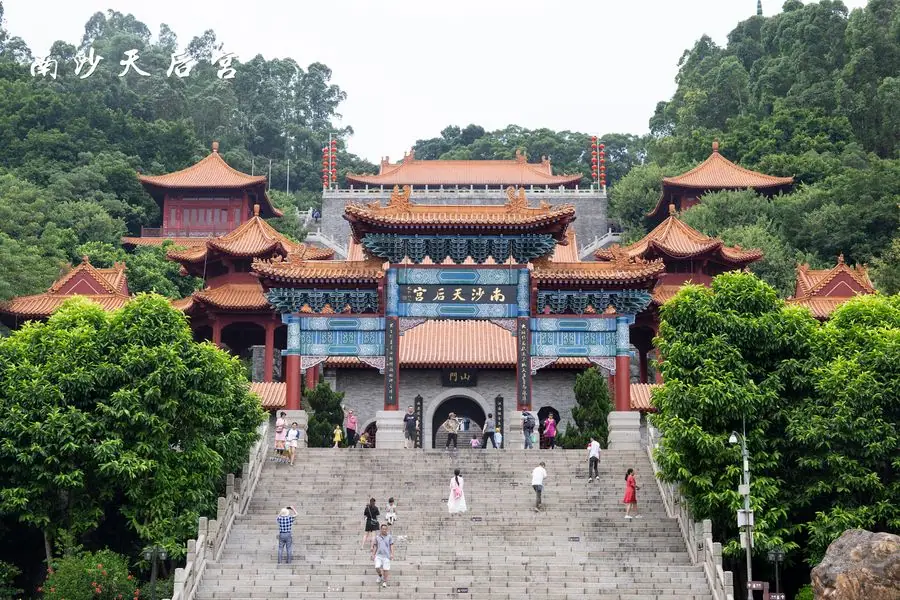
Jiangbei, ~1.5 km N across the Yao River
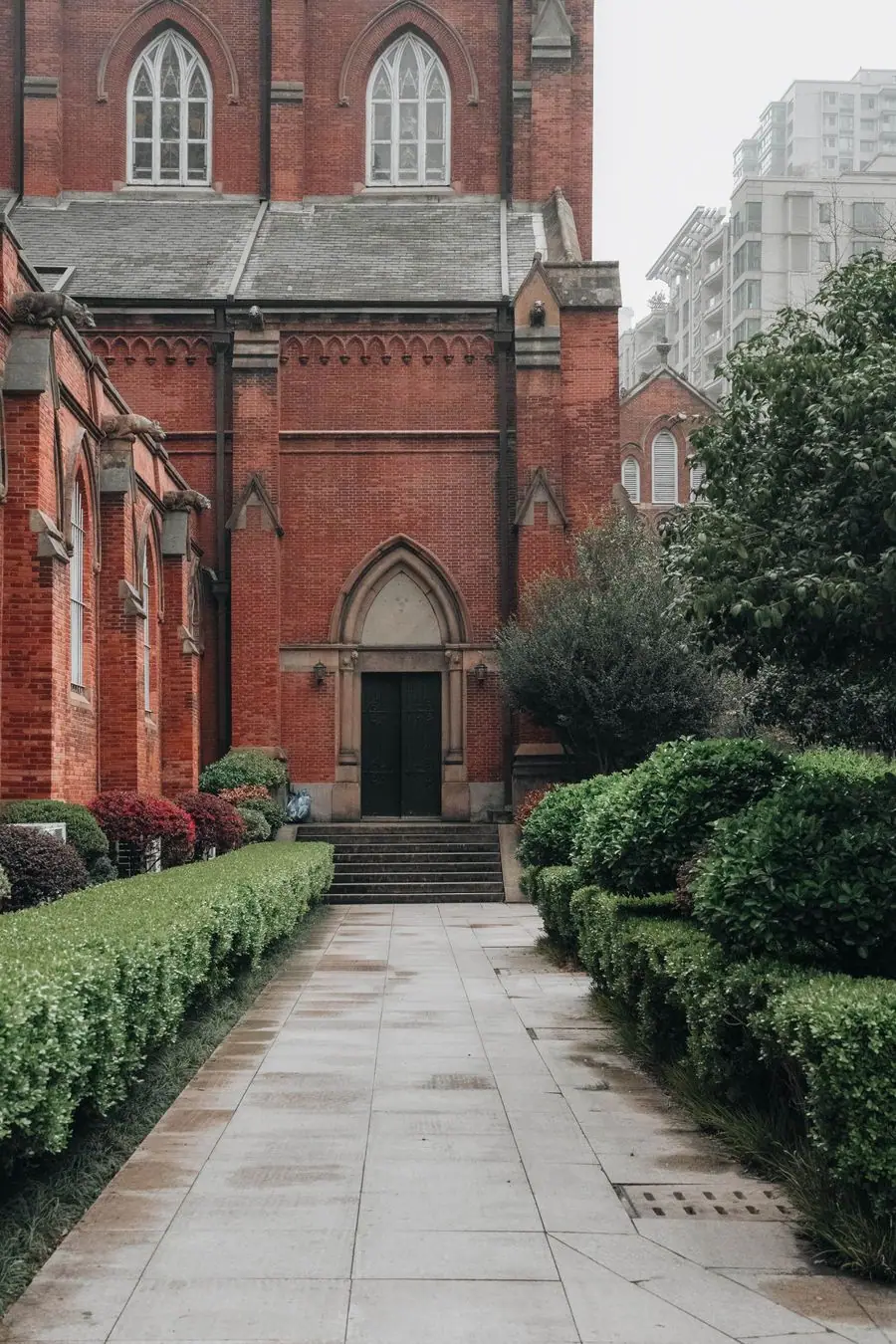
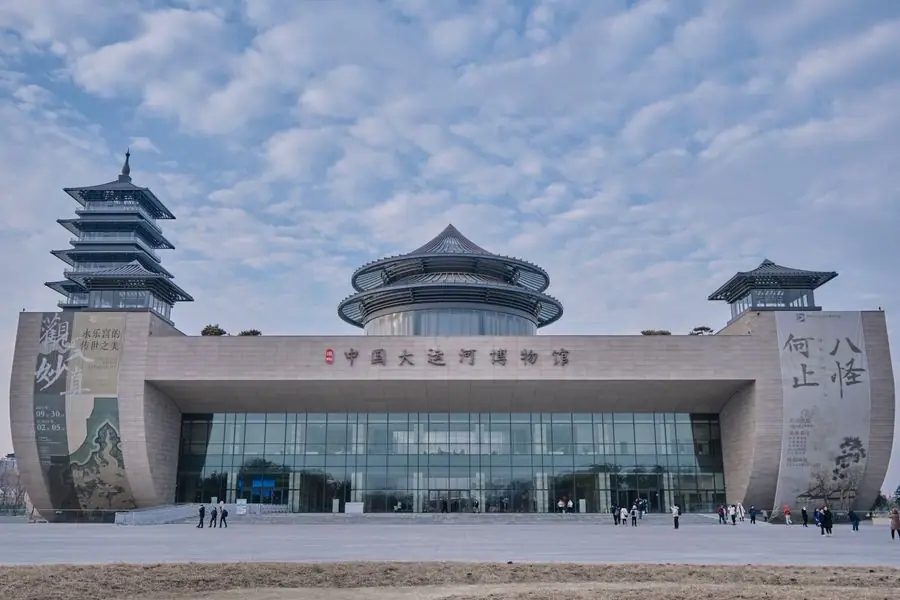
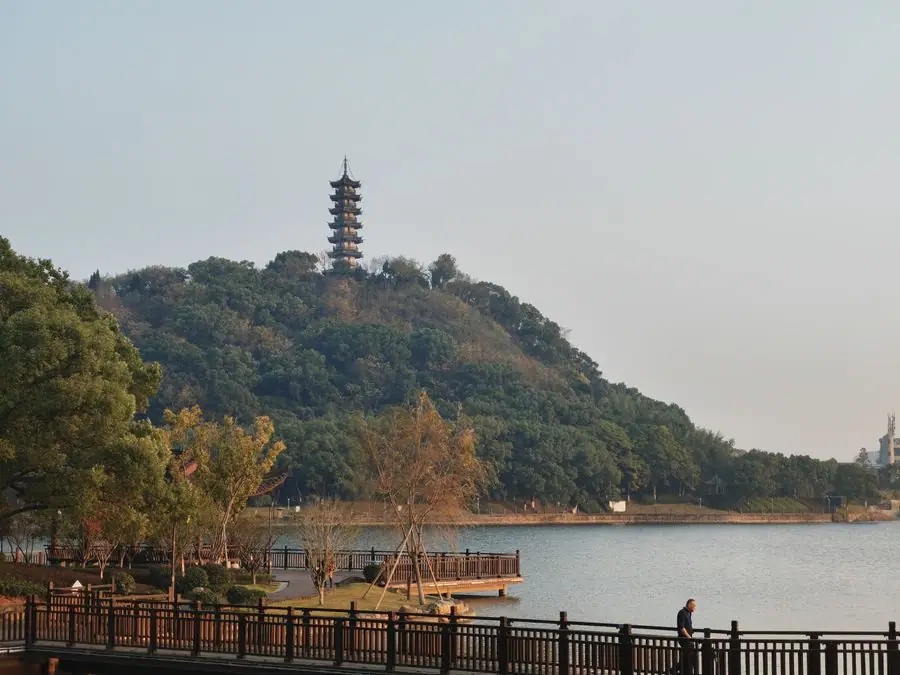
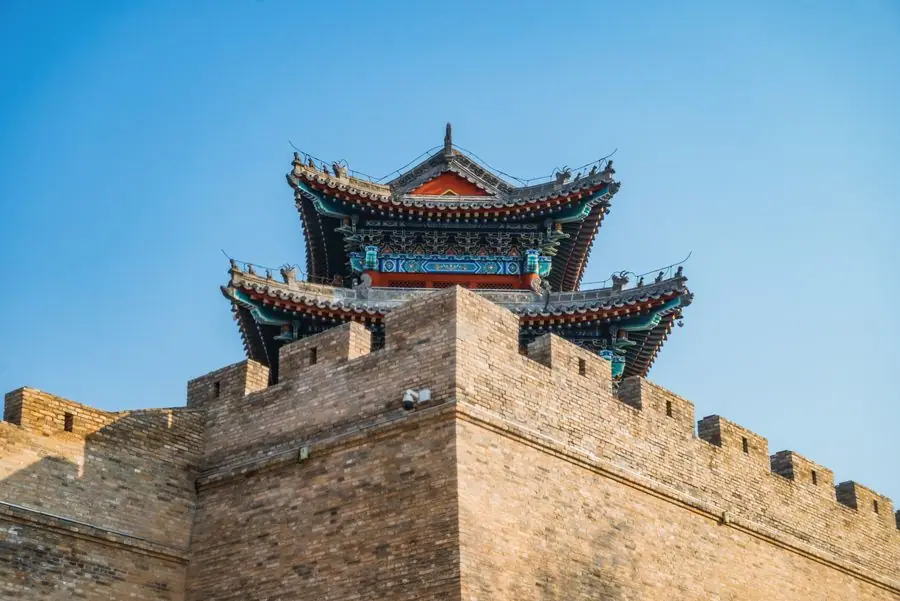
Taibai Mountain, Yinzhou, ~25 km E
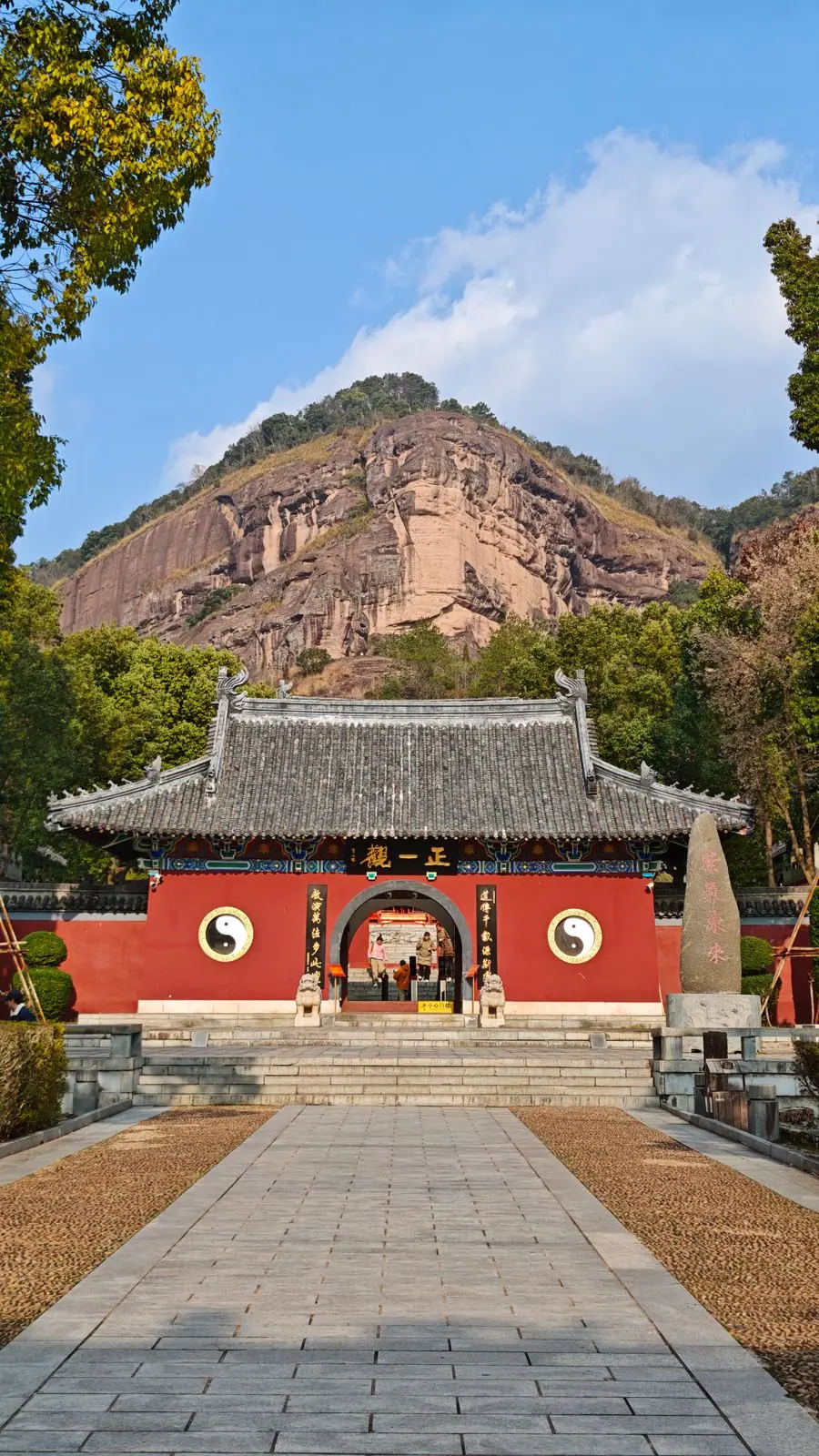

The river confluence, beside the old town
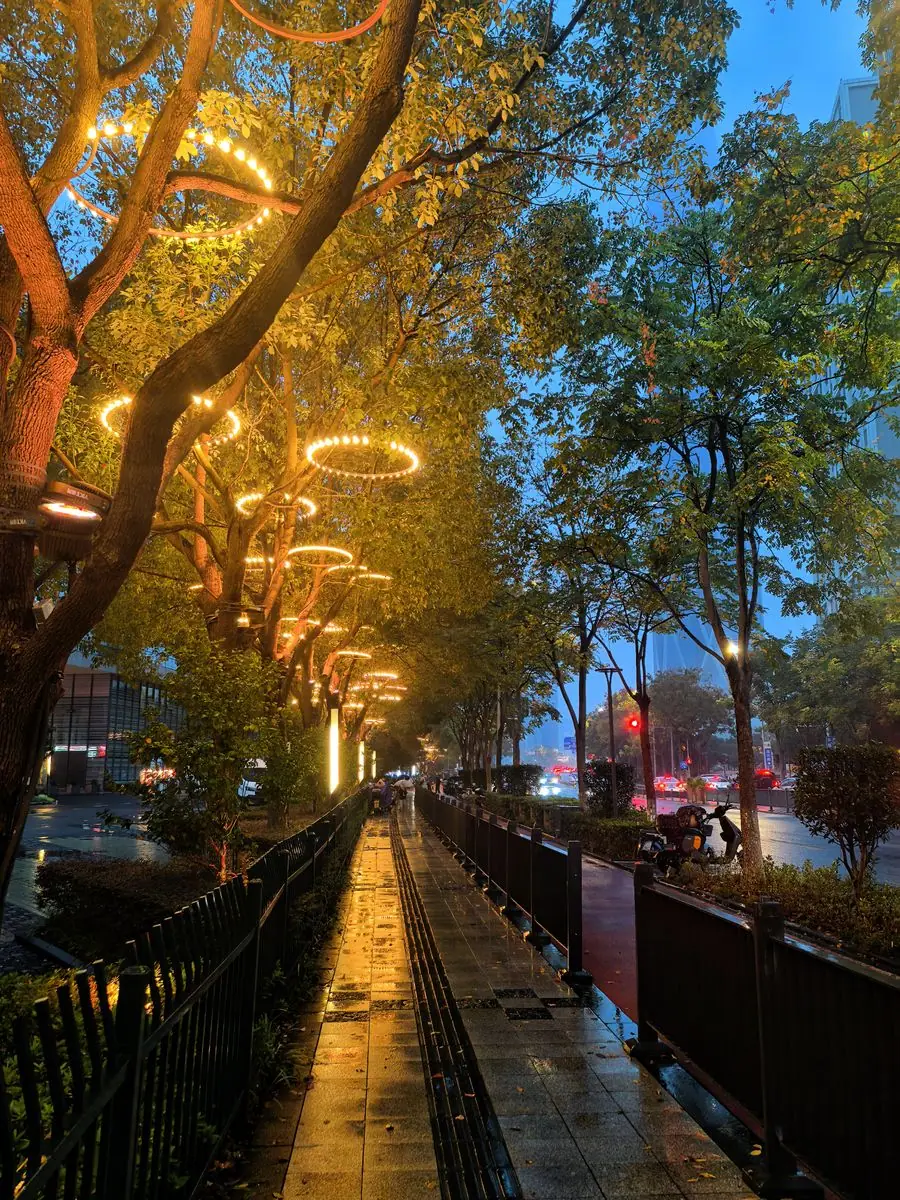
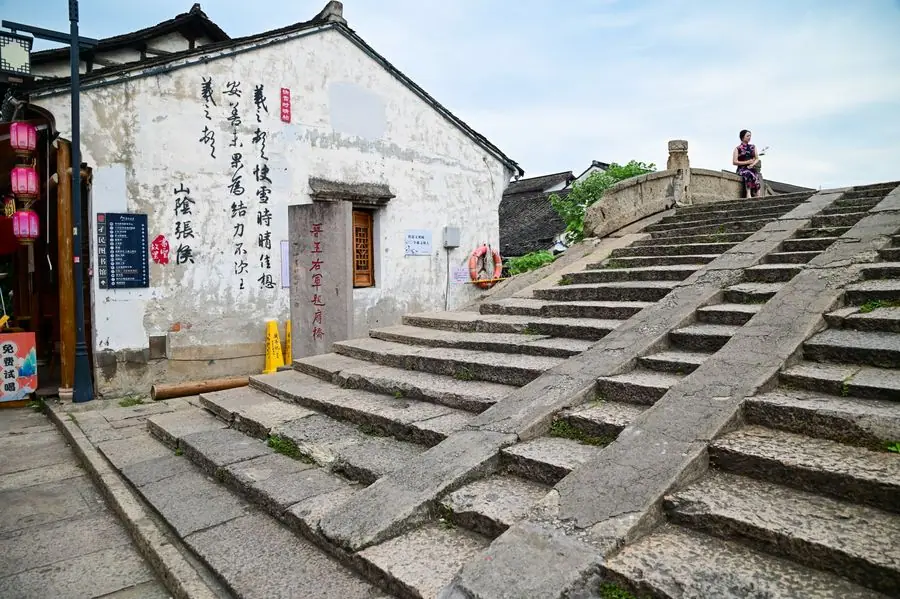
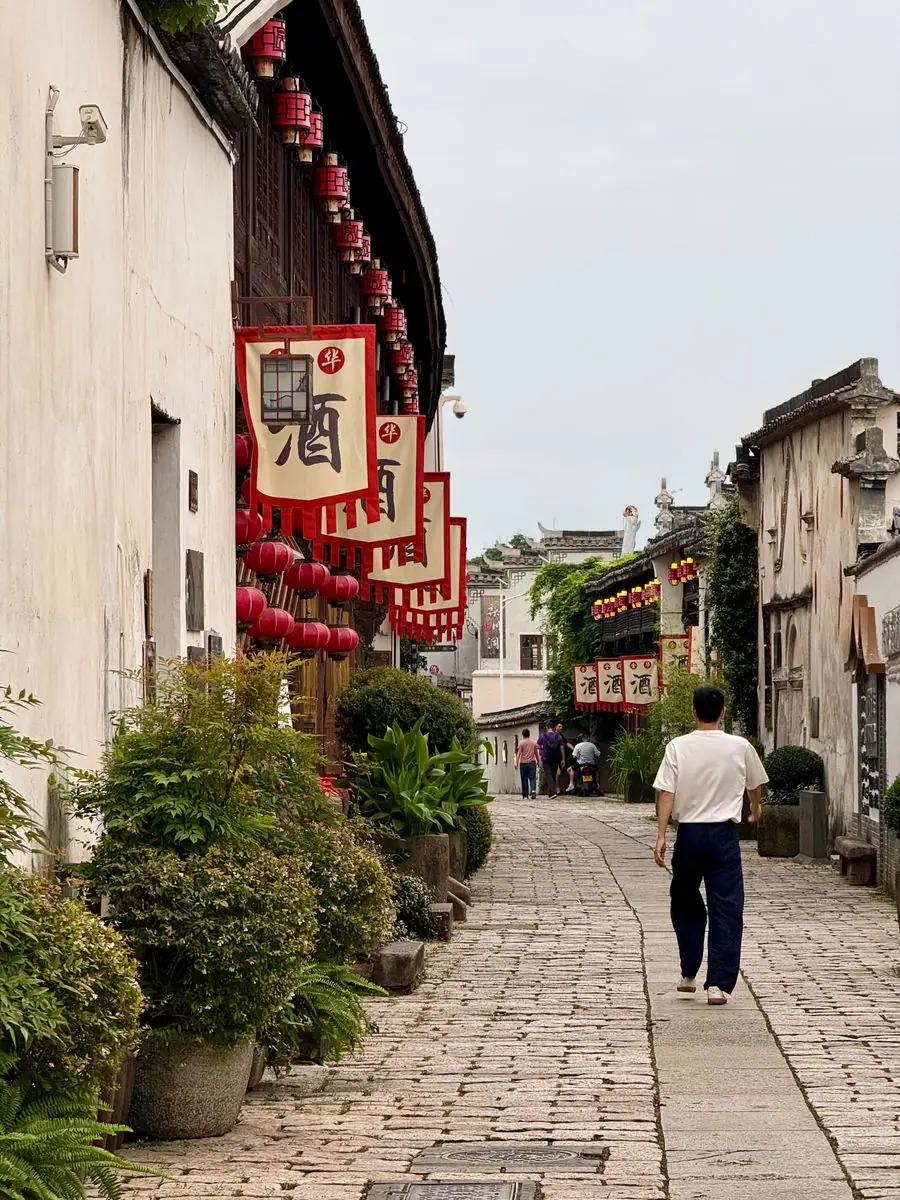
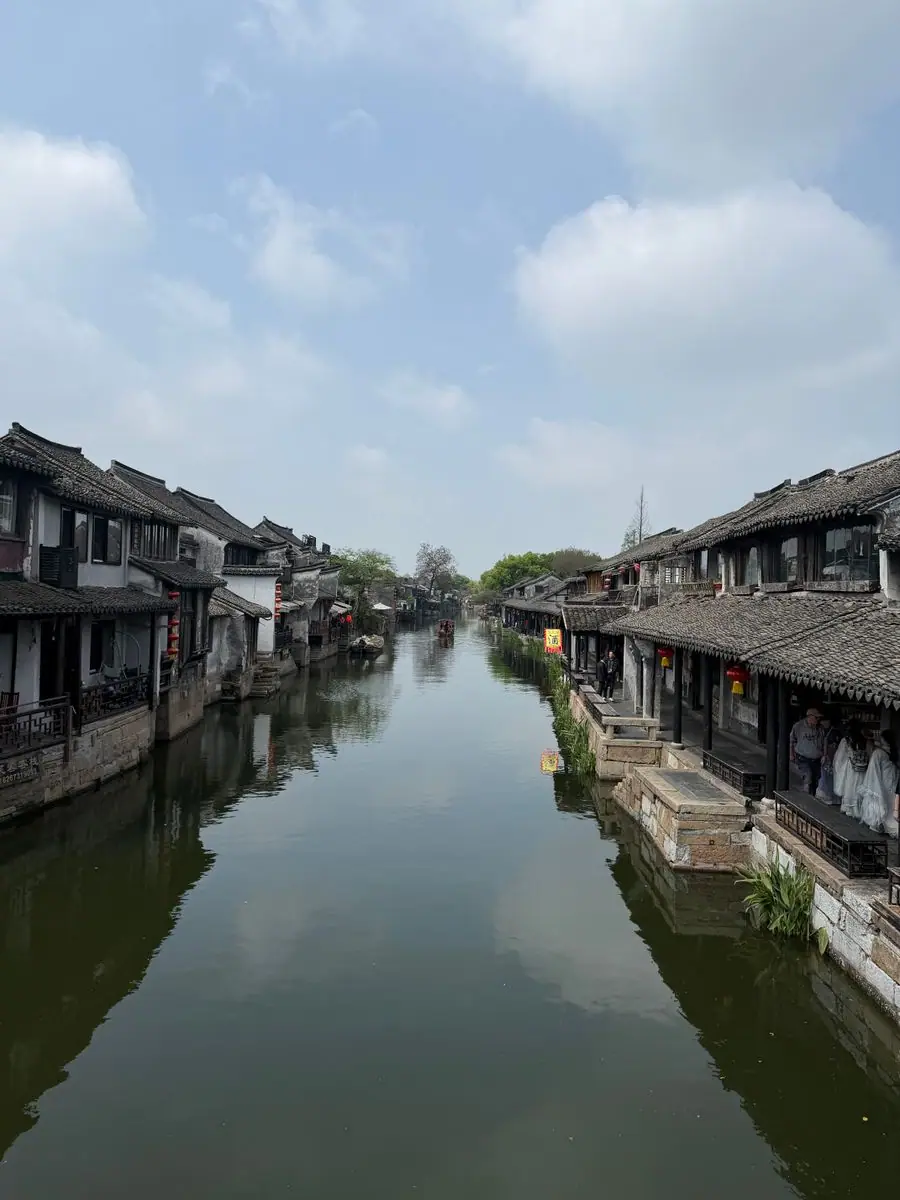
East bank of the Yong River, ~5 km E
Where to stay in Ningbo
Stay in the old town around the Drum Tower, Moon Lake and the Bund side — the historic sights, the metro lines and the food streets are all walkable. The Yinzhou CBD (by Ningbo Museum and the southern squares) has the newer business hotels; Jiangbei puts you on the Bund's nightlife strip; Beilun works only if you are doing the port museum.
Budget
$16–30 / nightChain hotels (Hanting, JI, 7 Days) around the Drum Tower and Moon Lake, plus guesthouses in the old town; clean doubles and foreign-passport registration is routine at the chains.
Mid-range
$39–78 / nightJI Hotel, Vienna and local full-service hotels in the old town and the Yinzhou CBD — the sweet spot, walkable or one metro stop from the sights.
Splurge
$92–184 / nightThe international chains in the Yinzhou CBD and the riverside hotels by the Bund — pools, river views and the most comfortable beds in the city.
Souvenirs & local crafts
Easy to pack, easy to explain at customs — and far cheaper at a supermarket than at a scenic stall.
-

Zhujin lacquer woodcarving (Zhu jin qi mu diao)
One of the 'three golds' of Ningbo craft: camphor wood carved and gilded with red lacquer — the wedding furniture, screens and Buddha figures of the old workshops, still made for temples and collectors.
-

Bone-and-wood inlay (Gu mu xiang qian)
The second golden craft: patterns of ox bone, shell and wood inlaid into furniture and boxes — a red-black-and-ivory marquetry that was the export luxury of the treaty-port era.
-
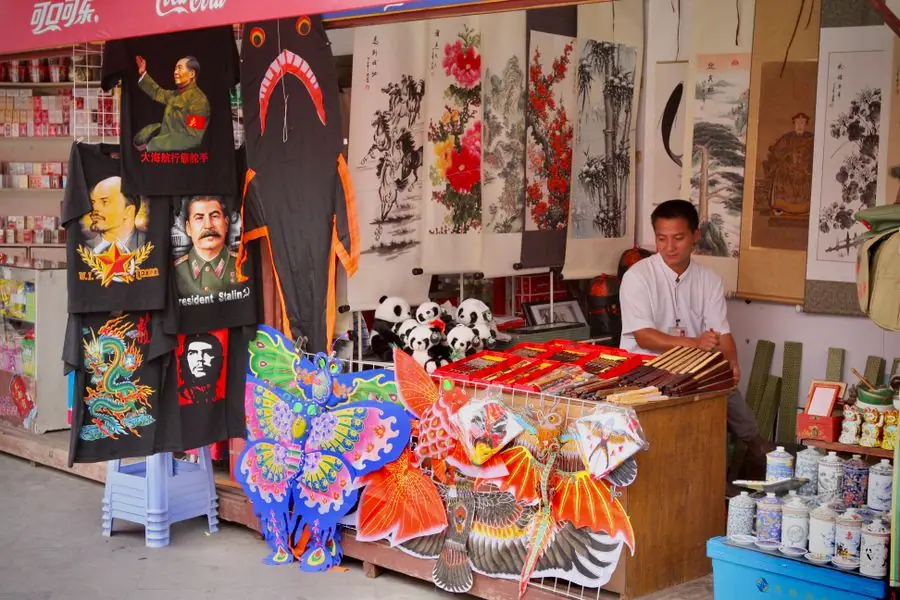
Gold-and-silver embroidery (Jin yin cai xiu)
The third: ceremonial embroidery in gold and silver thread on silk — the costumes and temple hangings of the Ningbo tradition, sold as framed pieces and cushions.
-
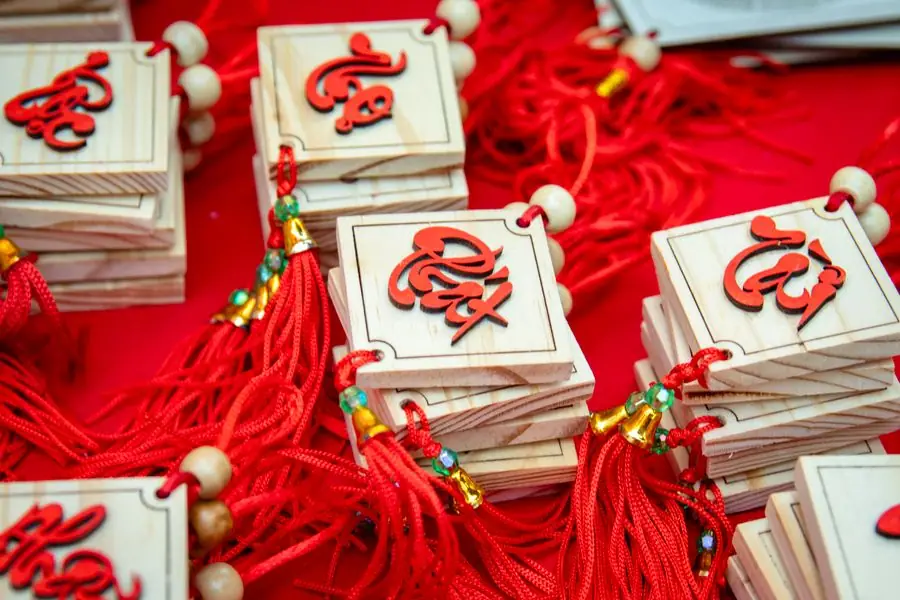
Yue-kiln celadon (Yue yao qing ci)
Celadon from the Yue-kiln tradition — the kilns at Shanglin Lake in Cixi supplied the Tang and Song courts with the famous olive-green wares; the modern workshops sell faithful reproductions and tea ware.
-
Cicheng rice cakes (Ci cheng nian gao)
The gift version of the city staple: dried rice cakes from Cicheng, the ancient county town that made its name with them — packed plain or flavoured, easy to carry and cook at home.
Getting around Ningbo
Ningbo is a compact metro city with a visa-free airport and high-speed rail on the coastal corridor.
- High-speed rail
- Ningbo station is the main stop — metro lines 1, 2 and 4 connect it to the old town in minutes. Hangzhou is about 1–1.5 h, Shanghai about 2–3 h, Wenzhou about 1.5–2 h and Fuzhou about 3 h by high-speed train.
- Long-distance bus
- City buses are cheap (about $0.15–0.30 / RMB 1–2) and cover the whole city; airport buses link Lishe to the centre. Long-distance buses run to Xikou, Cicheng and the county towns.
- Metro & bus
- Four lines operate (1–4), fares from about $0.28 (RMB 2); pay by tapping the Alipay or WeChat transit QR code. Line 1 runs north-south through the old town, line 2 links the station and the airport, and line 4 covers the Dongqian direction.
- Taxis
- Taxis are metered with a low flag fall (about $1.55 / RMB 11); the airport is about $11–14 (RMB 80–100) to the old town, Ningbo station about $3–4 (RMB 20–30).
- Ride-hailing
- DiDi is the default for cross-town runs and the mountain sights — the practical way to reach Taibai Mountain, Baoguo Temple and Xikou.
- Shared bikes
- Shared bikes and e-scooters cover the flat old town and the riverfront; the mountains and Xikou need a vehicle.
- Intercity carpool
Plan your 1, 2 or 3 days in Ningbo
Pick the length of your stay. Each plan is its own page, anchored at the city centre and written from real traveller itineraries — including splits for sightseeing, shopping, landscape, families and older travellers.
Ningbo in one day: the old town core
Dawn tangyuan by the Drum Tower, the Tianyi Pavilion library and Moon Lake, the City God Temple snack street, then the Old Bund and the cathedral at dusk.
Read the plan → 2-dayNingbo in two days: old town + the museum and the lake
Day two runs south: Wang Shu's Ningbo Museum in the morning, Dongqian Lake's causeway and islets in the afternoon, and a Sanjiangkou night cruise to finish.
Read the plan → 3-dayNingbo in three days: + Xikou and Xuedou Mountain
Add a Xikou day: Chiang Kai-shek's former residence and the salt shop in the morning, Xuedou Mountain's Maitreya temple and the Thousand-Zhang waterfall in the afternoon.
Read the plan →Frequently asked questions
- When is the best time to visit Ningbo?
- March–May and October–November are warm and mostly dry. Summer is hot, humid and typhoon-exposed — good for the museums and the Bund evenings; winter is mild, quiet and the cheapest for rooms.
- Do I need a visa for Ningbo?
- Good news: Ningbo Lishe Airport is one of China's 240-hour visa-free transit ports, so eligible nationals (57 countries, transiting to a third country) can enter visa-free and stay up to 10 days in Zhejiang province. Otherwise arrange a Chinese visa in advance; check the current qualifying list with a consulate before booking.
- Is Ningbo walkable?
- The old town is: the Drum Tower, Tianyi Pavilion, Moon Lake and the Bund side all sit within a 2–3 km core, and the metro (lines 1–4) covers the rest. The mountains, Xikou and the port need the metro, buses, a taxi or a tour bus.
- How much do the sights cost?
- Mostly nothing — the Old Bund, the Drum Tower, Moon Lake, Nantang Old Street, Baoguo Temple, Dongqian Lake and Ningbo Museum are all free (reserve the museum a day ahead). The paid ones are small: Tianyi Pavilion $4.23 (RMB 30), Chiang's former residence $16.90 (RMB 120), Xuedou Mountain $21.13 (RMB 150, includes the in-park shuttle), Qiantong town $7.04 (RMB 50) and the Sanjiangkou night cruise $13.80–16.62 (RMB 98–118).
- How many days do I need?
- Two days covers the old town, the museum and the lake; add a third for Xikou and Xuedou Mountain, which are the city's historic half-day-out and deserve the time.
- How do I get to Xikou and Xuedou Mountain?
- Xikou is about 40 km southwest — take the tourist bus from Ningbo station or a DiDi/taxi (about $17–21 / RMB 120–150 each way), or the bus to Fenghua and transfer. Chiang's residence and the salt shop are in the town; Xuedou Mountain's temple and waterfall are 5–8 km further up the valley, linked by the scenic-area shuttle included in the ticket.
Page last reviewed: 2026-11-02.