Anyang Travel Guide 2026: Yin Xu, Red Flag Canal and the Cradle of Chinese Writing
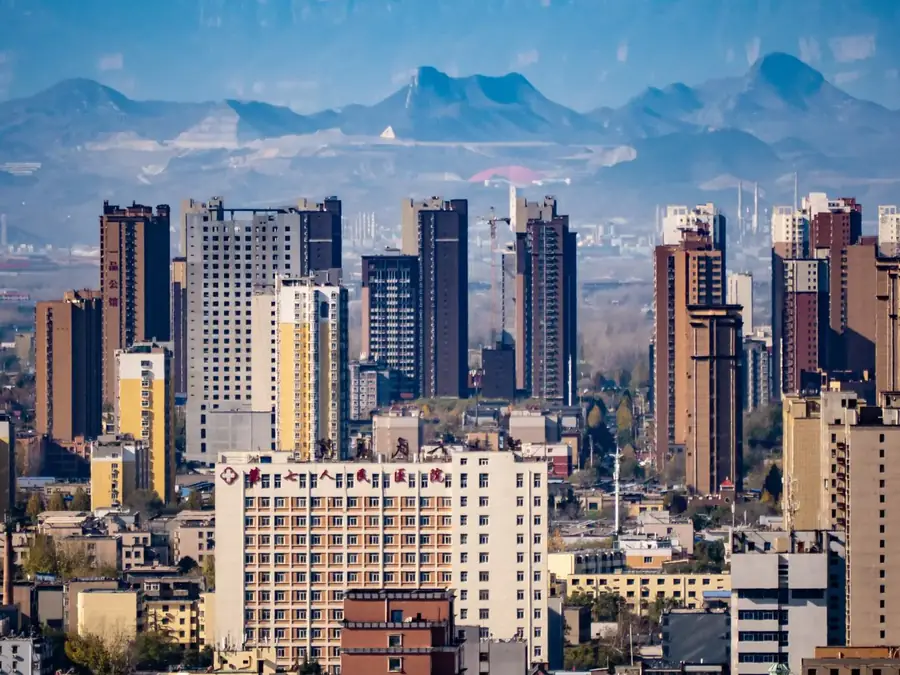
Anyang is the city where Chinese history is excavated. In the northwest of the centre lie the ruins of Yin Xu — the late-Shang capital (1300–1046 BC), a UNESCO World Heritage site and the place where the oracle-bone inscriptions, the earliest systematic Chinese writing, were discovered. From there the story runs to the Red Flag Canal, the cliff-cut 'Great Wall of Water' that turned drought-stricken Linzhou into farmland, and the red cliffs of the Taihang Grand Canyon; to the National Museum of Chinese Writing and the old-town lanes of Cangxiang Street; and to the I Ching birthplace at Youli Cheng and the tomb of Cao Cao. Below: the best time, the history, the food, where to stay, every major sight with its own guide, transport, and 1/2/3-day plans.
History & culture
Anyang's claim to fame is the oldest: the site of Yin Xu, the late-Shang capital of the royal house that ruled the Yellow River plain from about 1300 to 1046 BC. Yin Xu is the first capital site in China confirmed by both written record and excavation, and it is where the oracle-bone inscriptions — turtle-shell and bone 'scratches' used for royal divination — were found in 1899, proving a 3,000-year continuous Chinese writing tradition. The site was added to the UNESCO World Heritage List in 2006.
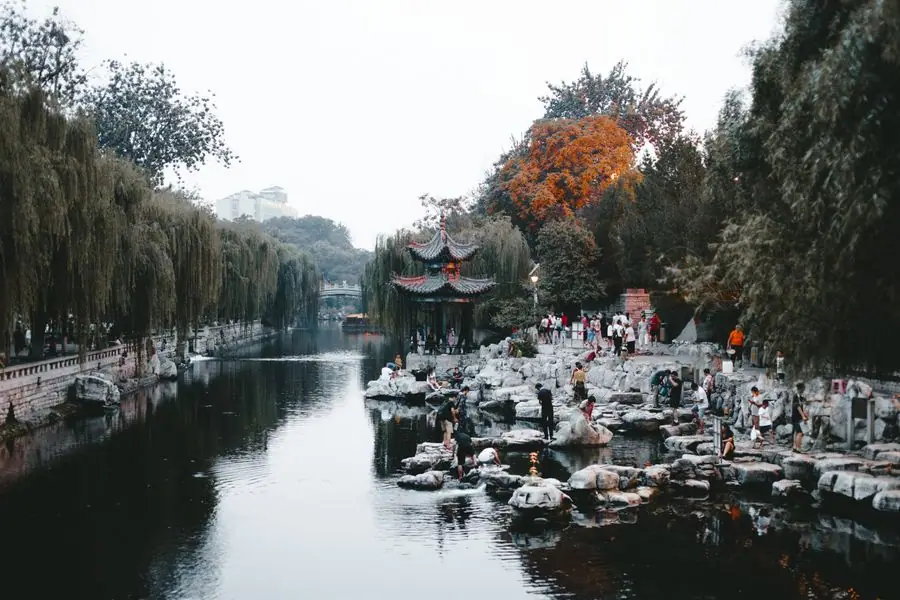
The surrounding region became a crossroads of the Central Plains. Tangyin, south of the city, is venerated as Youli Cheng, where King Wen of Zhou is said to have composed the 64 hexagrams of the I Ching while imprisoned; and the Southern-Song general Yue Fei, the icon of loyal patriotism, was born at Tangyin. The Ming and Qing left the walled Ma Family Estate and the merchant lanes of Cangxiang Street in the city itself.
Modern Anyang is defined by two twentieth-century stories. The first is the 1960s Red Flag Canal — 300,000 Linzhou villagers hand-cut a 1,500 km irrigation canal into the Taihang cliffs to end centuries of drought, a feat of will later called the 'Great Wall of Water'. The second is archaeology: the steady excavation of Yin Xu and, in 2009, the confirmation of Cao Cao's tomb at Anfeng north of the city, which ended the '72 fake tombs' legend and opened a major new museum.
Today Anyang is an industrial and rail city of Henan that wears its antiquity proudly — the 'capital of Chinese characters' markets oracle-bone culture across the city, the new Yinxu and Writing museums draw scholars and tourists, and the Taihang sites give it a mountain playground an hour west. Its face is still the ruins, the cliffs and the old lanes at the centre of a working Chinese city.
Best time to visit Anyang
Anyang has a temperate continental climate: hot, humid summers and cold, dry winters, with the clearest, most comfortable weather in spring and autumn.
Budget for Anyang: hotels from $14 a night, average ticket $$9.05 — see the full cost breakdown, or start from a ready-made route.
Cuisine of Anyang
Signature dishes worth seeking out — prices are typical per-person or per-dish ranges, not fixed quotes.
-
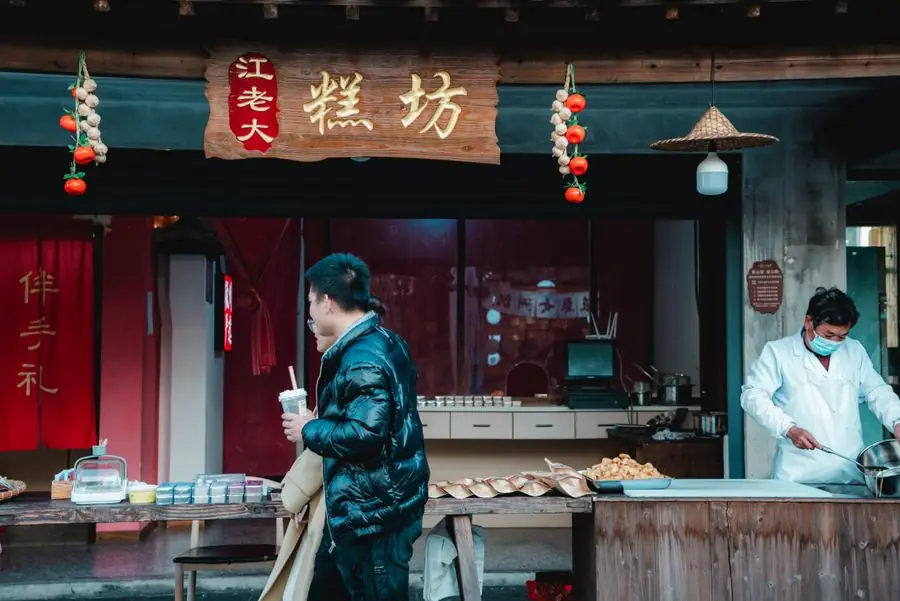
Bianfen cai (flat-noodle stew)
Anyang's signature breakfast bowl — wide sweet-potato noodles stewed with tofu skin, pig's blood and vegetables in a savoury broth, topped with chili. Eaten at the morning stalls around Cangxiang Street and the old town; cheap, filling and distinctly local.
-
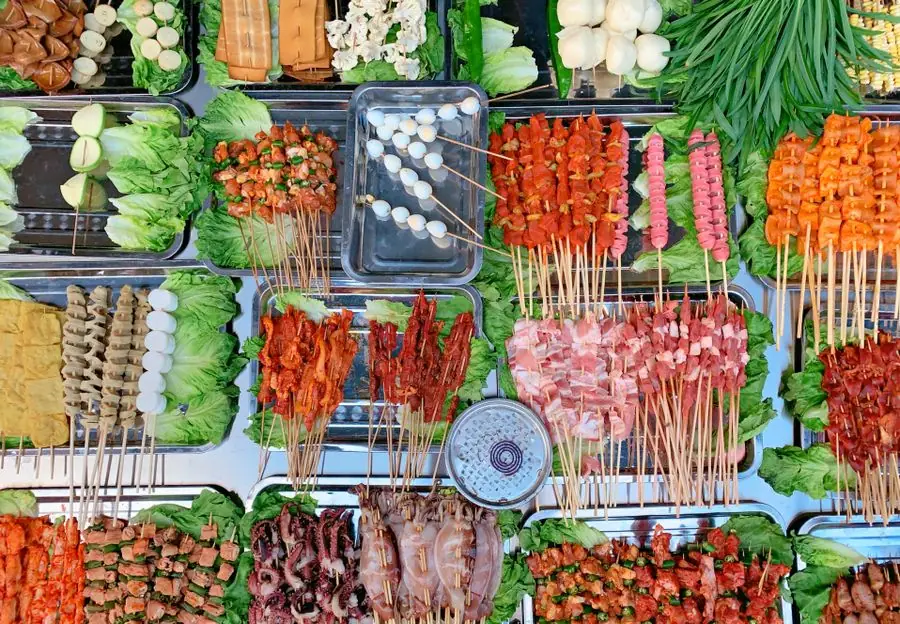
Daokou roast chicken
The famous 'Chinese-style' roast chicken of Daokou town (now part of Anyang) — a century-old braised-and-roasted bird, fragrant and tender, sold whole as a take-home treat and a provincial gift.
-
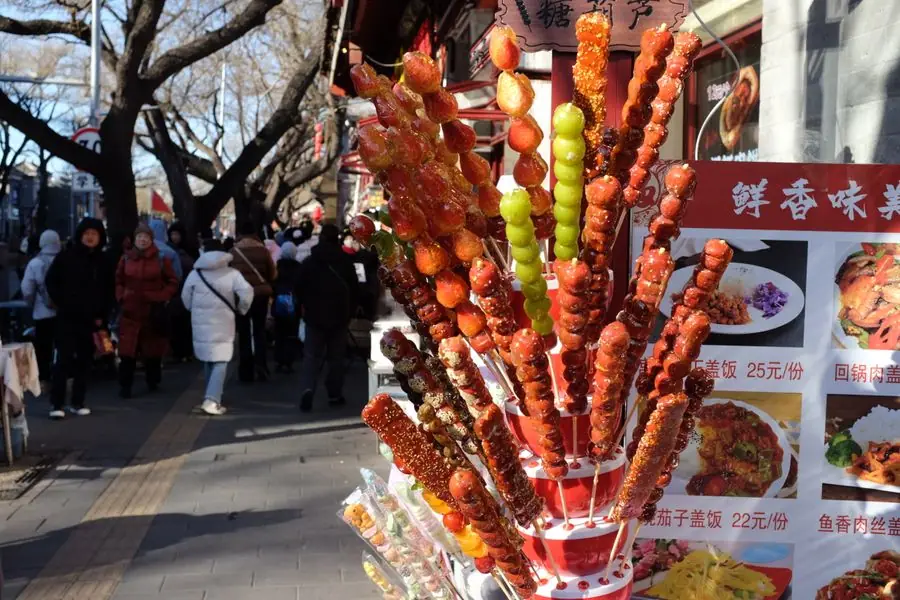
Anyang three-smoke (san xun)
The local cured trio — smoked chicken, smoked egg and smoked pork offal — sold at the markets and eaten as a savoury snack or with drinks; the smoke gives it a deep, keeps-well flavour.
-
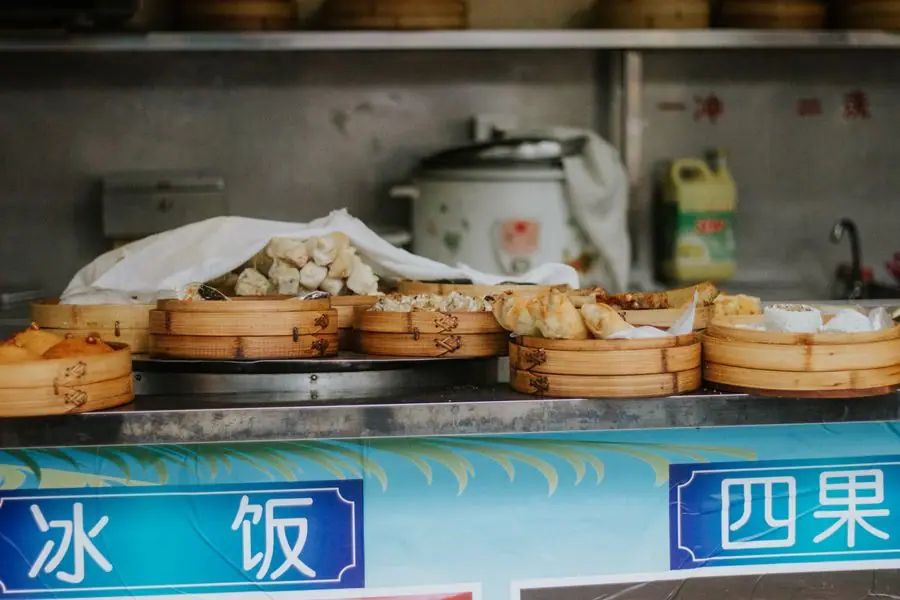
Fenjiang fan (fermented-grain porridge)
A sour, savoury porridge made from fermented mung-bean or millet pulp with peanuts and vegetables — an acquired, very local taste and a cheap old-town breakfast.
-
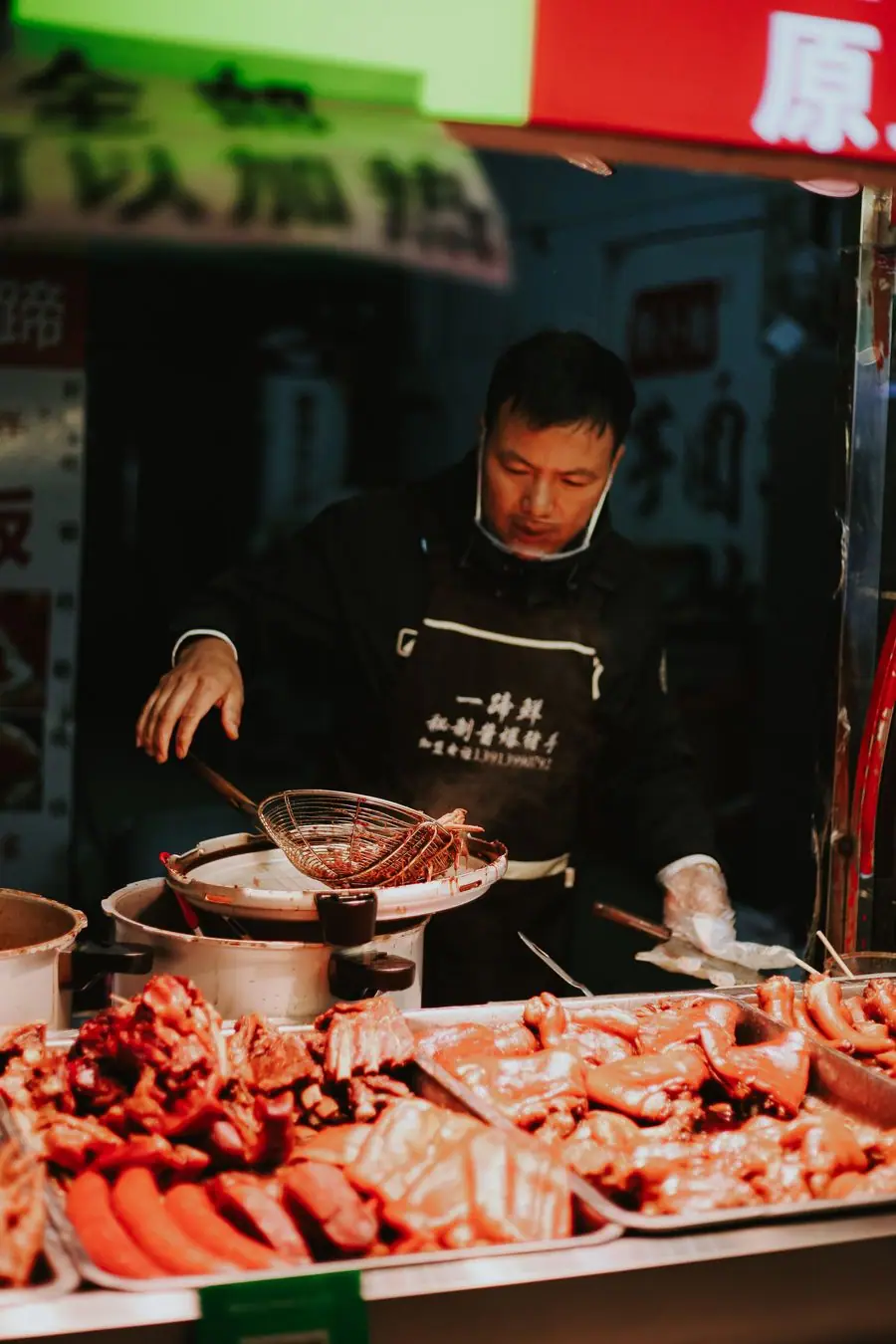
Neihuang guanchang (blood sausage)
A Neihuang-county speciality — a steamed or fried sausage of starch and blood, crisp outside and soft inside, dipped in garlic sauce; a street-food classic around Anyang.
Every major sight — with its own guide
Right after the food above, here are the sights — each one links to its own full guide (what to see, how to get there, facilities and the best season). Names follow each sight's official English signage.
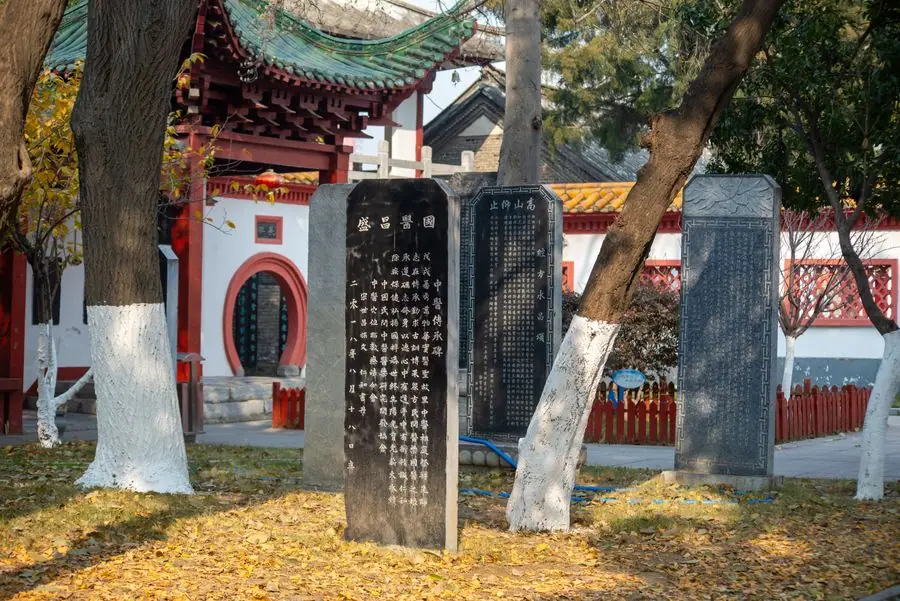
Linzhou, ~50 km W of the centre
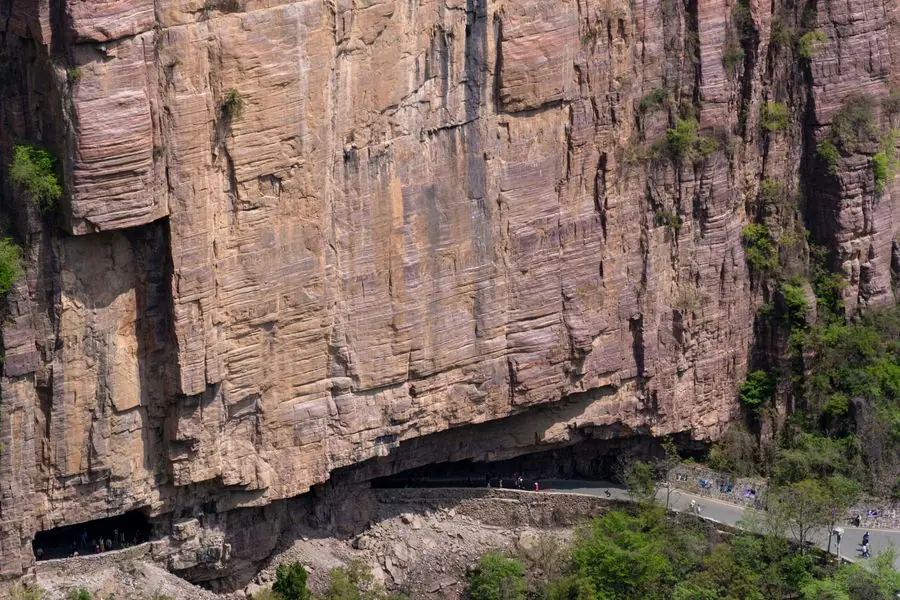
Red Flag Canal 红旗渠
The 'Great Wall of Water' — a 1,500 km irrigation canal hand-cut into the cliffs of the Taihang Mountains between 1960 and 1969 to end the chronic drought of Linzhou. Built by 300,000 villagers with no machines, it levels 1,250 hilltops, bores 211 tunnels and carries the water of the Zhang River along 70.6 km of cliff-edge channel. The scenic area centres on the Memorial Hall and the Youth Cave (Qingnian Dong), the hardest section, which you can walk or take a boat through.
Taihang Grand Canyon 太行大峡谷
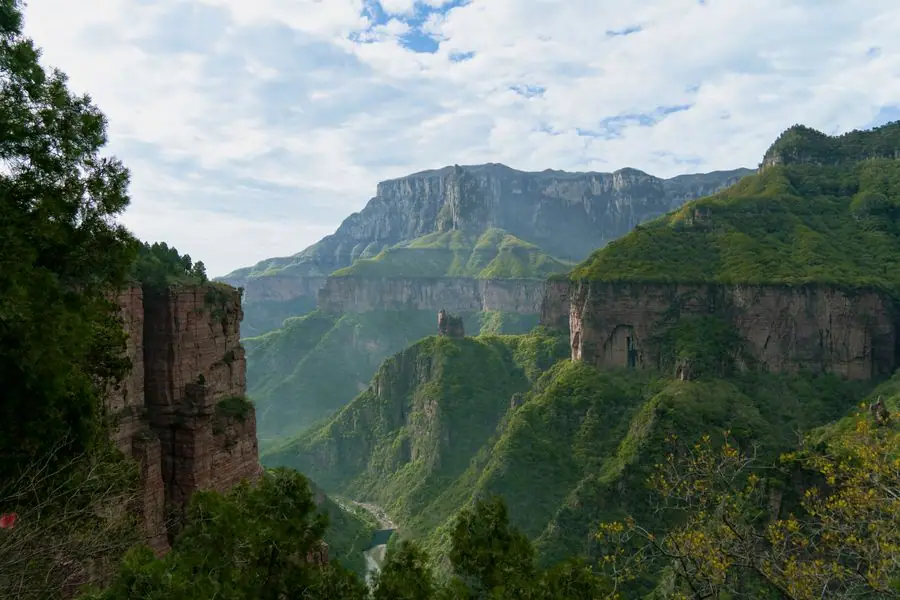
The 5A-rated Taihang Grand Canyon in Linzhou — a 89 km² valley of red cliffs, hanging waterfalls and the 'Linzhou rooftop' viewpoints, with the three core areas of Peach Blossom Valley (Taohua Gu), the Wangxiang Rock (Wangxiang Yan) and the Taihang Sky Road (Taihang Tianlu). It is the natural counterpoint to the Red Flag Canal: the same Taihang escarpment seen as scenery rather than engineering, with plank paths, the canyon stream and the autumn colour.
Wenfeng District, ~2 km from the centre
Wenfeng Pagoda 文峰塔
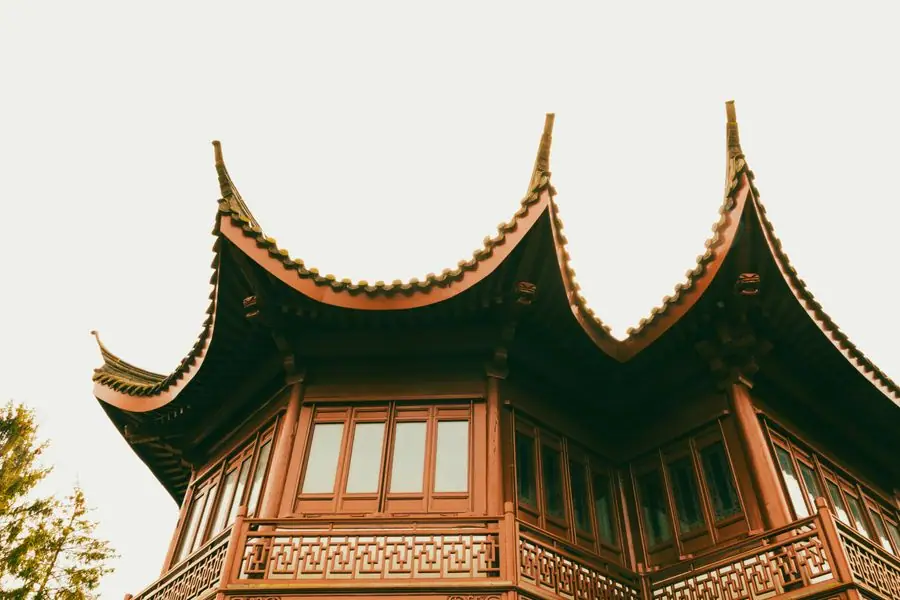
Anyang's landmark pagoda (also called the Tianning Temple Pagoda) — an unusual 'inverted' Buddhist pagoda built in the Yuan dynasty, wider at the top than the bottom, with a tall hexagonal body and an ornate eaved crown. Set in the old Tianning Temple, it is the symbol of the city and the climb to the top gives a view over the old-town rooftops. The surrounding lanes (Cangxiang Street) are the historic core of Anyang.
Cangxiang Street 仓巷街
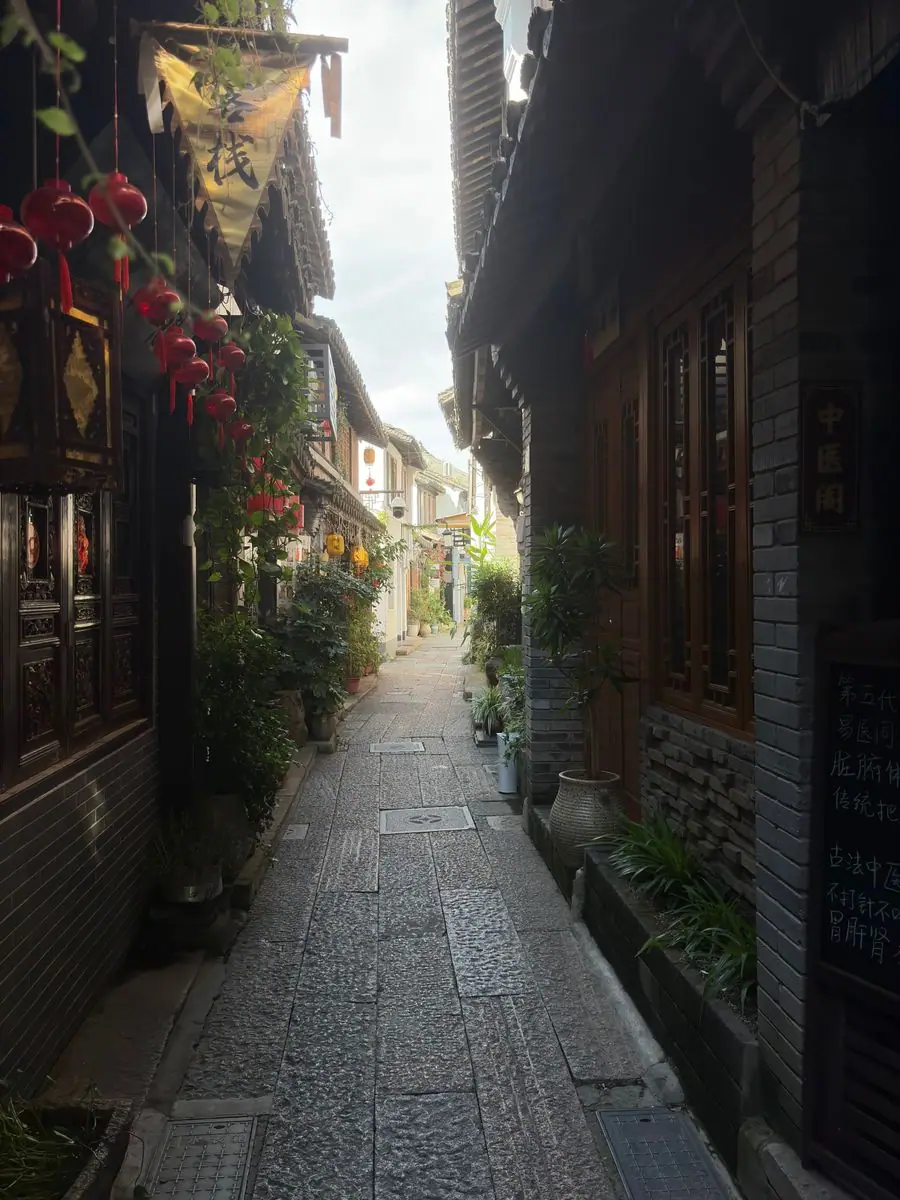
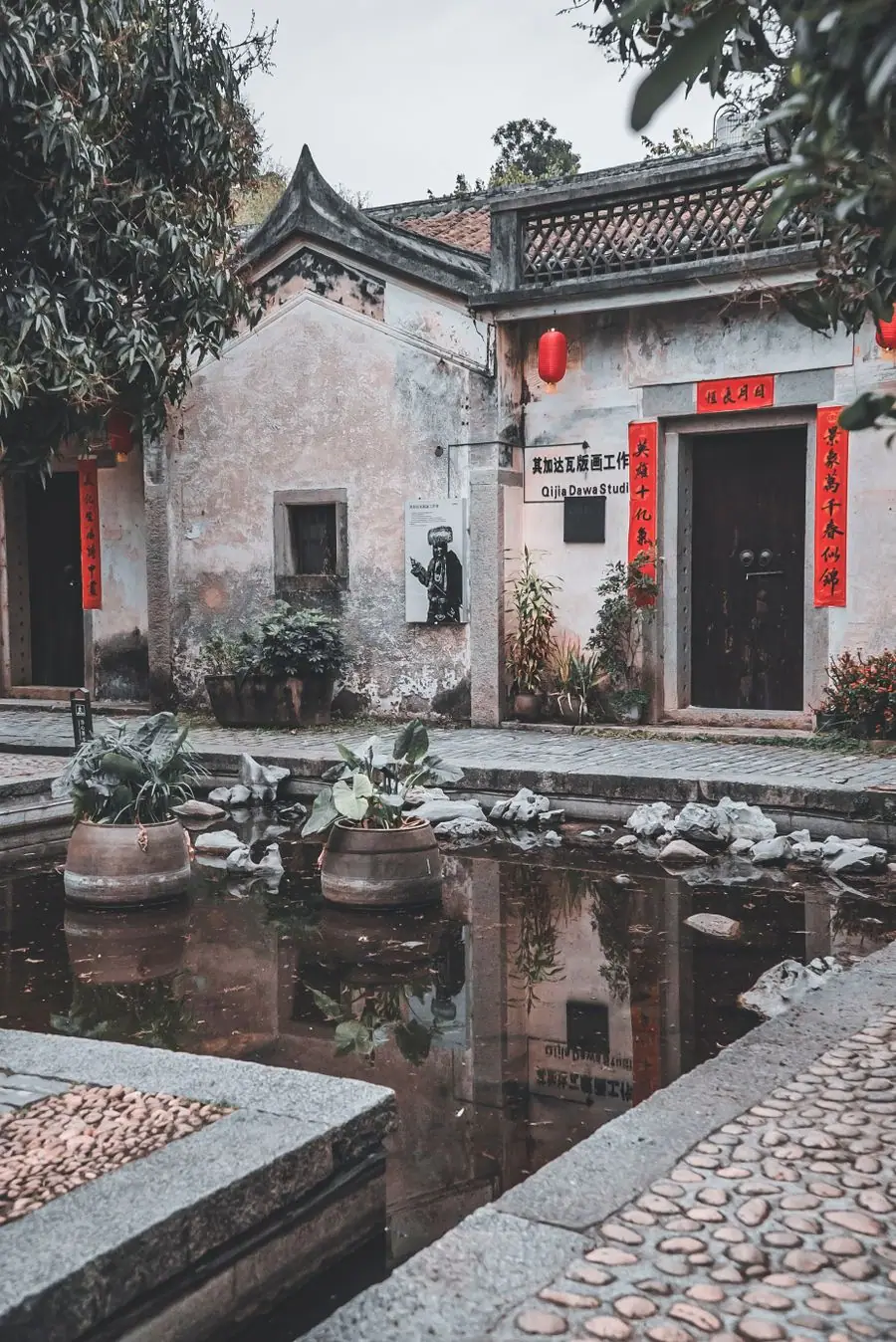
The restored historic street of old Anyang — a lane of grey-brick courtyard houses, carved gates and small shops that is the living picture of the city's merchant quarter, paired with the nearby Xianqian Street. Free to walk, it is the place to feel the old town as it was lived, with teahouses, the night lanterns and the Wenfeng Pagoda at the end of the lane.
Tangyin County, ~20 km S of the centre
Yili City (Youli Cheng) 羑里城
The traditional birthplace of the I Ching (Book of Changes) — the walled site where King Wen of Zhou was imprisoned by the tyrant Zhou Xin and, according to legend, composed the 64 hexagrams of the I Ching. It has a memorial gate, a reconstruction of King Wen's retreat, the Eight-Trigram maze (Bagua Zhen) and a museum of the divination classic. For visitors interested in Chinese philosophy rather than ruins, it is the most atmospheric of the Tangyin sites.
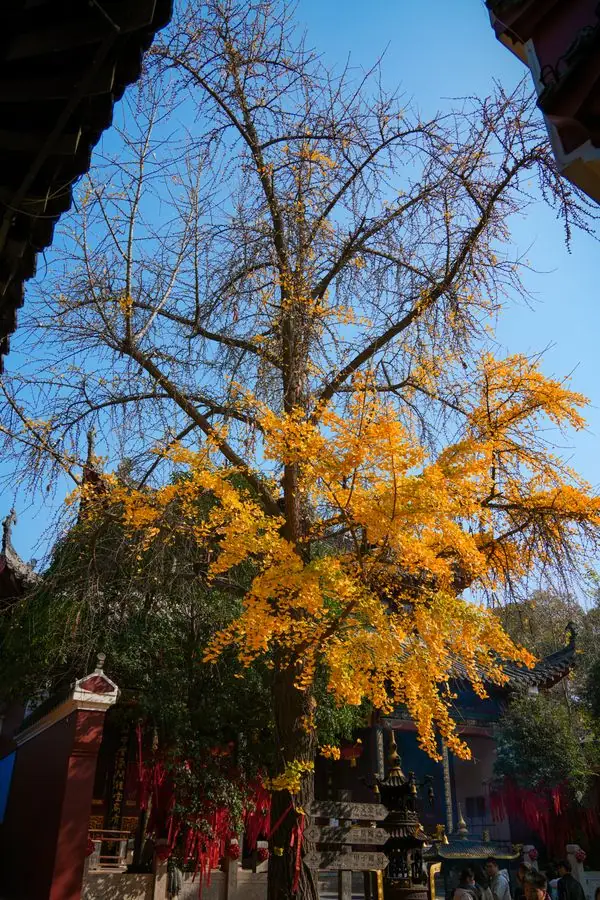
Yue Fei Temple 岳飞庙
The memorial temple of Yue Fei, the Southern-Song general who became the icon of patriotic loyalty until his execution in 1142. The Tangyin temple — his birthplace — is a walled compound of memorial arches, the main hall with a large Yue Fei statue, the stele pavilions and the 'Loyalty' (zhong) inscriptions. For visitors who know the story of the 'torture rack' injustice, it is the most emotional of the Anyang-area sites.
Where to stay in Anyang
Stay in the Wenfeng district around Wenfeng Pagoda and Cangxiang Street — the old town, the museums, the restaurants and the bus lines are all close, and Yin Xu is a short ride northwest. The Beiguan district (by the Writing Museum and Yuan Lin) is quieter and good for a museum-focused stay; the station area is practical for early trains, and the Linzhou resorts are only worth it if the Taihang is your main plan.
Budget
$14–28 / nightChain hotels (Hanting, JI, 7 Days) around the station and Wenfeng Pagoda, plus guesthouses near Cangxiang Street; clean doubles and foreign-passport registration is routine at the chains.
Mid-range
$35–70 / nightJI Hotel, Vienna and local full-service hotels downtown and by the museum quarter — the sweet spot; old-town-view rooms cost a little more.
Splurge
$85–170 / nightThe international chains and new business hotels near the high-speed station and the East district — pools, city views and the corporate crowd.
Souvenirs & local crafts
Easy to pack, easy to explain at customs — and far cheaper at a supermarket than at a scenic stall.
-
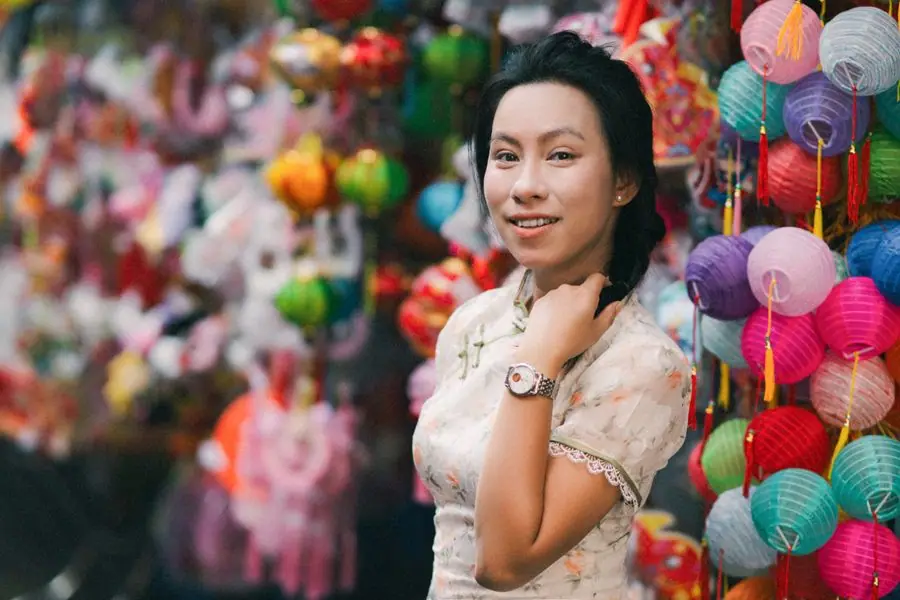
Oracle-bone cultural products
The signature Anyang gift — replica oracle bones, character-stamp sets and I-Ching items themed on the Yin Xu script, sold at the Yinxu and Writing Museum shops and the old-town lanes.
-
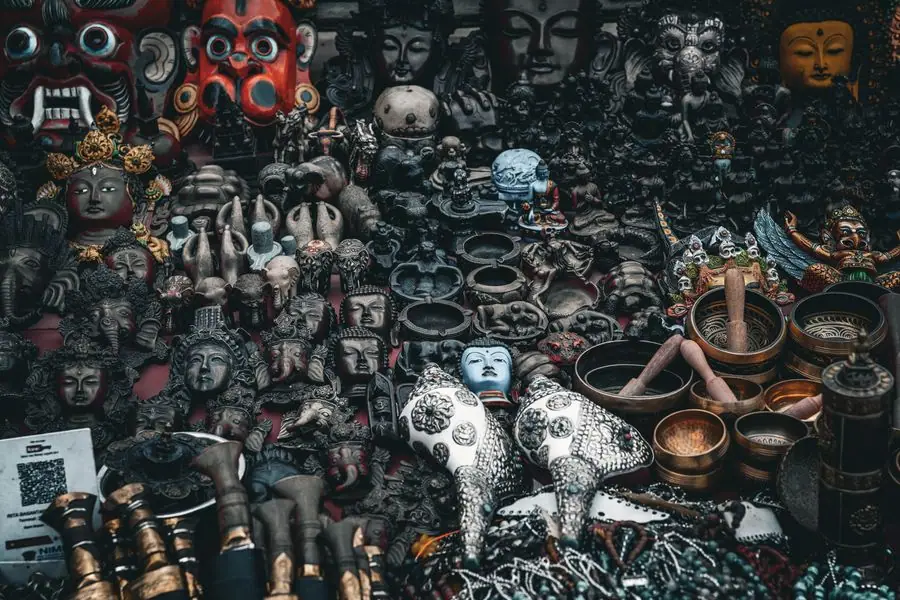
Yin Xu bronze replicas
Small reproductions of the Shang bronzes (ding cauldrons, the Fu Hao owl-zun) and jade pieces — the cultural gift, heavier and pricier than the stationery but genuinely local.
-
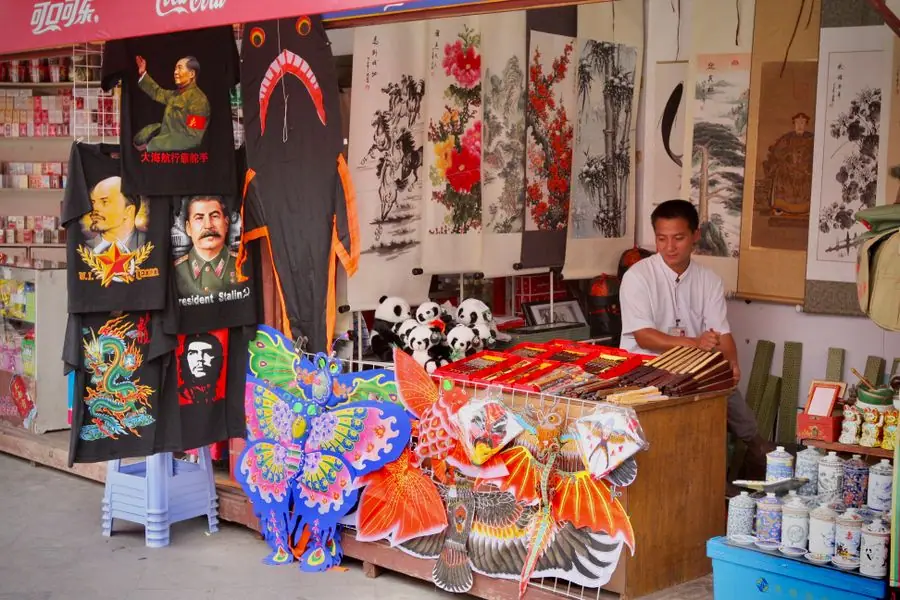
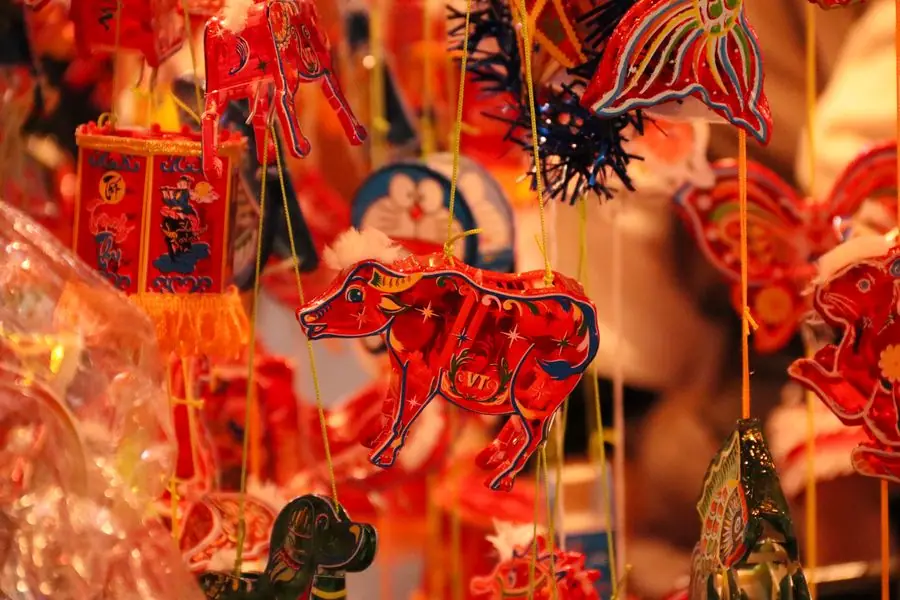
Anyang paper-cutting
Traditional Henan paper-cut (jianzhi) with character and zodiac motifs, sold at the Cangxiang Street stalls — light, cheap and easy to pack.
-
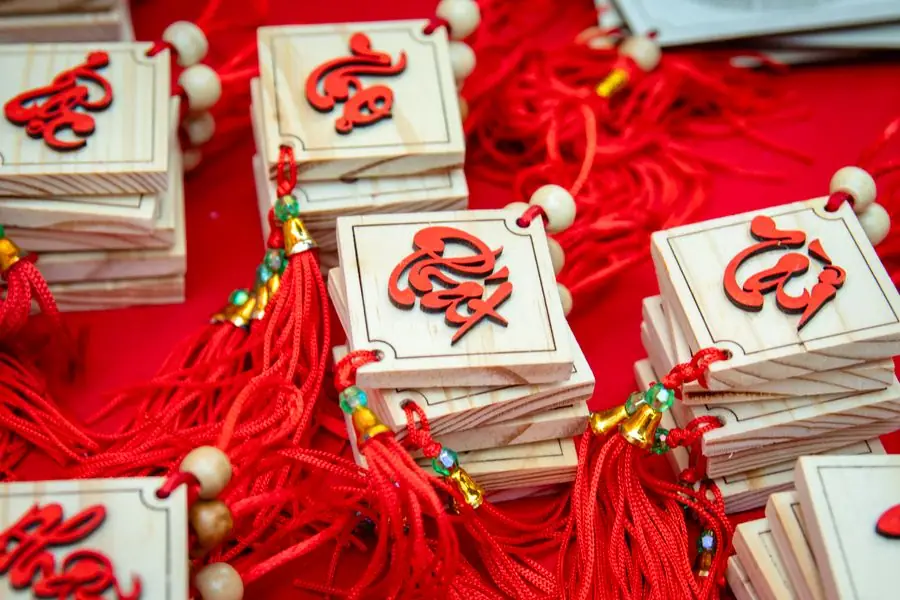
Daokou roast chicken (gift pack)
The vacuum-packed roast chicken of Daokou — a practical, edible Anyang souvenir for family back home.
-
Neihuang jujube and walnuts
The dried red dates and the Taihang hill walnuts of the Anyang countryside — bagged at the markets, easy to carry and genuinely local.
Getting around Anyang
Anyang runs on buses and taxis, with one high-speed rail station and a small domestic airport the real gateways; the Taihang sites need a car or a tourist bus.
- High-speed rail
- Anyang East (Anyang Dong) is on the Beijing–Zhengzhou–Guangzhou high-speed line: Beijing West about 2.5 h, Zhengzhou East about 1 h, Wuhan about 2.5 h, Guangzhou about 6 h. Add a taxi or bus to the centre.
- Long-distance bus
- Long-distance buses run to Zhengzhou, Luoyang and the county towns; within Anyang the city buses are cheap (about $0.28 / RMB 2) and reach Yin Xu, the museums, Wenfeng Pagoda and Cangxiang Street.
- Metro & bus
- Anyang has no metro — buses, taxis and the walkable old-town lanes cover the centre; the outlying sites (Linzhou, Tangyin, Anyang County) need a bus, DiDi or a booked car.
- Taxis
- Taxis are metered from about $1.13 (RMB 8); the station and the small airport are a short ride from the centre.
- Ride-hailing
- DiDi is the default for the Linzhou and Tangyin day trips — the mountain and memorial sites are spread out.
- Shared bikes
- Shared e-bikes are handy around the flat old town and the museum quarter; the centre is walkable between Wenfeng Pagoda, Cangxiang Street and the bus stops.
- Intercity carpool
- Intercity buses and the high-speed trains link Anyang with Zhengzhou, Luoyang and the rest of Henan; for the Taihang sites a booked car or the Linzhou tourist bus is easiest.
Plan your 1, 2 or 3 days in Anyang
Pick the length of your stay. Each plan is its own page, anchored at the city centre and written from real traveller itineraries — including splits for sightseeing, shopping, landscape, families and older travellers.
Anyang in one day: the Shang capital and the old town
Morning at Yin Xu and the Yinxu Museum, then the National Museum of Chinese Writing, the afternoon at Wenfeng Pagoda and a lantern-lit walk of Cangxiang Street, with Anyang Museum as a free add-on.
Read the plan → 2-dayAnyang in two days: + Tangyin loyalty and the Taihang foothills
Day two heads south to Tangyin's Yue Fei Temple and Youli Cheng (the I Ching birthplace), and north to Yuan Lin or the Ma Family Estate — or branches west to the Red Flag Canal.
Read the plan → 3-dayAnyang in three days: + the Taihang mountains of Linzhou
Give the third day to Linzhou: the Red Flag Canal and the Taihang Grand Canyon (or Tianping Mountain), the cliff-carved waterway and the red-rock valleys, back in the evening.
Read the plan →Frequently asked questions
- When is the best time to visit Anyang?
- April–May and September–October are mild and dry, the Taihang mountains green in spring and coloured in autumn. Summer is hot and rainy; winter is cold but good for the indoor museums and the winter Taihang icefalls.
- Do I need a visa for Anyang?
- Anyang has no international airport of its own. Most foreign visitors fly into Zhengzhou Xinzheng International Airport (CGO), a participating port of China's 240-hour visa-free transit scheme, about 2 hours away by high-speed train, or arrive via Beijing or Xi'an. If your nationality is among the 57 countries eligible for the 240-hour transit waiver and you continue to a third country, you can enter at Zhengzhou and stay in Henan (which includes Anyang) for up to 10 days. Otherwise arrange a Chinese visa in advance; confirm the current qualifying list and ports with a consulate before booking.
- What is Yin Xu, and why does it matter?
- Yin Xu is the late-Shang capital (1300–1046 BC) at Anyang — a UNESCO World Heritage site and the place where the oracle-bone inscriptions, the earliest systematic Chinese writing, were discovered in 1899. It is the physical proof of 3,000-year-old Chinese civilisation and the headline sight of the city.
- How much do the sights cost?
- Many are free: the National Museum of Chinese Writing, Anyang Museum, Cangxiang Street, Wenfeng Pagoda ($2.82 / RMB 20), Yuan Lin ($4.93 / RMB 35), and the Xiuding Temple Pagoda and Lingquan Grottoes are free rural sites. The paid ones: Yin Xu Museum $11.27 (RMB 80), the ruins park $7.04 (RMB 50), the Red Flag Canal $11.27 (RMB 80), the Taihang Grand Canyon $19.72 (RMB 140), Youli Cheng $5.35 (RMB 38), the Ma Family Estate $5.63 (RMB 40), the Yue Fei Temple $7.04 (RMB 50), Tianping Mountain $4.23 (RMB 30) and Cao Cao's Mausoleum $7.04 (RMB 50).
- How many days do I need?
- Two days covers the city sights (Yin Xu, the museums, Wenfeng Pagoda, Cangxiang Street) plus Tangyin. Three adds the Linzhou Taihang day (Red Flag Canal and the Grand Canyon). Add a fourth for the outer sites (Ma Family Estate, Cao Cao's Mausoleum, the grottoes and Xiuding Pagoda).
- How do I get to the Red Flag Canal and the Taihang Grand Canyon?
- Both are in Linzhou, about 50 km west of Anyang. Take the tourist bus from Anyang centre or a DiDi / self-drive (about 1 h); they are separate 5A scenic areas and most visitors do both in one Linzhou day, with Tianping Mountain as a quieter alternative.
Page last reviewed: 2026-11-02.