Nanning Travel Guide 2026: The Green Capital of Guangxi
Nanning is the green capital of the south — the capital of the Guangxi Zhuang autonomous region, built around the Yong River and shaded by the banyans and tropical trees that gave it the name 'Green City'. It is the front door to Southeast Asia by land: the China–ASEAN Expo runs here every year, Vietnamese traders work the border markets, and the karst country of Guangxi starts at the city edge. Below: the best time, the history, the food, where to stay, every major sight with its own guide, transport, and 1/2/3-day plans.

History & culture
The Nanning plain is Zhuang country — the heartland of the Zhuang people, China's largest minority, whose bronze-drum culture goes back two thousand years to the Luoyue tribes. The city itself was a county seat from the Jin, a prefecture called Yongzhou under the Tang and Nanning prefecture from the Ming; for most of its life it was the administrative hinge between the Chinese plains and the Southeast Asian marches.
It became the regional capital in 1950, when Guangxi stopped being a province and became the Guangxi Zhuang Autonomous Region with Nanning as its seat — a planned, green, low-rise capital laid out along the Yong River and its chain of lakes.
The city's modern role is the China–ASEAN gateway: the China–ASEAN Expo has run here every September since 2004, the high-speed railway crosses into Vietnam at Pingxiang, and the border trade with Vietnam runs through Guangxi's ports and roads.
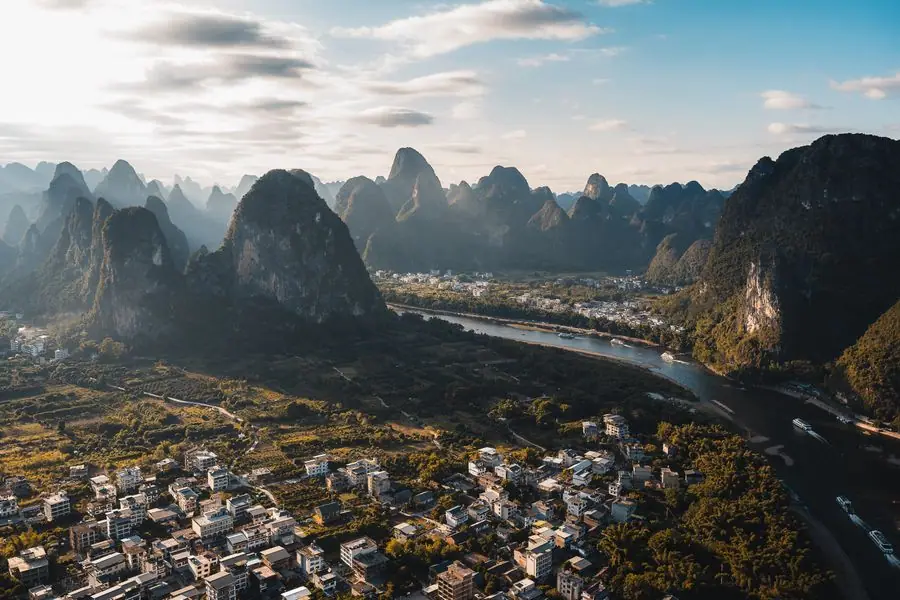
For visitors the city works as a base: two or three days for the old town, the mountain and the museums, then out into the karst — the Detian waterfall on the Vietnam border, the Guilin karst country and the Longji rice terraces are all day trips or overnighters from here.
One warning for expectations: Nanning is not Guilin. It is a working regional capital — pleasant, leafy, low-key and food-mad — whose own sights are few but genuinely enjoyable, and whose real job is feeding you the best noodles in southern China.
Best time to visit Nanning
Nanning sits on the Yong River plain in a subtropical zone: long, hot, humid summers, short mild winters and a long green shoulder season.
Budget for Nanning: hotels from $16 a night, average ticket $$7.6 — see the full cost breakdown, or start from a ready-made route.
Cuisine of Nanning
Signature dishes worth seeking out — prices are typical per-person or per-dish ranges, not fixed quotes.
-
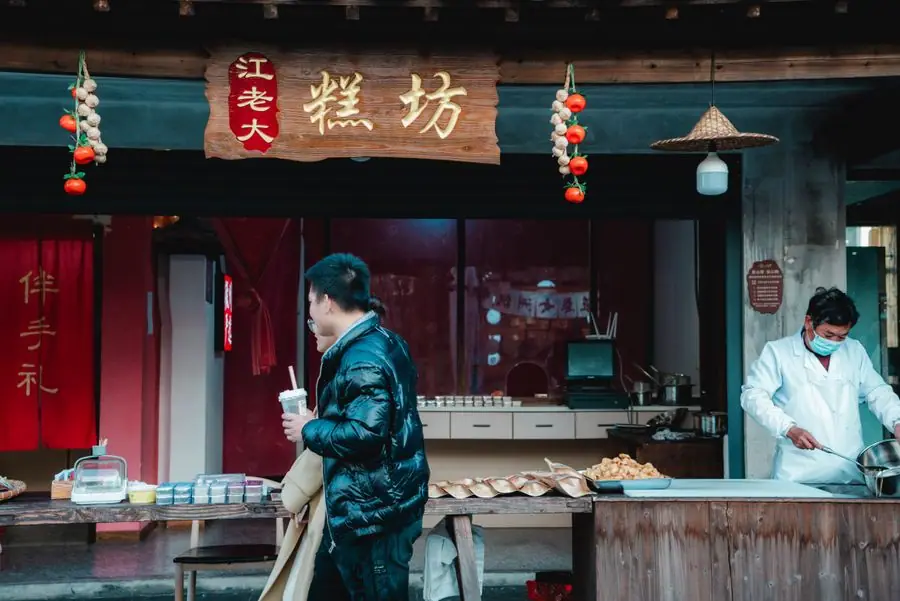
Old Friend noodles (Lao you fen)
The signature of Nanning: rice noodles in a soup fried first with sour bamboo shoots, black bean, garlic, chili and pork — pungent, sour and fiery, eaten by the bowl from breakfast on. Every neighbourhood has its lao-you shop, and every Nanning person has a favourite.
-
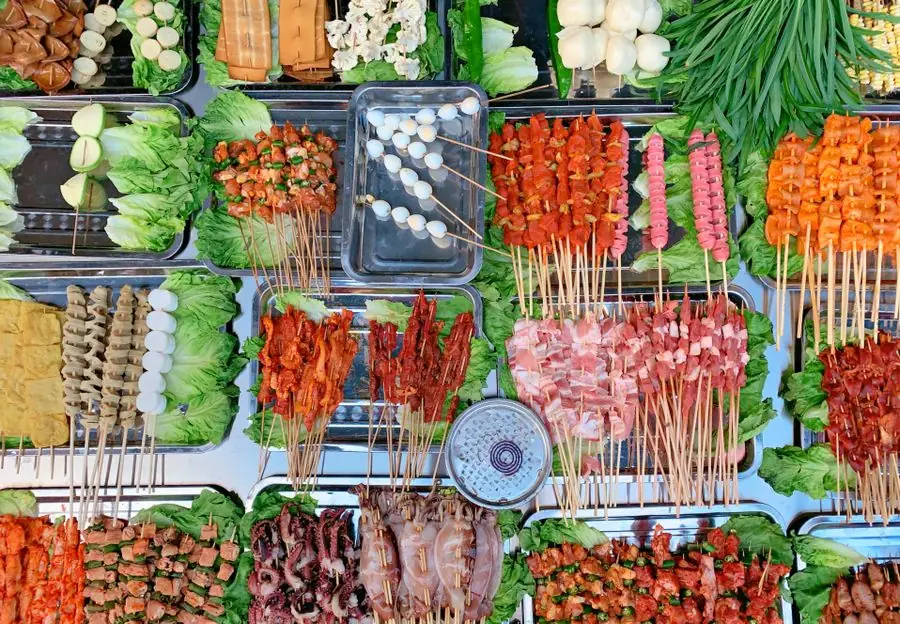
Lemon duck (Ning meng ya)
The Guangxi classic and a non-heritage dish: duck braised with pickled lemon, preserved plum and ginger — sour, fragrant and rich, a banquet dish from the Wuming highlands north of the city.
-
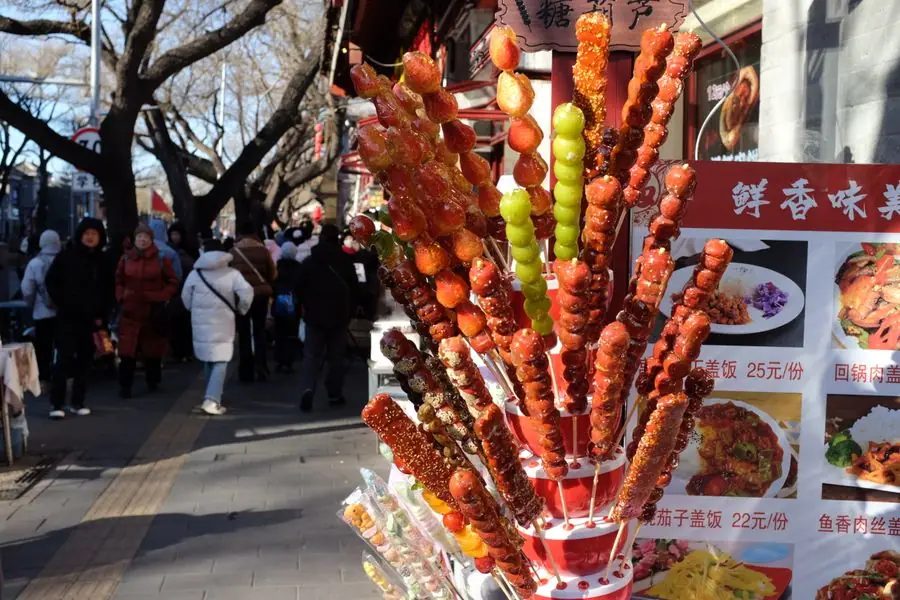
Raw-pressed rice noodles (Sheng zha mi fen)
The old Nanning breakfast: sour-fermented rice noodles pressed into the pot and served in a clear broth with minced pork, fried soybeans and scallion — the everyday bowl that locals rate above the famous one.
-
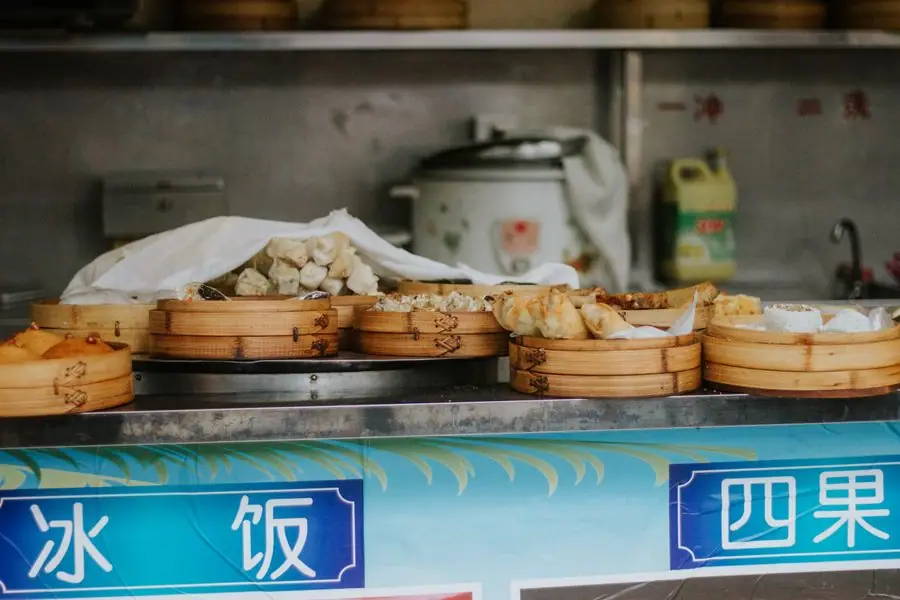
Rolled rice-noodle sheets (Juan tong fen)
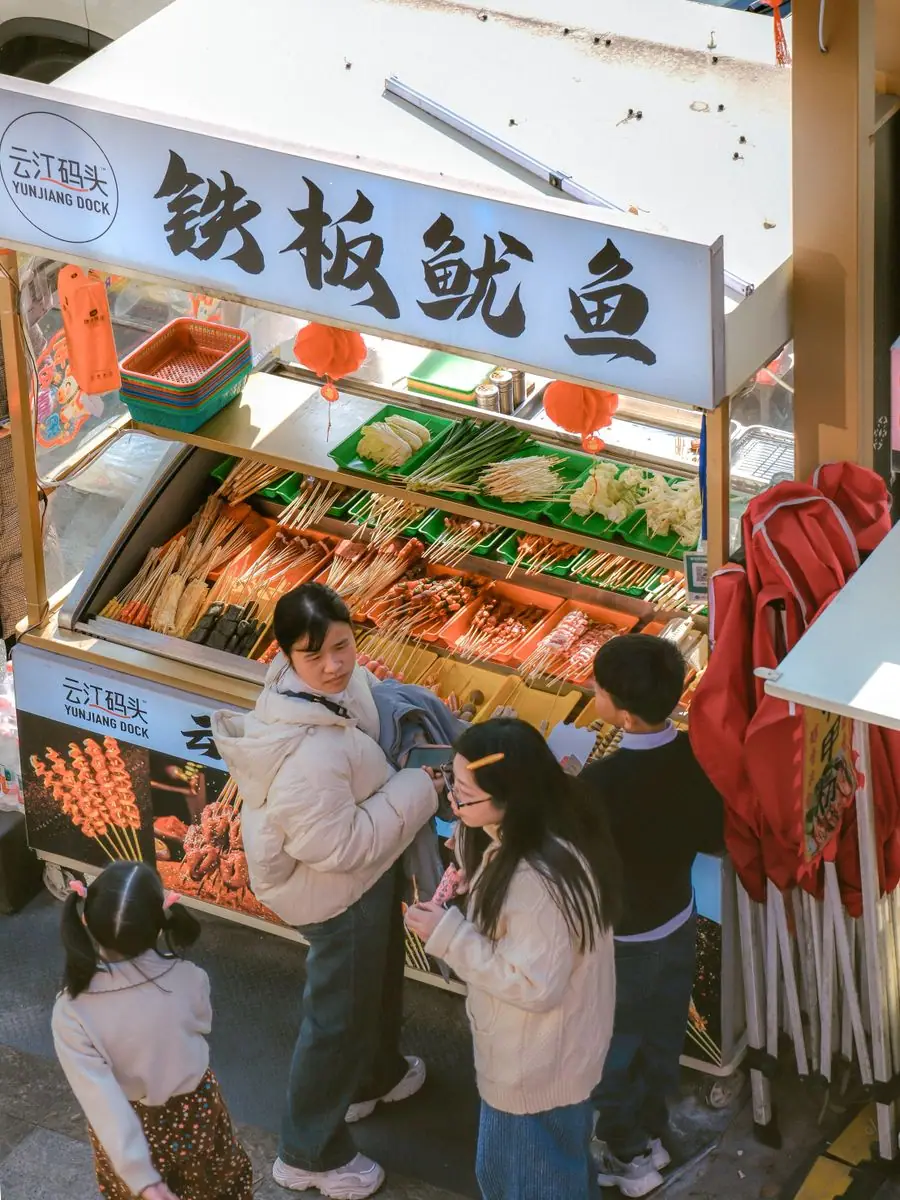
The street snack: sheets of rice noodle rolled around a filling of minced pork, wood-ear and egg, served with a soy-chili dip — eaten by the plate from the market stalls.
-
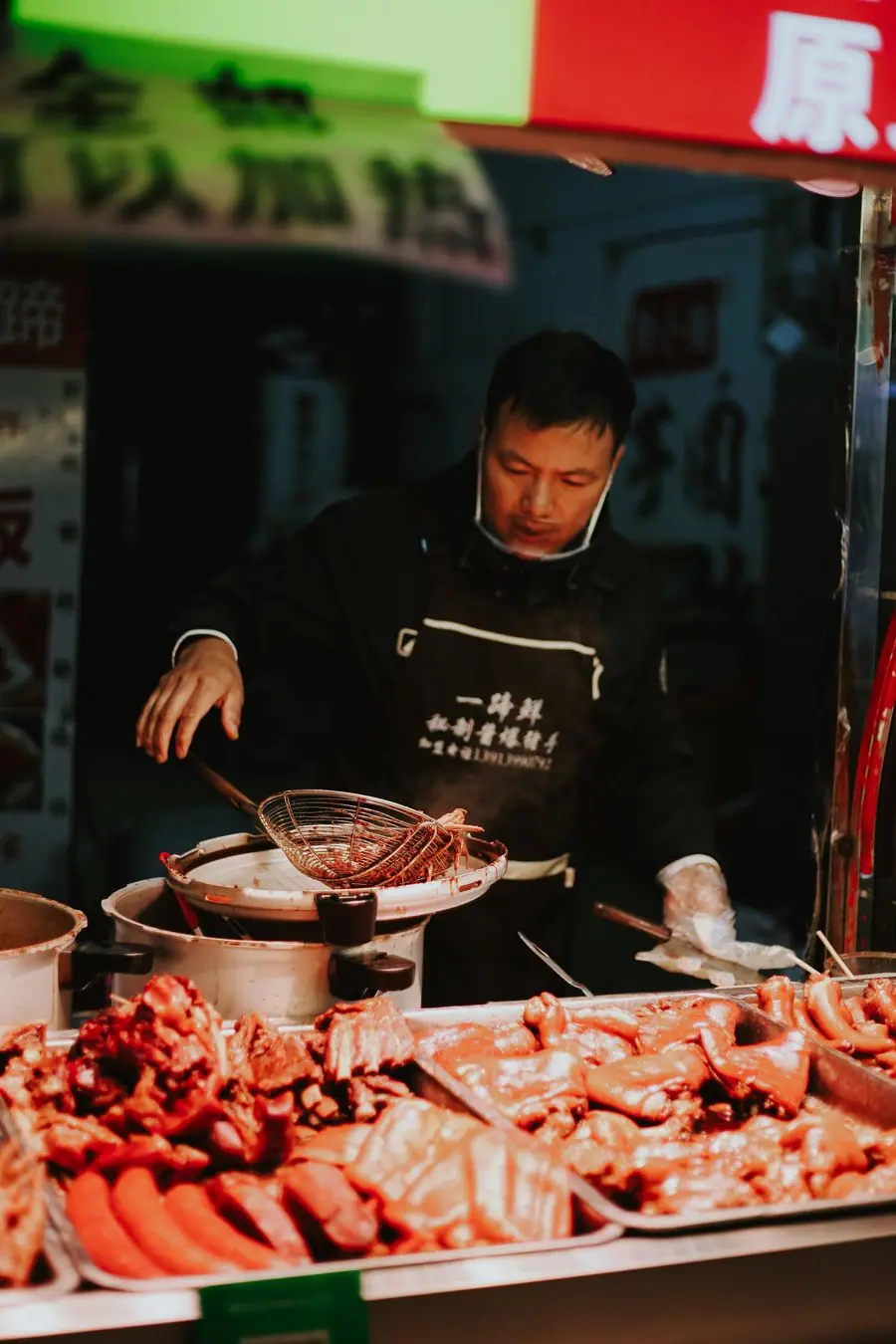
Pickled fruit (Suan ye)
The Guangxi street institution: mango, pineapple, plum and cucumber pickled with chili, salt and sugar in the sour-spicy-sweet register — sold by the bag from market stalls, the essential snack on a hot day.
Every major sight — with its own guide
Right after the food above, here are the sights — each one links to its own full guide (what to see, how to get there, facilities and the best season). Names follow each sight's official English signage.
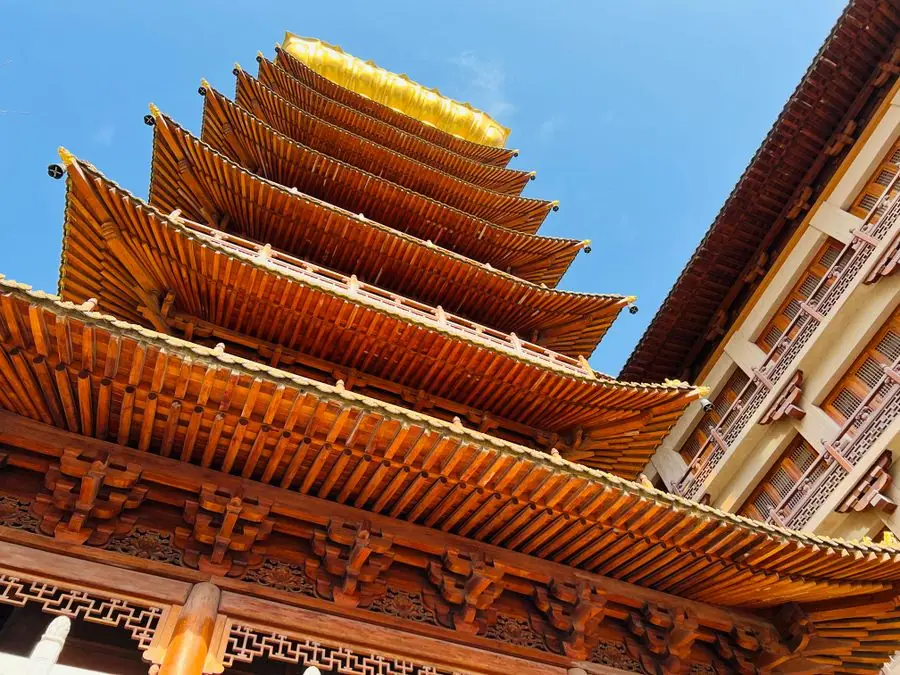
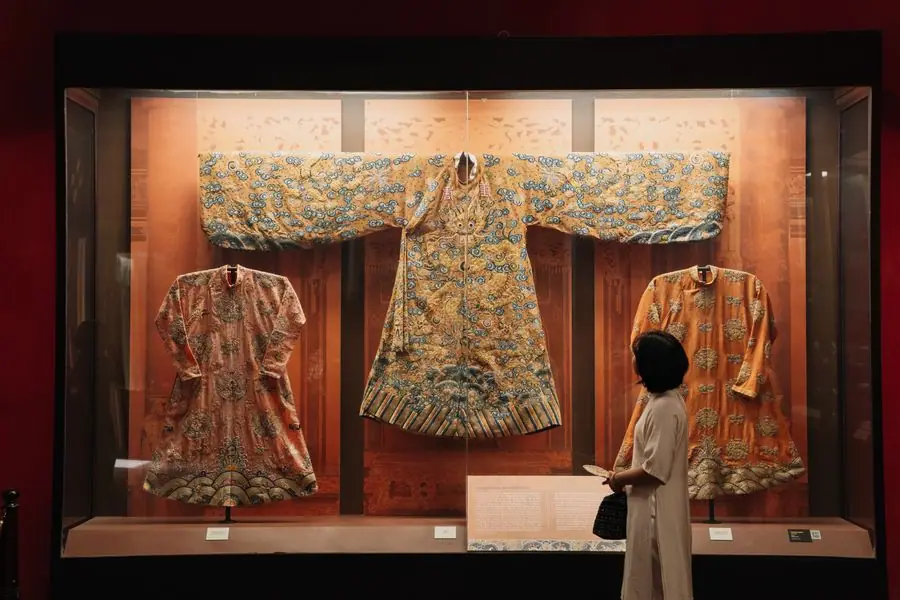
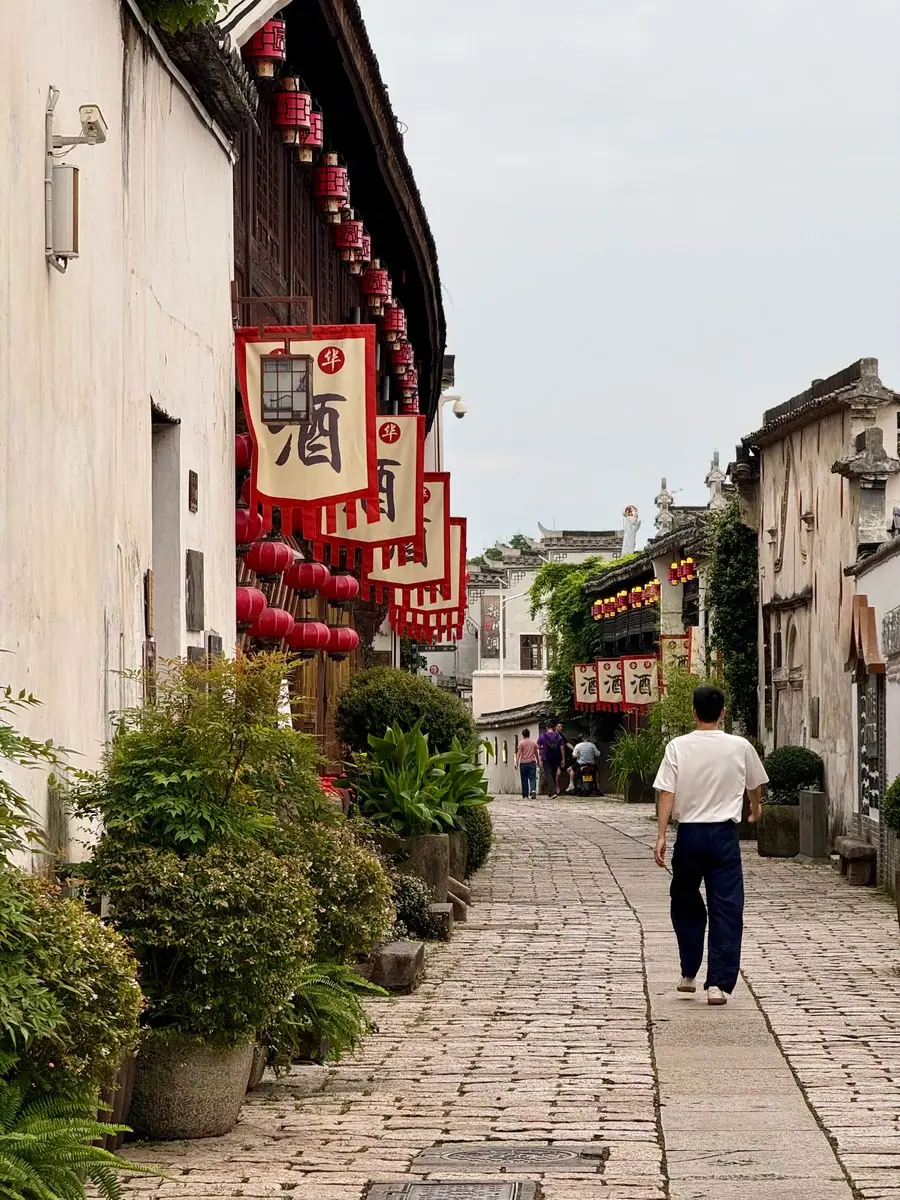
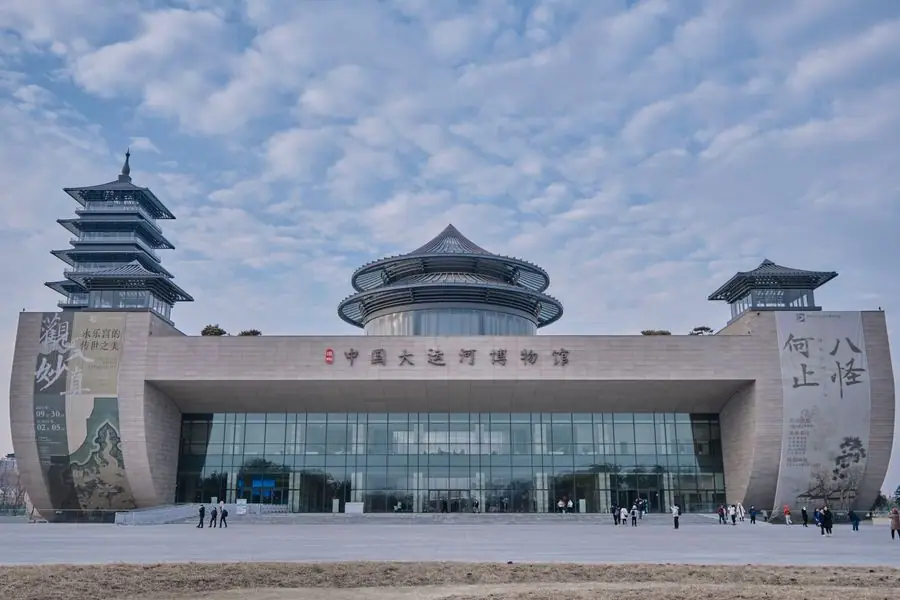
Minsheng pier, ~2 km S of the old town
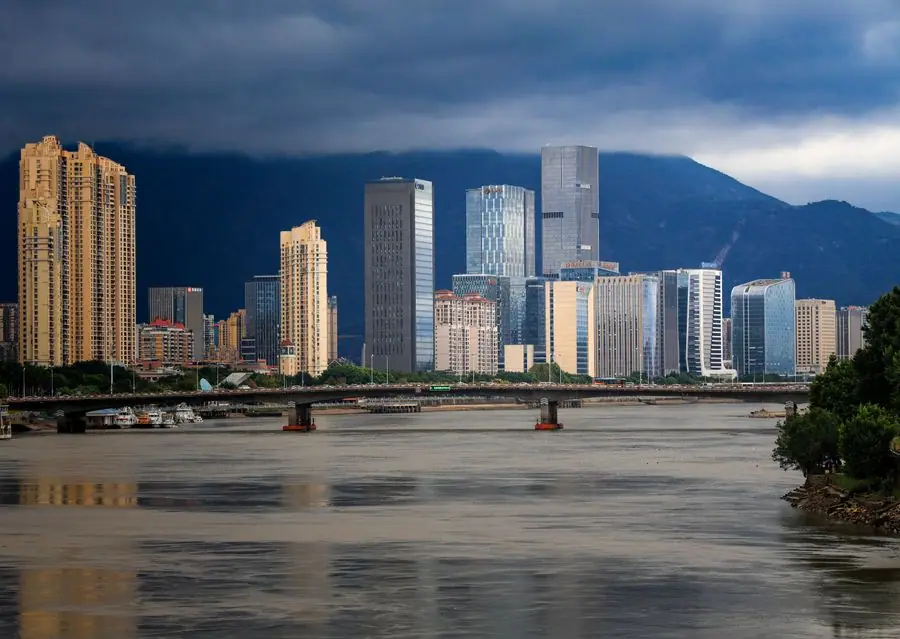
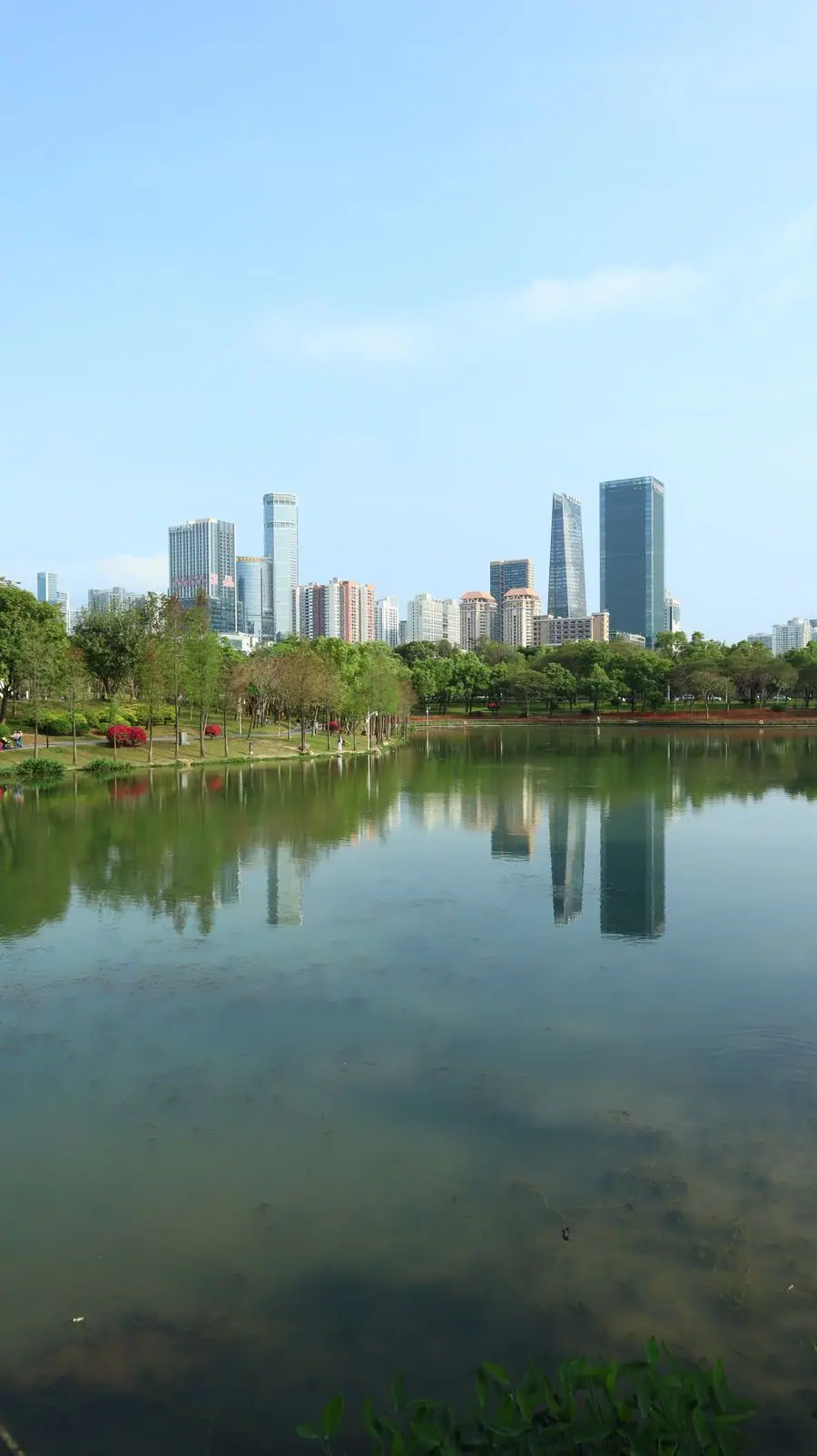
University East Road, Xixiangtang, ~8 km W

Jinhu, ~4 km E of the old town
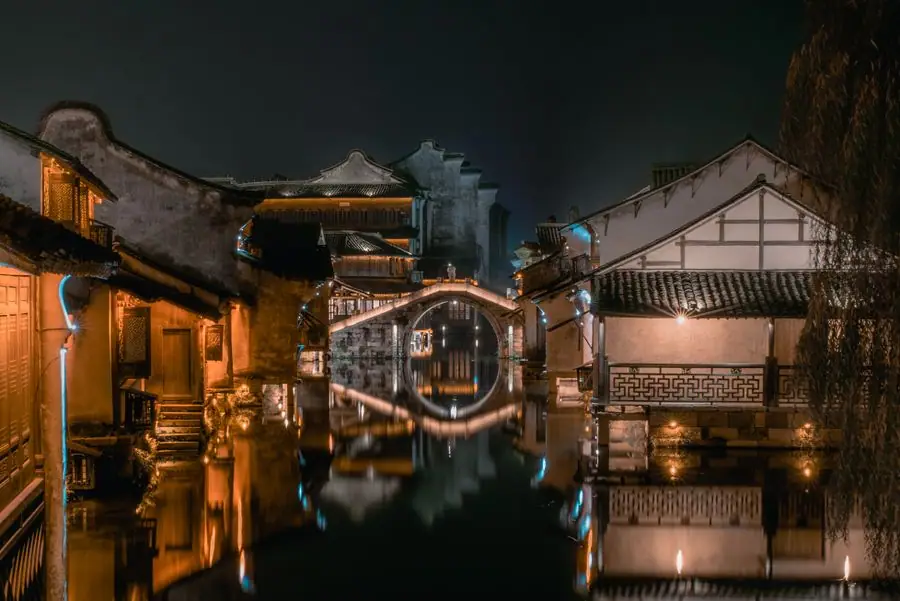
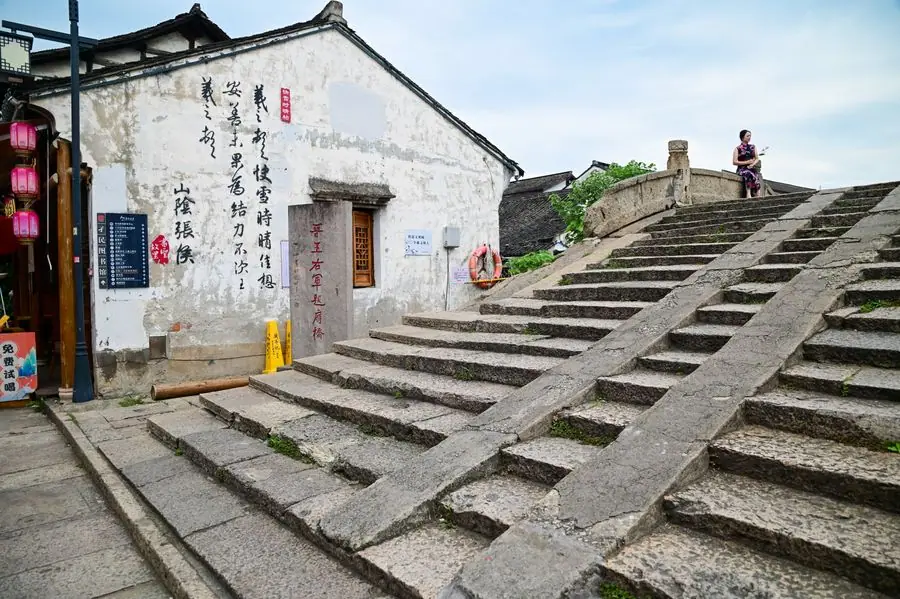
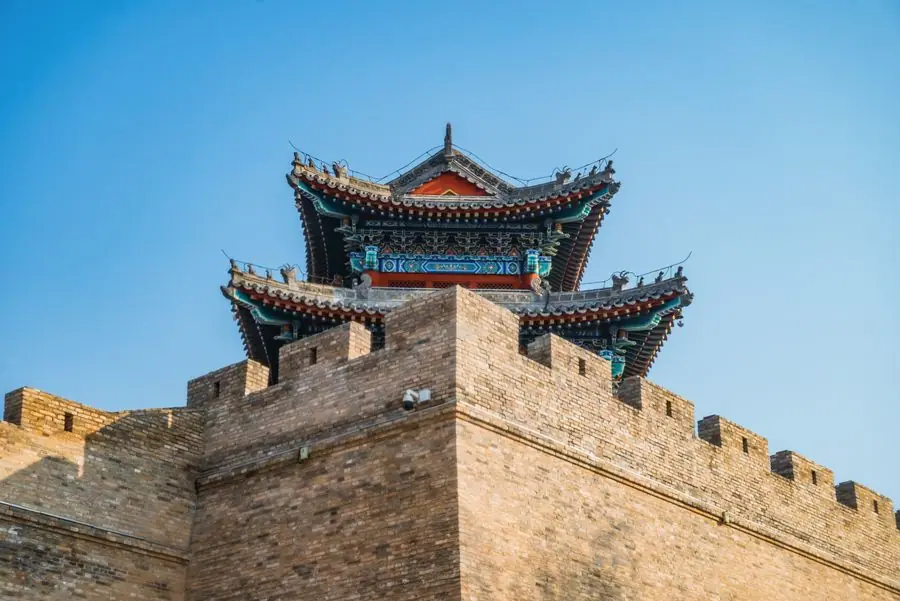
Liangjiang town, Wuming, ~76 km N
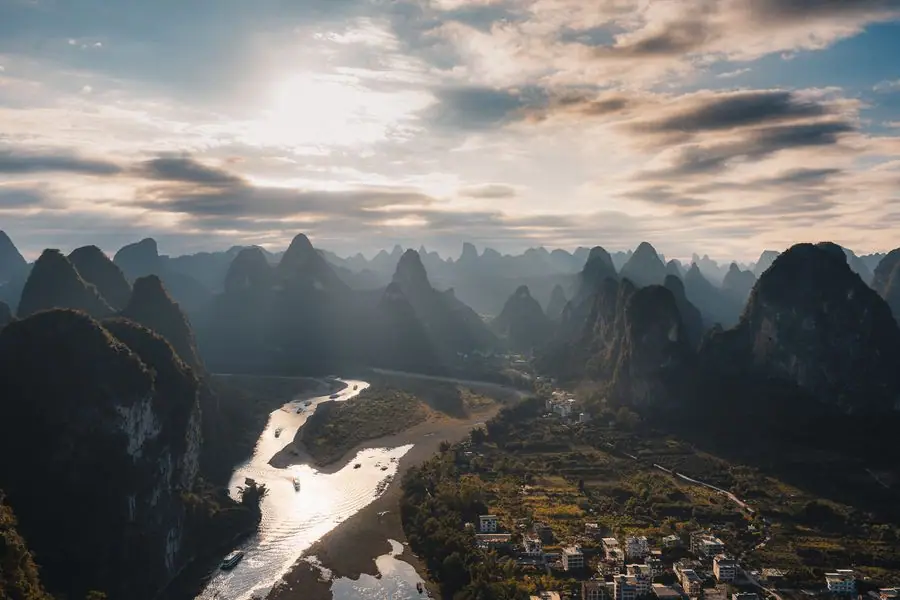
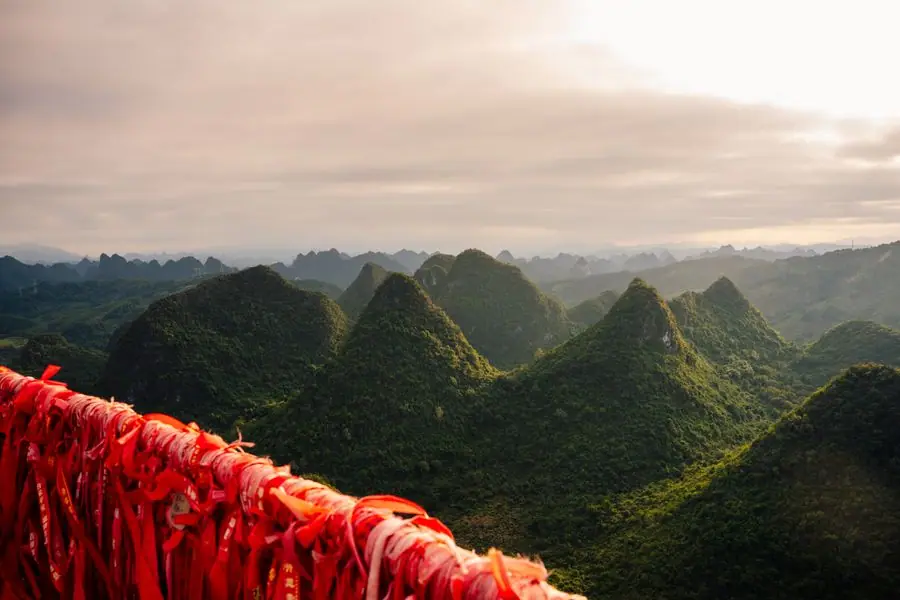
Where to stay in Nanning
Stay in the old town around Chaoyang Square and the Sanjie Liangxiang blocks — the historic sights, the metro lines and the food streets are all walkable. The Wuxiang new district (by the expo grounds and Nanning Night) has the newer business hotels; the Langdong area is the modern CBD.
Budget
$16–30 / nightChain hotels (Hanting, JI, 7 Days) around Chaoyang Square and the old blocks, plus guesthouses in the old town; clean doubles and foreign-passport registration is routine at the chains.
Mid-range
$39–78 / nightJI Hotel, Vienna and local full-service hotels in the old town and the Langdong CBD — the sweet spot, walkable or one metro stop from the sights.
Splurge
$92–184 / nightThe international chains in the Wuxiang and Langdong districts — pools, river views and the most comfortable beds in the city.
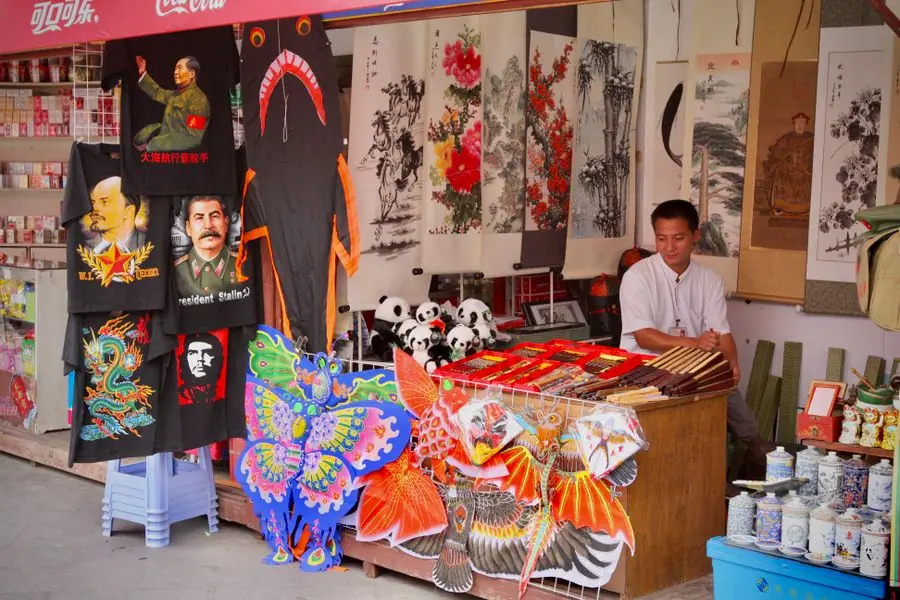
Souvenirs & local crafts
Easy to pack, easy to explain at customs — and far cheaper at a supermarket than at a scenic stall.
-

Zhuang brocade (Zhuang jin)
The weaving of the Zhuang people — geometric patterns in coloured cotton and silk on the old back-strap looms, sold as bags, wall hangings and cushion covers; the craft the Guangxi Museum of Nationalities documents.
-

Embroidered balls (Xiu qiu)
The Zhuang courtship symbol: twelve-panelled embroidered balls thrown by girls at the song fairs — now the souvenir of Guangxi, sold in every size from keyring to wall hanging.
-
Nixing pottery (Ni xing tao)
One of China's four famous potteries, from Qinzhou on the coast — a dark red-brown stoneware that becomes mirror-polished with use, sold as teapots and ornaments.
-
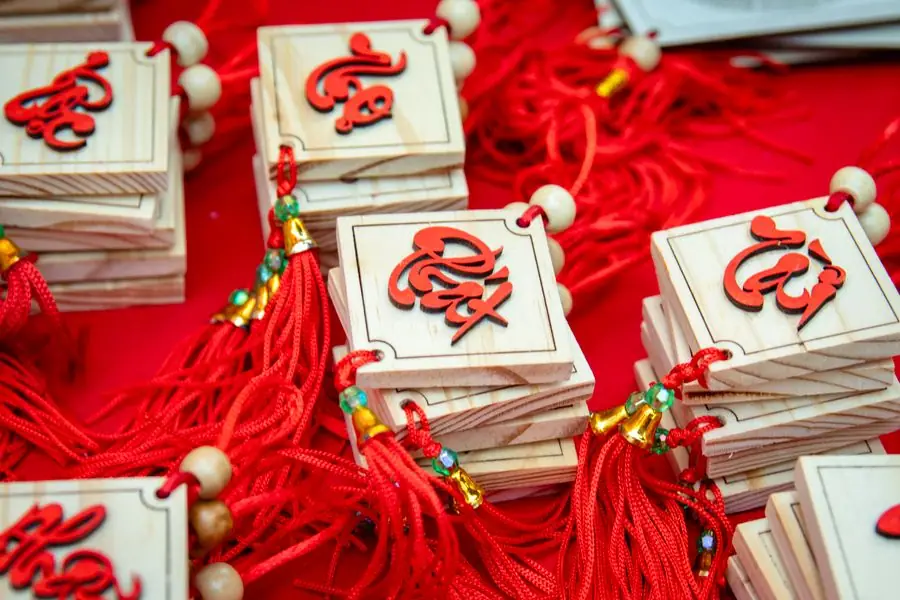
Liubao tea (Liu bao cha)
The dark tea of Guangxi, from Wuzhou — aged, earthy and brewed dark, the local answer to Pu'er and the traditional tea of the Zhuang and Yao hill villages.
-
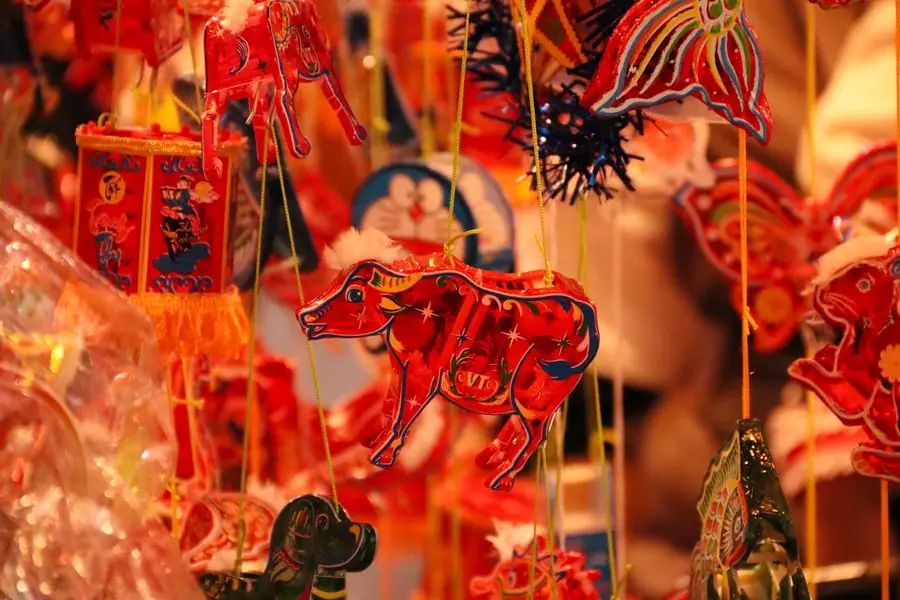
Jasmine tea (Mo li hua cha)
Guangxi is China's biggest jasmine-tea producer — the Hengzhou fields south of the city scent green tea over fresh flowers through repeated layers; the cheap, fragrant bulk tea is the local gift.
Getting around Nanning
Nanning is a metro city with a high-speed rail hub and a visa-free airport on the Vietnam corridor.
- High-speed rail
- Nanning station sits in the city centre, walkable to the old town; Nanning East is the high-speed hub, one metro stop from the centre. Guangzhou is about 3–4 h, Kunming about 4–5 h, Guilin about 2–2.5 h and Guiyang about 4–5 h by high-speed train.
- Long-distance bus
- City buses are cheap (about $0.15–0.30 / RMB 1–2) and cover the whole city; airport buses link Wuxu to the centre. Long-distance buses run to Detian waterfall, Yangmei and the county towns.
- Metro & bus
- Five lines operate (1–5), fares from about $0.28 (RMB 2); pay by tapping the Alipay or WeChat transit QR code. Line 1 runs north-south through the old town and the zoo, line 2 serves the Yong River and Chaoyang Square, and lines 3–4 cover the east and the new districts.
- Taxis
- Taxis are metered with a low flag fall (about $1.55 / RMB 11); the airport is about $14–21 (RMB 100–150) to the old town, Nanning station about $3–4 (RMB 20–30).
- Ride-hailing
- DiDi is the default for cross-town runs and the mountain sights — the practical way to reach Daming Mountain, Longhushan and Yilingyan.
- Shared bikes
- Shared bikes and e-scooters are everywhere — Nanning has one of the highest e-scooter counts in China, and they are the local way to cover the flat old town.
- Intercity carpool
Plan your 1, 2 or 3 days in Nanning
Pick the length of your stay. Each plan is its own page, anchored at the city centre and written from real traveller itineraries — including splits for sightseeing, shopping, landscape, families and older travellers.
Nanning in one day: the old town core
Dawn Old Friend noodles on the old blocks, the Sanjie Liangxiang lanes, the Guangxi Museum and Nanhu Park; finish at Mingge Lake or the Yongjiang cruise after dark.
Read the plan → 2-dayNanning in two days: old town + the green mountain
Day two runs the mountain: Qingxiu's dragon-elephant pagoda and its gardens in the morning, the Museum of Nationalities' bronze drums and ethnic village in the afternoon.
Read the plan → 3-dayNanning in three days: + the ancient town or the pass
Add a day out: Yangmei's Ming-Qing river town in the morning, or the Kunlun Pass battlefield and museum — both half a day from the city.
Read the plan →Frequently asked questions
- When is the best time to visit Nanning?
- March–May and October–November are warm and mostly dry. Summer is hot and thundery — good for the museums and the evening riverside; winter is mild, quiet and the cheapest for rooms.
- Do I need a visa for Nanning?
- Good news: Nanning Wuxu Airport is one of China's 240-hour visa-free transit ports, so eligible nationals (57 countries, transiting to a third country) can enter visa-free and stay up to 10 days within the policy area, which covers Nanning and 11 other Guangxi cities as well as 23 other provinces and regions. Otherwise arrange a Chinese visa in advance; check the current qualifying list with a consulate before booking.
- Is Nanning walkable?
- The old town is: Chaoyang Square, the Sanjie Liangxiang blocks, the Guangxi Museum and the Yong River all sit within a few kilometres, and the metro (lines 1–5) plus the city's shared e-scooters cover the rest. The mountains, the cave and the ancient town need buses, taxis or a tour bus.
- How much do the sights cost?
- Mostly nothing — the Sanjie Liangxiang blocks, Nanhu Park, Mingge Lake, Kunlun Pass and the museums are all free (reserve the big museums a day ahead). The paid ones are small: Qingxiu Mountain $2.82 (RMB 20), the zoo $7.04 (RMB 50), Yangmei town $2.11 (RMB 15), the Garden Expo Park $6.34 (RMB 45), Yilingyan cave $8.45 (RMB 60), Longhushan $9.86 (RMB 70) and the Yongjiang cruise from $6.48 (RMB 46). Daming Mountain is the outlier: $13.52 (RMB 96) plus the mandatory shuttle $11.27 (RMB 80).
- How many days do I need?
- Two days covers the old town, the mountain and the museums; add a third for the day trips — Yangmei's river town, the Kunlun Pass battlefield or the Garden Expo Park.
- Is Nanning worth a stop, or should I go straight to Guilin?
- Both. Nanning is the transport hub and the food capital — two days of old town, mountain, museums and noodles are genuinely enjoyable — and its trains make it the natural base for the Guangxi karst country: Guilin is 2–2.5 hours, Detian waterfall on the Vietnam border is a day trip, and the Longji rice terraces are an overnight run.
Page last reviewed: 2026-11-02.