Dalian Travel Guide 2026: The Sea Bridge, the Beaches and Port Arthur
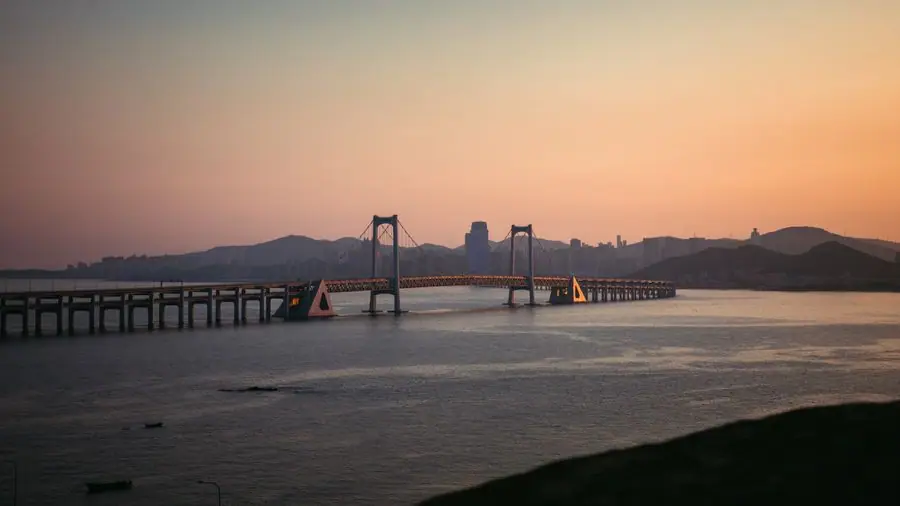
Dalian is the sea city of northeast China — a Russian-founded, Japanese-built port on the tip of the Liaodong peninsula, where the streets curve with the hills and the trams still run. The postcard is the Xinghai Square waterfront and the Xinghaiwan sea bridge; the coast delivers Silver-Beach sand at Jinshitan, the forested headland drive of Binhai Road, and the fishing-village cafés of the Fisherman's Wharf. An hour west lies Lushun — Port Arthur — where the 1894 and 1904–05 wars wrote half of China's modern history into the hills above the naval harbour. Below: the best time, the history, the food, where to stay, every major sight with its own guide, transport, and 1/2/3-day plans.

History & culture
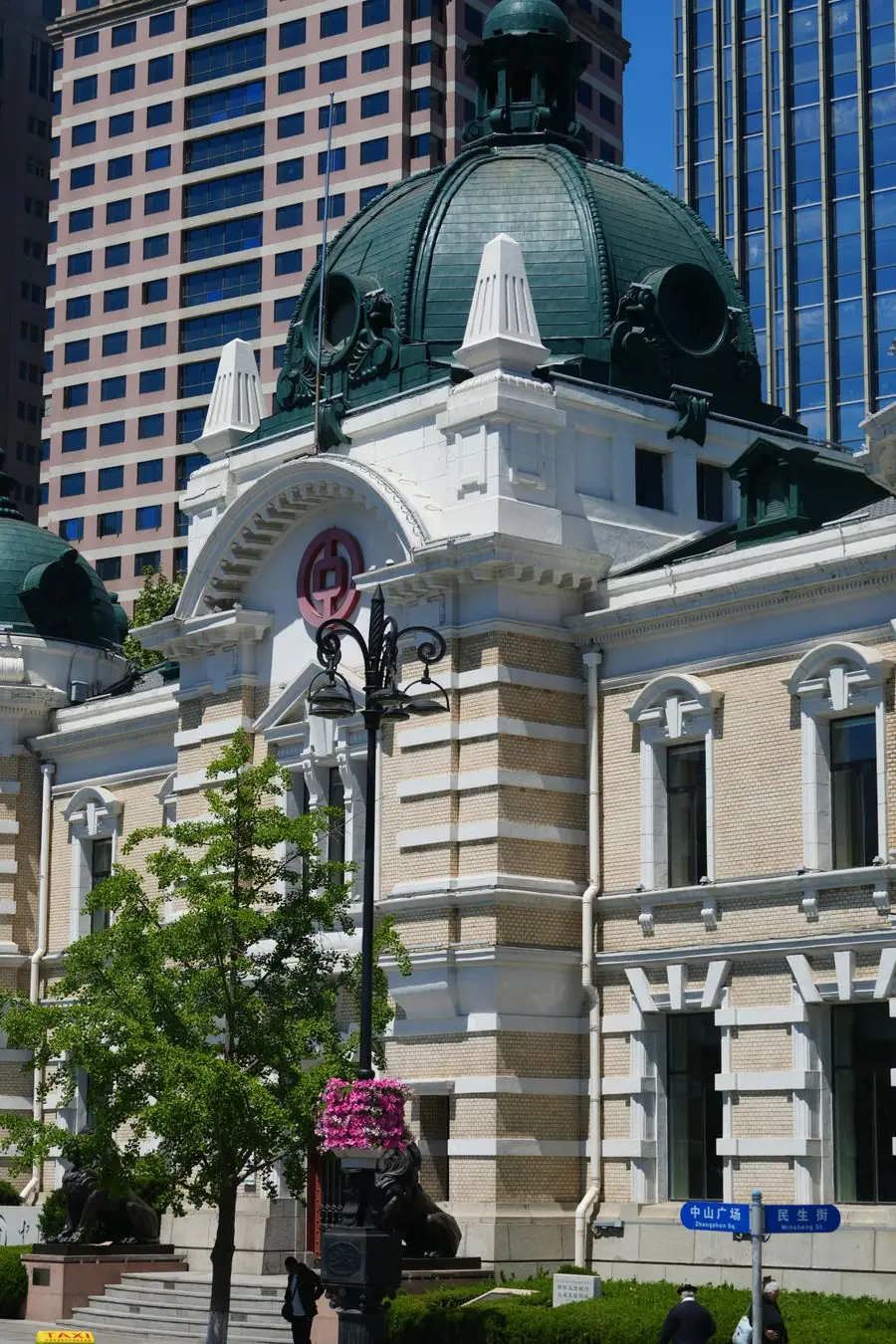
Dalian is a young city by Chinese standards — a fishing village until the Russians arrived in 1898 and built Dalny (Dalian) as their ice-free Pacific port, laying out the radial streets and the railway that still shape the city. After the Russo-Japanese War of 1904–05 the Japanese took the peninsula and rebuilt the port as Dairen, running it until 1945; the Soviet Union then held the port jointly until 1955. The Russian-era and Japanese-era layers — the circular Zhongshan Square with its ten styled bank buildings, the trams of 1909, the Sunjiatun villas of Lushun — are what the foreign visitor actually sees.
The deeper history is at Lushun, the naval harbour 45 km west that the world knew as Port Arthur. The 1894–95 war with Japan and the 1904–05 Russo-Japanese War were both decided here; the hill forts, the Baiyu Mountain lookout over the fleet anchorage, and the Russo-Japanese prison where the Japanese held their colonial prisoners tell the story that Chinese textbooks call 'half of China's modern history'.
The city grew again after 1984 as one of China's first coastal open cities: the shipyards, the Dalian Software Park and the petrochemical works of the new districts, and the beaches — Xinghai, Jinshitan, Bangchui — turned into the northeast's holiday coast. The trams, the squares and the hills are the old city; the sea bridge, opened in 2015, is the new one.
For visitors the city works on two levels: the central squares and the waterfront — Xinghai, Donggang, the Fisherman's Wharf — and the edges, the Binhai Road coast, Jinshitan and Lushun, each a half-day out.
Best time to visit Dalian
Dalian has a mild maritime climate for its latitude — summers cooled by the sea, winters cold but bearable, and a long comfortable shoulder season.
Budget for Dalian: hotels from $16 a night, average ticket $$14.19 — see the full cost breakdown, or start from a ready-made route.
Cuisine of Dalian
Signature dishes worth seeking out — prices are typical per-person or per-dish ranges, not fixed quotes.
-

Grilled squid (Tie ban you yu)
The Dalian street snack: squid grilled on an iron plate with the sweet-savoury sauce, squeezed with lemon — sold by the piece on the food streets and at the beaches; the iron-plate squid stall is the city's late-night institution.
-
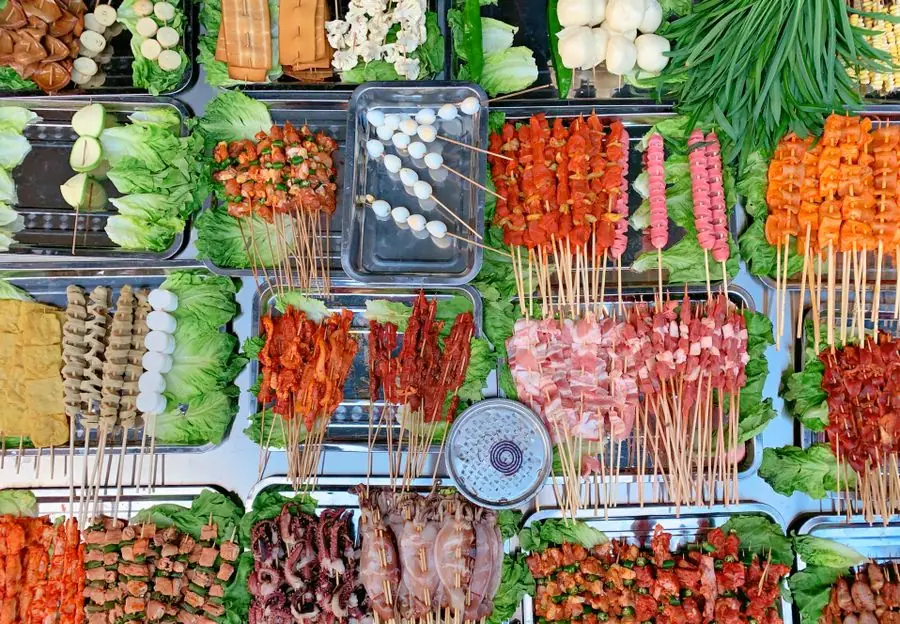
Sea-urchin dumplings (Hai dan shui jiao)
The Dalian banquet dish: the roe of the local sea urchin wrapped into dumplings with pork — sweet, briny and the signature of the city's seafood kitchens; the Changxianlou restaurant made its name with them.
-
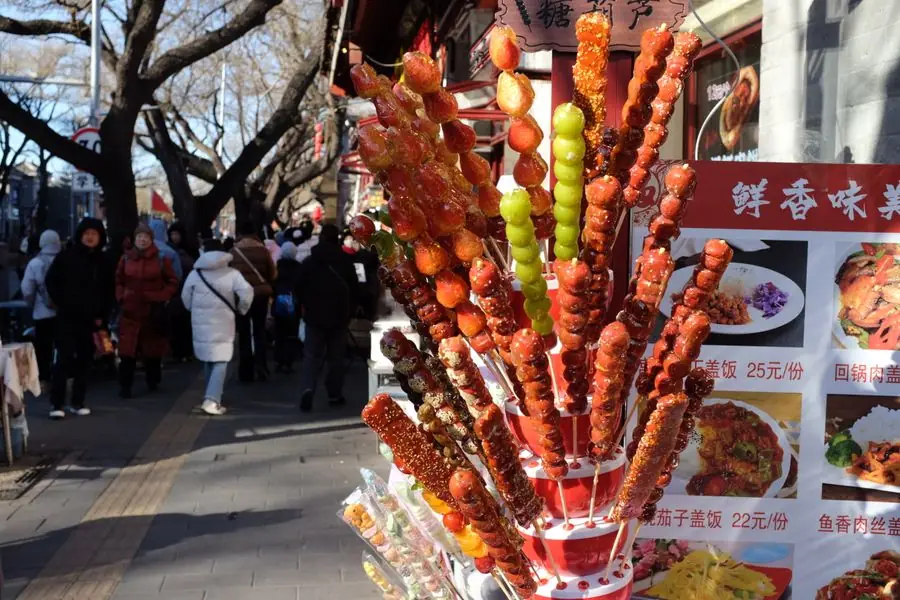
Seafood noodles (Hai xian mian)
The home bowl: wheat noodles in a clear broth with clams, shrimp and cabbage — the simple Manchurian-coastal staple, eaten at the market breakfast stalls from early morning.
-

Salted fish cakes (Xian yu bing zi)
The old fisherman's food: salted fish baked with corn cakes over the fire — the peasant-and-fishing cooking of the Liaodong coast, now a heritage dish in the old-town restaurants.
-
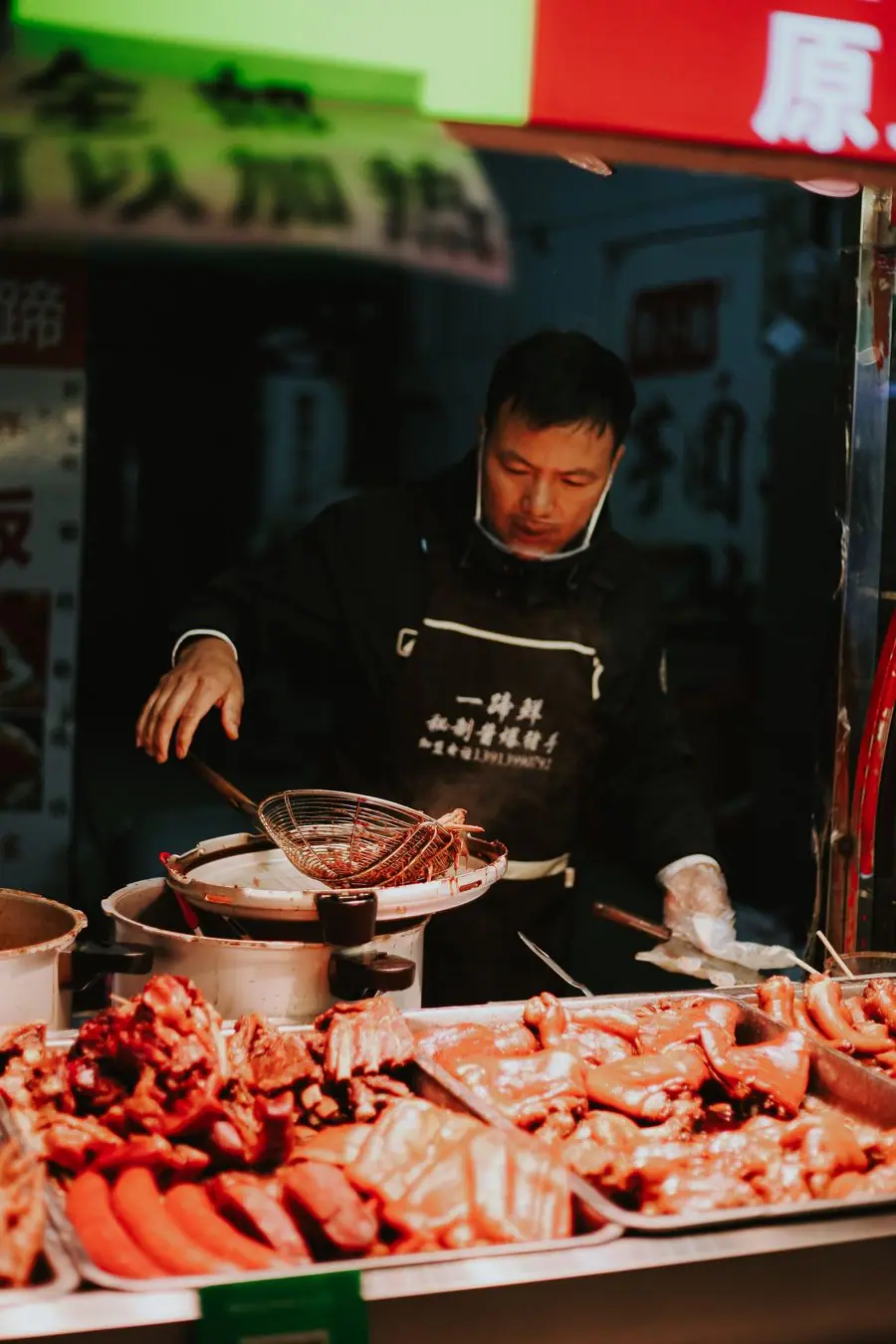
Dalian cherries (Ying tao)
The regional fruit: the small, hard cherries of the Liaodong hills, at their cheapest in early summer — sold by the basket at the markets and along the roads out of town.
Every major sight — with its own guide
Right after the food above, here are the sights — each one links to its own full guide (what to see, how to get there, facilities and the best season). Names follow each sight's official English signage.
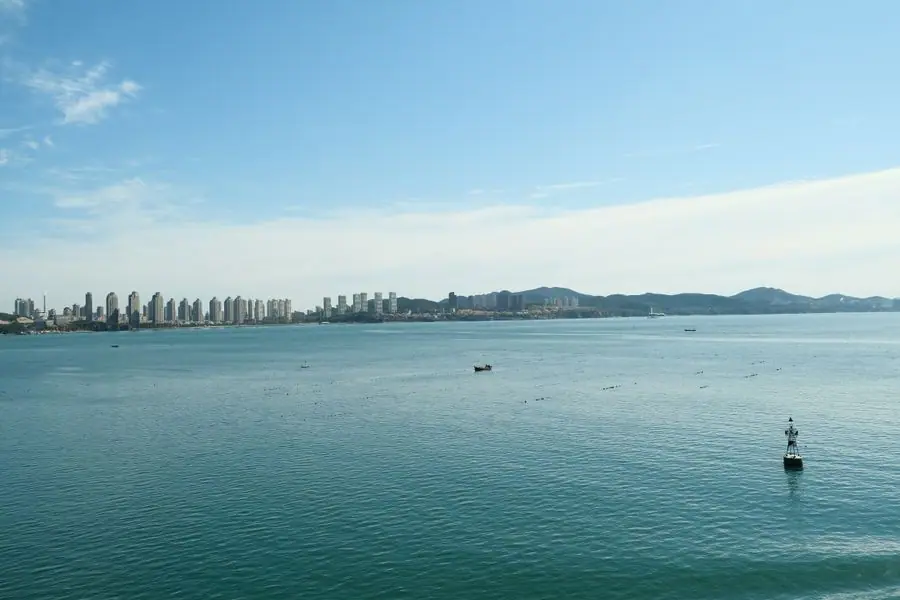


Lushun, ~45 km W

Lushun Museum 旅顺博物馆
The museum of Lushun in the old Russian-era quarter of Sungou: a national first-grade museum founded in 1917 in the Japanese-colonial museum building, holding the bronzes, the Buddhist sculptures, the ancient-coin and the Xinjiang-mummy collections for which it is famous — with the Sino-Soviet Friendship Tower and the Victory Tower on the square outside.
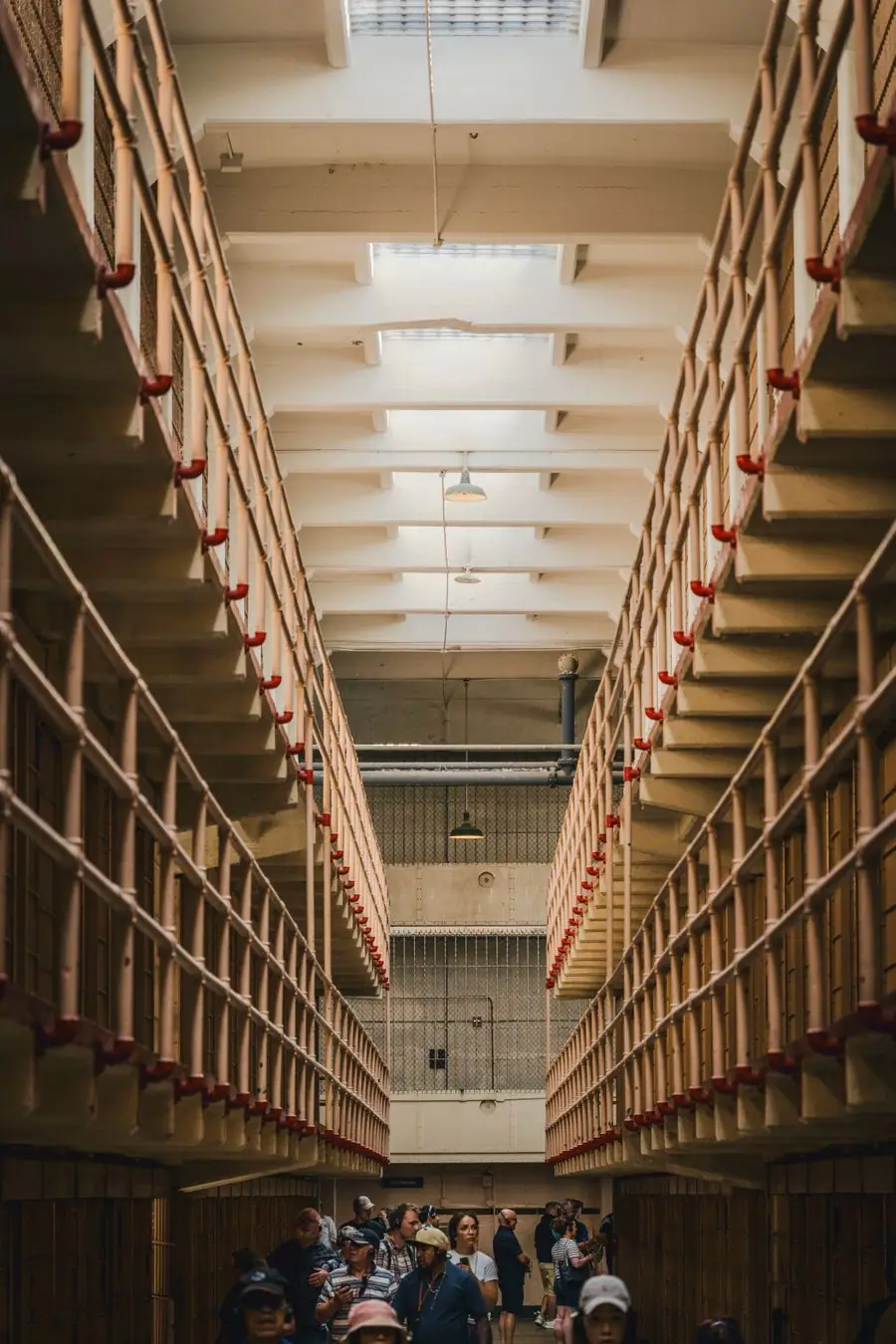
The Russo-Japanese Prison Site 旅顺日俄监狱旧址博物馆
The colonial prison built by Russia in 1902 and expanded by Japan until 1945 — the most complete prison complex of its kind in China, where the cells, the solitary dark rooms, the workrooms and the execution yard held the Korean patriot An Jung-geun and the Chinese and Korean resistance of the half-century. Now a sobering museum and patriotic-education site.
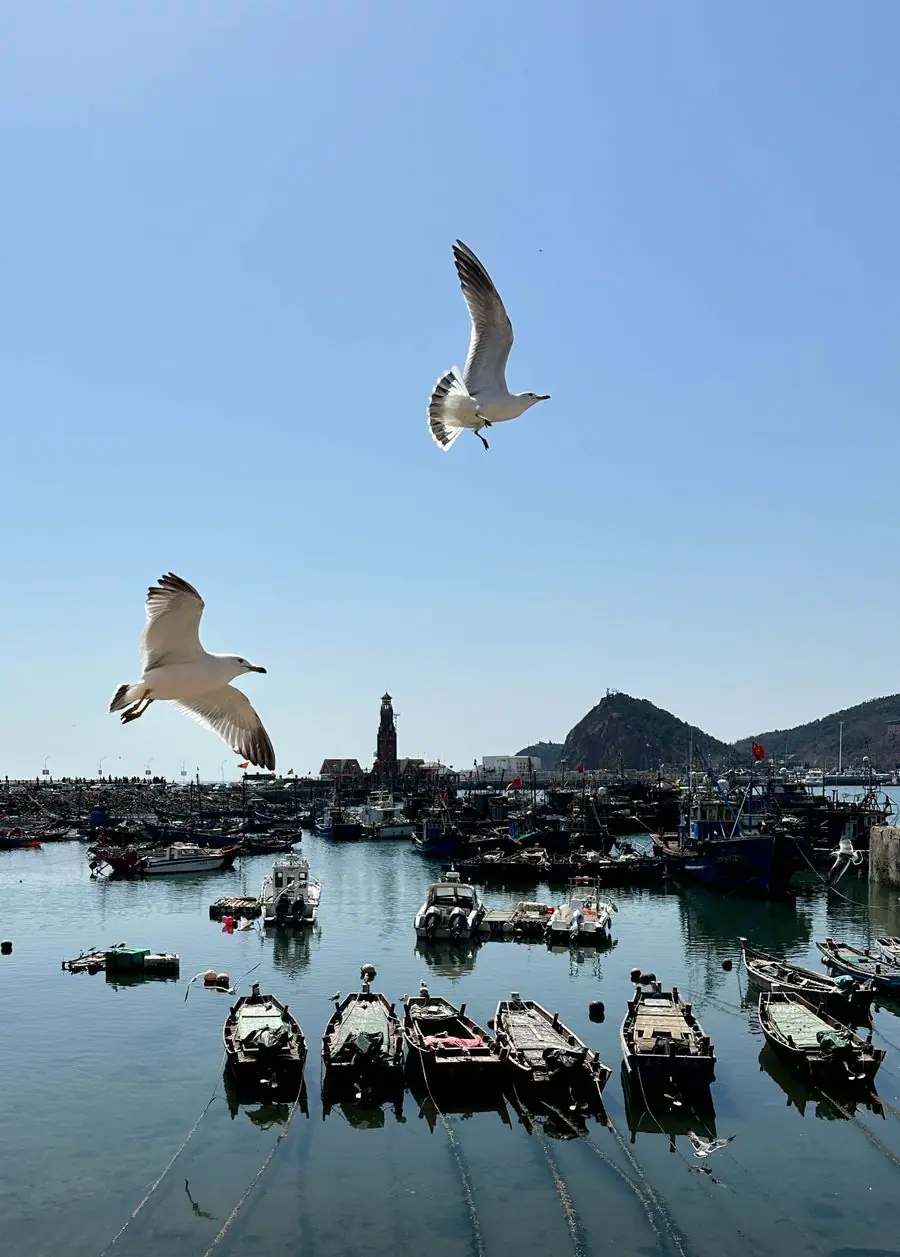
Baiyu Mountain & the Naval Harbour 旅顺白玉山
The hill above Lushun's naval harbour — the 'White Jade Mountain' that is the town's landmark: climb the 499 steps or take the cable car to the top for the panorama over the fleet anchorage and the Tiger's Tail peninsula, with the Japanese-era Baiyu Mountain Tower (the former 'Loyalty Tower') on the summit and the naval-armament museum halfway up.


Where to stay in Dalian
Stay around Zhongshan Square and Qingniwaqiao — the old-town centre, the metro lines and the train station are all here, and the food streets are walkable. The Xinghai Square side has the sea-view hotels and the nightlife; Donggang has the newer business chains; Laohutan and the Fisherman's Wharf suit a beach evening; Jinshitan works only for a Discoveryland day.
Budget
$16–30 / nightChain hotels (Hanting, JI, 7 Days) around Qingniwaqiao and the station, plus guesthouses in the old town; clean doubles, and foreign-passport registration is routine at the chains.
Mid-range
$39–78 / nightJI Hotel, Vienna and local full-service hotels by Zhongshan Square and the Xinghai strip — the sweet spot, walkable or one metro stop from the sights.
Splurge
$92–184 / nightThe international chains in Donggang and the sea-view hotels on the Xinghai and Bangchui strips — pools, gulf views and the most comfortable beds in the city.
Souvenirs & local crafts
Easy to pack, easy to explain at customs — and far cheaper at a supermarket than at a scenic stall.
-

Dried scallops and shrimp (Gan bei)
The classic Beihai-style gift of the north: dried scallops, peeled shrimp and squid from the Yellow Sea, packed by weight at the seafood markets — the soup-base of the local kitchen, easy to carry.
-

South-Liaoning pearls (Zhen zhu)
The pearls of the northern coast — the Dalian and Yingkou oyster farms' akoya and freshwater strands, sold as necklaces and loose stones; the quality varies, so buy sealed packs.
-
Shell and coral carvings (Bei ke ke shi)
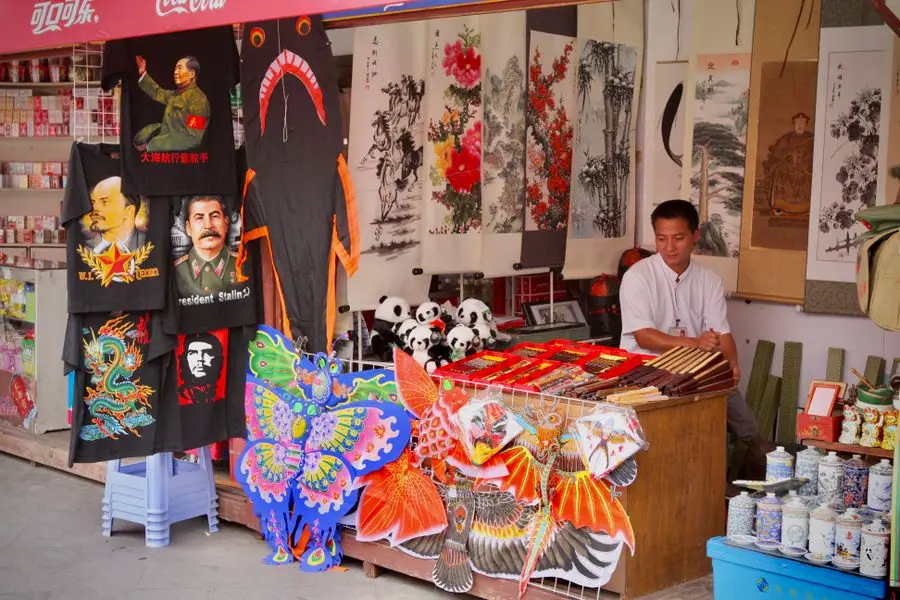
Carved shell, coral substitutes and the black-stone (Heiya stone) trinkets of the Liaodong workshops — small fish, dolphins and the harbour terraces as desktop pieces.
-
Cherry products (Ying tao chan pin)
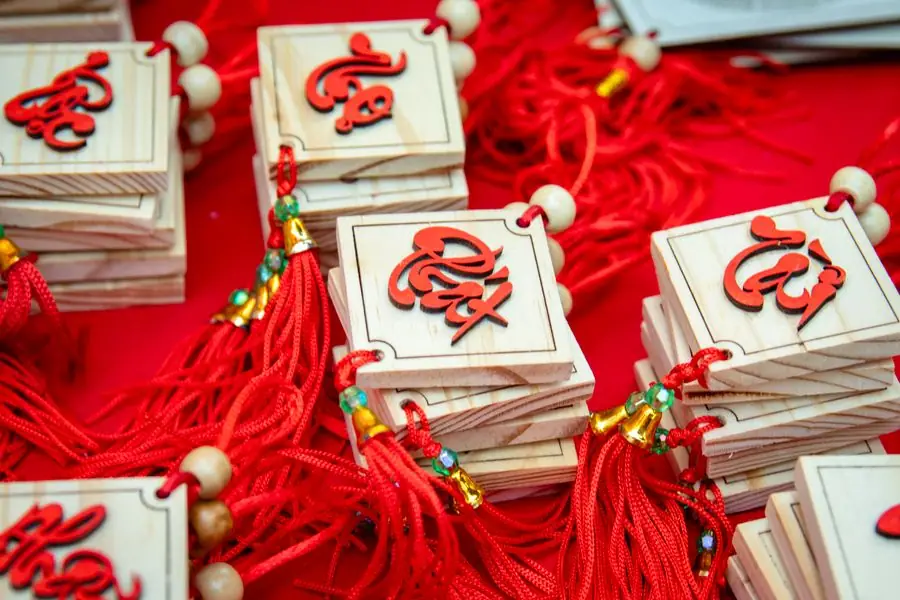
Cherry wine, dried cherries and cherry jam from the Liaodong orchards — the regional gift of early summer.
-
Russian-style matryoshka and lacquer (E luo si qi pin)
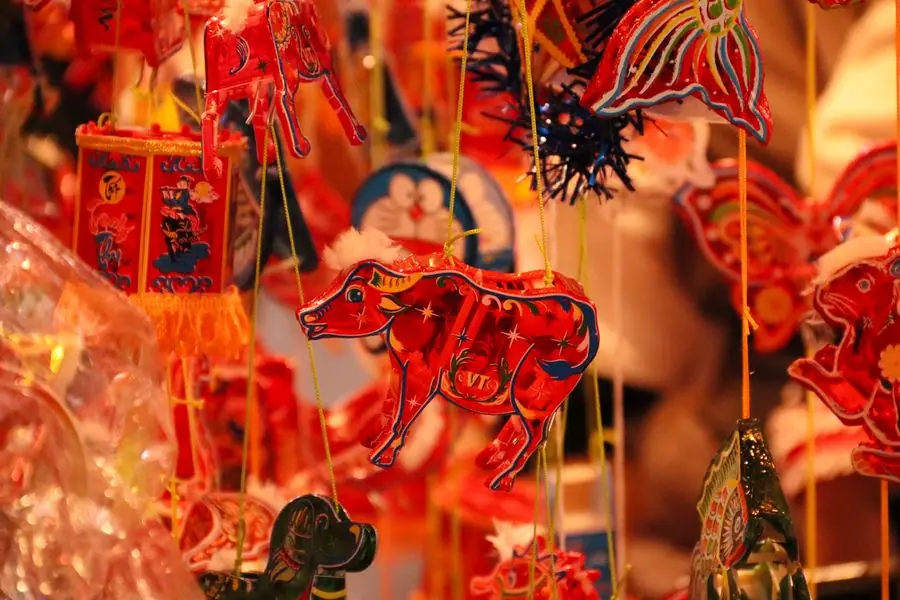
The nesting dolls, lacquer boxes and Russian sweets of the border trade sold along the Russian Street — the souvenir of the city's Russian century.
Getting around Dalian
Dalian is a hill city of metros, trams, buses and taxis, with high-speed rail and a visa-free airport.
- High-speed rail
- Dalian North and Dalian stations are on the coastal high-speed corridor: Shenyang about 1.5–2 h, Dandong about 2 h, Beijing about 4.5–6 h and Changchun about 3.5 h.
- Long-distance bus
- City buses are cheap (about $0.15–0.30 / RMB 1–2) and cover the whole city including Xinghai, Laohutan and Bangchui; tap the Alipay or WeChat transit QR code.
- Metro & bus
- Metro lines 1, 2 and 12 run through the city (line 1 to Xinghai Square, line 12 to Lushun), and light-rail line 3 runs out to Jinshitan — fares from about $0.28 (RMB 2).
- Taxis
- Taxis are metered with a low flag fall (about $1.55 / RMB 11); the airport is about $14–21 (RMB 100–150) to the centre, Dalian station about $5–7 (RMB 35–50).
- Ride-hailing
- DiDi is the default for the Binhai Road viewpoints, Bangchui Island and the Lushun sights.
- Shared bikes
- Shared bikes cover the flat centre and the Xinghai promenade; the hill coast and the Binhai Road need a vehicle.
- Intercity carpool
Plan your 1, 2 or 3 days in Dalian
Pick the length of your stay. Each plan is its own page, anchored at the city centre and written from real traveller itineraries — including splits for sightseeing, shopping, landscape, families and older travellers.
Dalian in one day: the squares and the waterfront
Morning on Zhongshan Square and the Russian Street, the trams through the old town, then Xinghai Square in the afternoon and the Xinghaiwan bridge and Donggang water city at dusk.
Read the plan → 2-dayDalian in two days: + the coast and the ocean parks
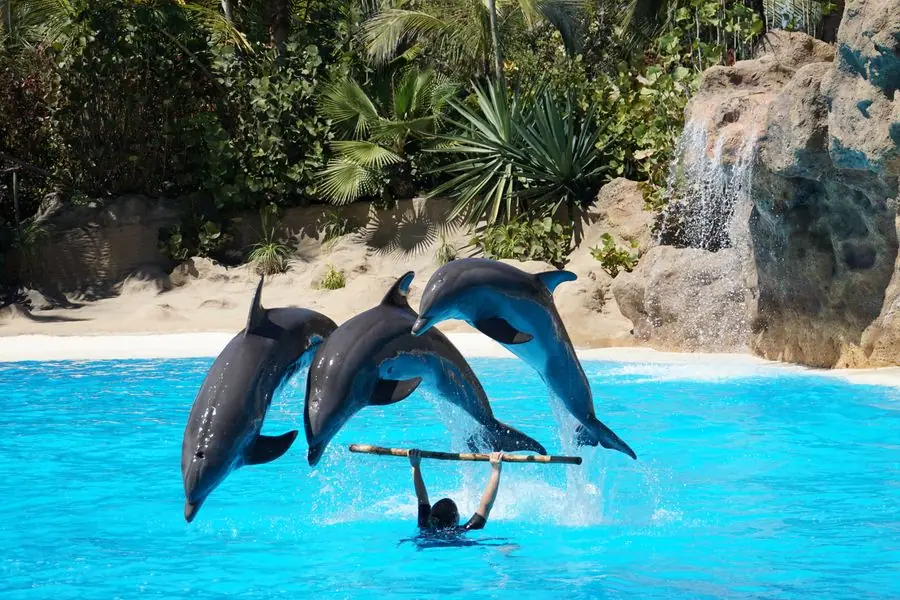
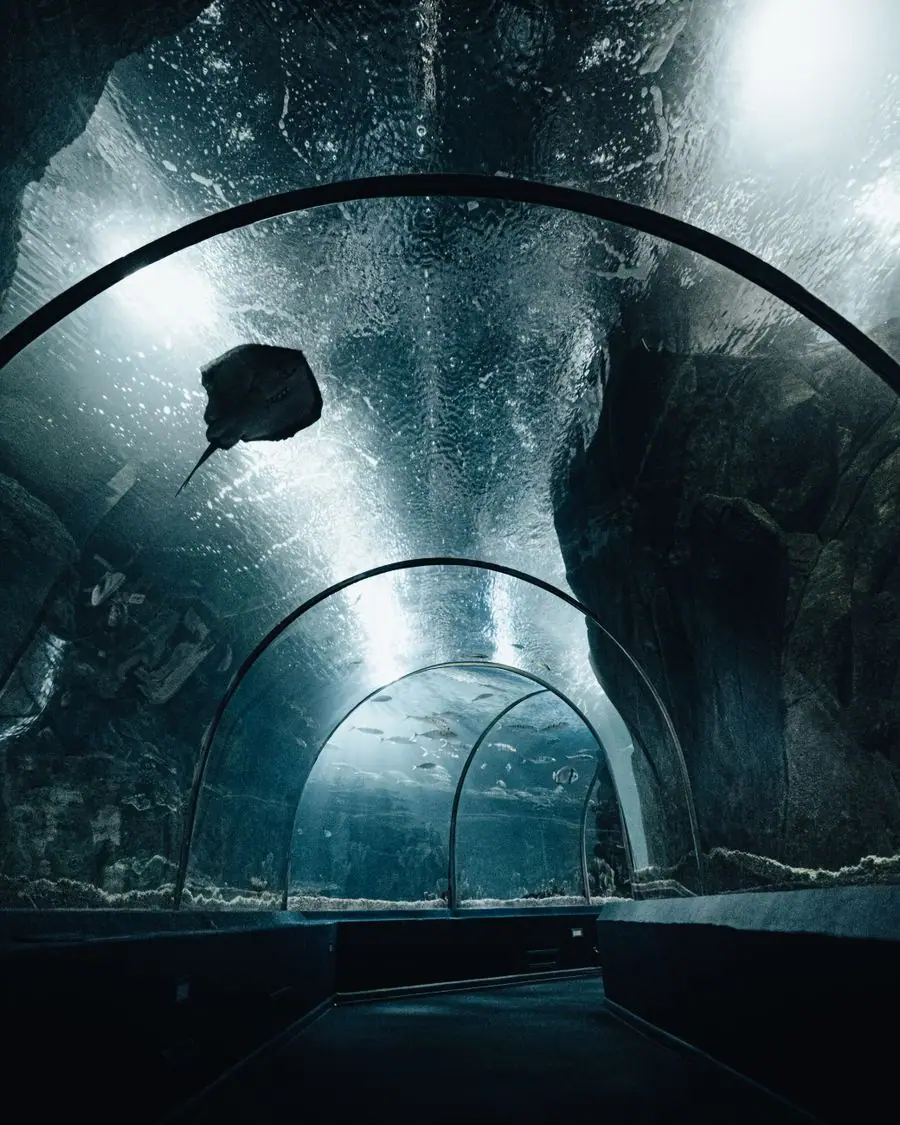
Day two runs the coast: the Binhai Road viewpoints, the Forest Zoo cableway, Bangchui Island's beach, and the Laohutan Ocean Park or the Fisherman's Wharf at sunset.
Read the plan → 3-dayDalian in three days: + Jinshitan and Lushun
Day three splits: Jinshitan's golden rocks and Discoveryland on the north-east light rail, or the Lushun day west — Baiyu Mountain, the museum, the prison and the Laotie Mountain cape.
Read the plan →Frequently asked questions
- When is the best time to visit Dalian?
- May–October — warm, breezy and made for the coast; June–September for swimming, late April for the Lushun cherry blossom, autumn for the clearest light. Winter is cold and windy but the cheapest.
- Do I need a visa for Dalian?
- Good news: Dalian Zhoushuizi Airport and the Dalian seaport are both 240-hour visa-free transit ports, so eligible nationals (57 countries, transiting to a third country) can enter visa-free and stay up to 10 days in Liaoning province. Otherwise arrange a Chinese visa in advance; check the current qualifying list with a consulate before booking.
- How much do the sights cost?
- The city's public face is free — Xinghai Square, Zhongshan Square, the Russian Street, the Binhai Road, Donggang and the Fisherman's Wharf. The paid ones: the Laohutan Ocean Park $29.58 (RMB 210), Sunasia $28.87–33.80 (RMB 205–240), Discoveryland from $20.28 (RMB 144), the Forest Zoo $16.90 (RMB 120), the Jinshitan geology park $8.45 (RMB 60), Baiyu Mountain $5.63 (RMB 40), Bangchui Island $5.63 (RMB 40) and the Laotie Mountain boundary $2.82–3.52 (RMB 20–25). The Lushun Museum and the Russo-Japanese prison are free.
- How do I get to Lushun (Port Arthur)?
- Metro line 12 runs from the city to Lushun (about 50 minutes), or take a taxi or DiDi (about $28–42 / RMB 200–300, 45 km west). The sights are spread — Baiyu Mountain, the museum, the prison and the cape — so a taxi for the day is the practical way.
- How many days do I need?
- Two days covers the old town, the waterfront and the ocean parks; three adds Jinshitan and the Lushun history day, which is the one half of the city a first-time visitor should not miss.
- Is Dalian walkable?
- The centre is hilly but compact — Zhongshan Square, the Russian Street and the trams are walkable, and metro line 1 reaches Xinghai. The coast, Jinshitan and Lushun need the metro, buses, taxis or the light rail.
Page last reviewed: 2026-11-02.