Longji Rice Terraces 2026: Tickets, Best Villages & How to Get There
The Longji Rice Terraces are Guangxi's mountain masterpiece, two hours north of Guilin. Learn the Jinkeng and Ping'an areas, the best season for water or gold, and how foreign visitors reach them.
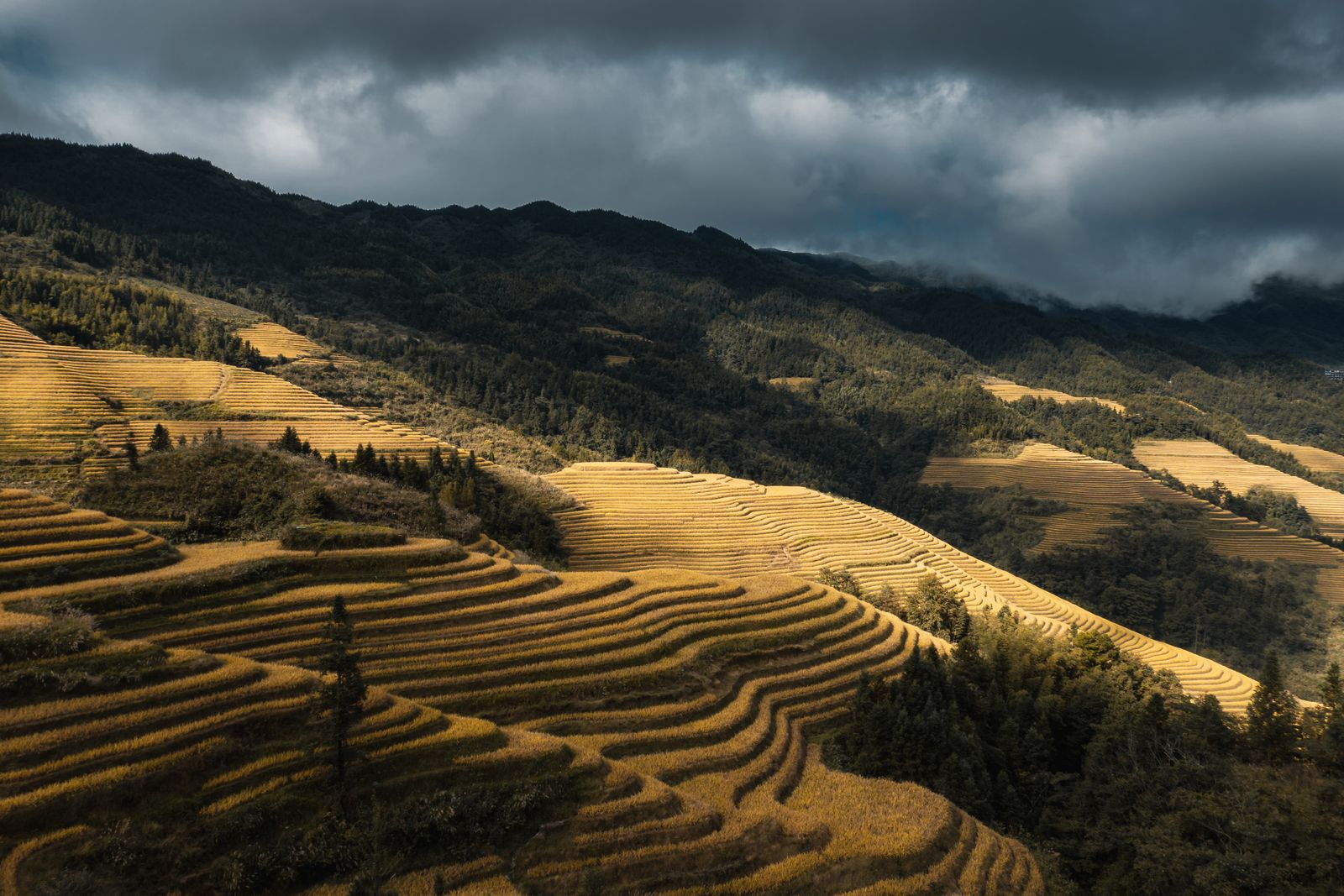
The Longji Rice Terraces (龙脊梯田), the “Dragon’s Backbone,” are hand-built rice fields that coil up the slopes of Longsheng county, about 90 km north of Guilin. Zhuang and Yao farmers have shaped these terraces for over 600 years, and the result is one of China’s most staggering landscapes.
Intro: why go
This is the counterpoint to the Li River. Instead of water and peaks, you get human-made ribbons of field stacked dozens of stories high. At sunrise the mist lifts off the terraces and the whole mountainside seems to breathe. Staying in a wooden village house, eating bitter squash with a Yao host, is a highlight many visitors rate above the cruise.
Tickets & booking
The scenic area charges roughly $14–21 per person and covers the main zones; verify the current price on site, since the Yao and Zhuang areas share one ticket. There is no separate charge per village. Buy at the central gate, where your passport is recorded. The ticket is valid for the day and includes the shuttle bus up to the villages.
How to get there & in-site route
Buses from Guilin run to Longsheng, where you change to a local shuttle into the hills — budget three to four hours total. Within the area, a shuttle bus links Ping’an, Jinkeng and the Dazhai cable car. Walk the ridge paths between lookout points such as Seven Stars with Moon and the Nine Dragons and Five Tigers. Wear proper shoes; the stone paths are steep.
Facilities
Each village has guesthouses, simple restaurants and small shops. Jinkeng has a cable car to save the climb. Cash helps, as some homestays do not take cards. Toilets are basic but present near the main views.
Best season & seasonal pros and cons
Flooded terraces in late April to mid-May are mirror-smooth and perfect for reflections. Golden rice in late September to early October is the postcard shot. Summer is green and wet; winter is cold and bare but almost crowd-free.
Tips & scams
Ignore drivers who promise a “secret free entrance”; there is none. The cable car saves knees but costs extra. Bring water and a rain layer, and start walks early to catch the best light.
Frequently asked questions
- When should I visit the Longji terraces?
- Late April to mid-May the fields are flooded and mirror the sky. September to early October the rice turns gold. Both are photogenic; winter is bare but quiet.
- Which village should I stay in?
- Ping'an is easier and closer, with the classic Two Dragons and Moon views. Jinkeng (Dazhai) is larger and higher, with cable cars and fewer crowds.
- Can I visit Longji on a day trip from Guilin?
- Yes, but it is a long day. Buses take about three to four hours each way via Longsheng. An overnight stay lets you catch sunrise and avoid the rush.
Page last reviewed: 2026-10-18. Ticket seasons and crowd seasons are different things — this page states both where they differ.