Wuzhen 2026: West & East Scenic Zones, Mu Xin Art Museum & a 1–3 Day Plan
Wuzhen is a canal-laced Jiangnan water town of stone bridges and Ming-Qing lane houses, split into the evening-lit West Zone (Xizha) and the traditional morning East Zone (Dongzha). High-speed rail from Hangzhou and Shanghai, a walkable core and the Mu Xin Art Museum make the town easy. Plan the zone tickets and the boat ride and the rest follows.
History & culture
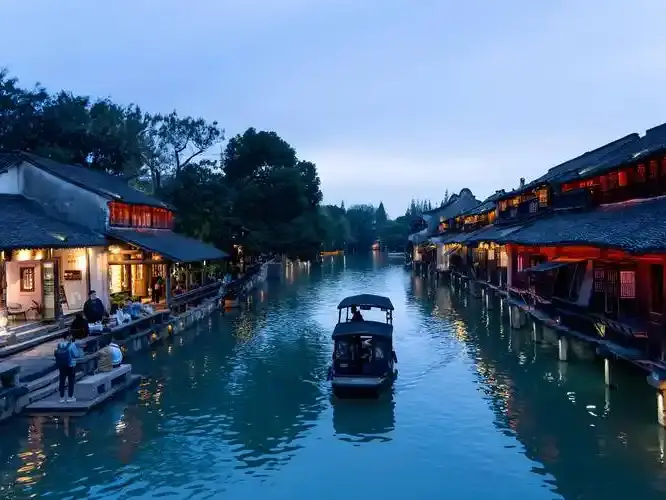
Wuzhen began over 1,300 years ago as a market town on the Grand Canal tributary network, and by the Song and Yuan eras it was a busy weaving, dyeing and grain centre in the Yangtze Delta. Its grid of canals and stone bridges was laid out to move goods and people by water, much as you see it today.
The town produced scholars and writers across the centuries; the most famous is Mao Dun (Shen Yanbing), the 20th-century novelist and a founder of modern Chinese literature, who was born in the house that is now a museum inside the East Zone. Wuzhen also became known for its blue indigo cloth and its Sanbai rice liquor.
After decades as a quiet backwater, Wuzhen was restored from the 1990s as a preserved water town, with the larger West Zone (Xizha) rebuilt for overnight stays and the East Zone (Dongzha) kept as a traditional museum walk. Since 2013 it has hosted the Wuzhen Theatre Festival, drawing stages and visitors from across the world.
Today Wuzhen pairs that restored old town with the Mu Xin Art Museum and the landmark Grand Theatre, and it is also the host of the World Internet Conference. It reads as both a living canal town and a curated cultural stop between Hangzhou and Shanghai.
Best time to visit Wuzhen
Wuzhen sits in the humid Yangtze Delta, so it is mild and green most of the year; spring and autumn give the clearest light and the calmest canals.
Budget for Wuzhen: hotels from $12 a night, average ticket $$12.32 — see the full cost breakdown, or start from a ready-made route.
Cuisine of Wuzhen
Signature dishes worth seeking out — prices are typical per-person or per-dish ranges, not fixed quotes.
-
Steamed White Water Fish (Baishui Yu)
The canal signature — a local river fish steamed with ginger and scallion, mild and fresh; order it whole at a waterside restaurant.
-
Wuzhen Sauce Duck (Jiang Ya)
Duck slow-braised in a dark soy sauce until glossy and tender, a cold-cut favourite sold by the quarter near the gates.
-
Ding Sheng Cake (Dingsheng Gao)
A small pink rice cake steamed in a wooden mould, lightly sweet and chewy — the town’s lucky snack, sold warm from street stalls.
-
The Three Whites (San Bai)
White fish, white shrimp and white water cooked together — the canal’s "three whites" in one light, local hotpot or stir-fry.
-
Radish Shred Cake (Luobo Si Bing)
A fried cake of shredded radish and flour, crisp outside and soft inside; the easy grab-and-walk breakfast by the canals.
-
Sanbai Rice Wine (Sanbai Jiu)
Wuzhen’s own liquor from rice, wheat and sorghum, sweet and low-proof; taste it free at the wine workshop and buy a small jar.
Every major sight — with its own guide
Right after the food above, here are the sights — each one links to its own full guide (what to see, how to get there, facilities and the best season). Names follow each sight's official English signage.
West Scenic Zone
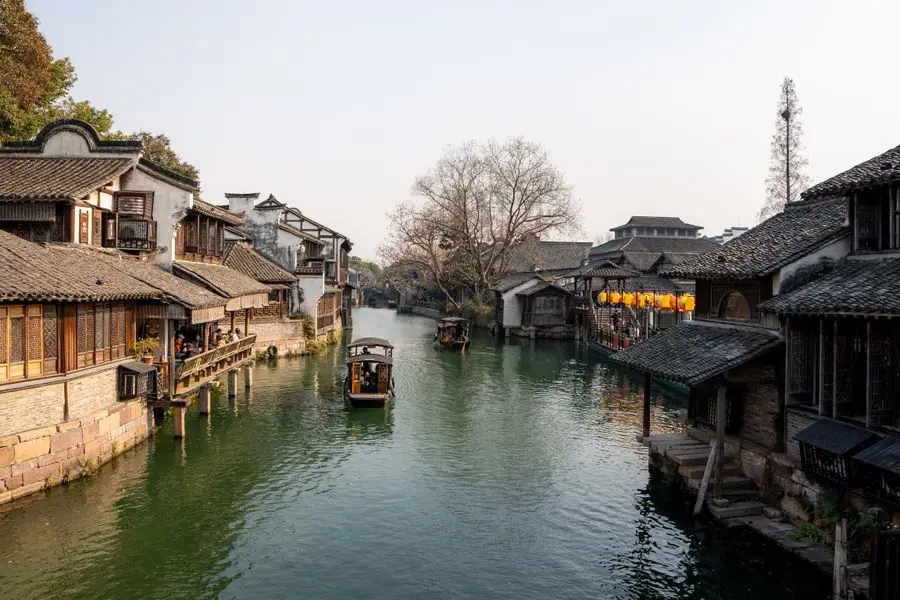
West Scenic Zone (Xizha) 西栅
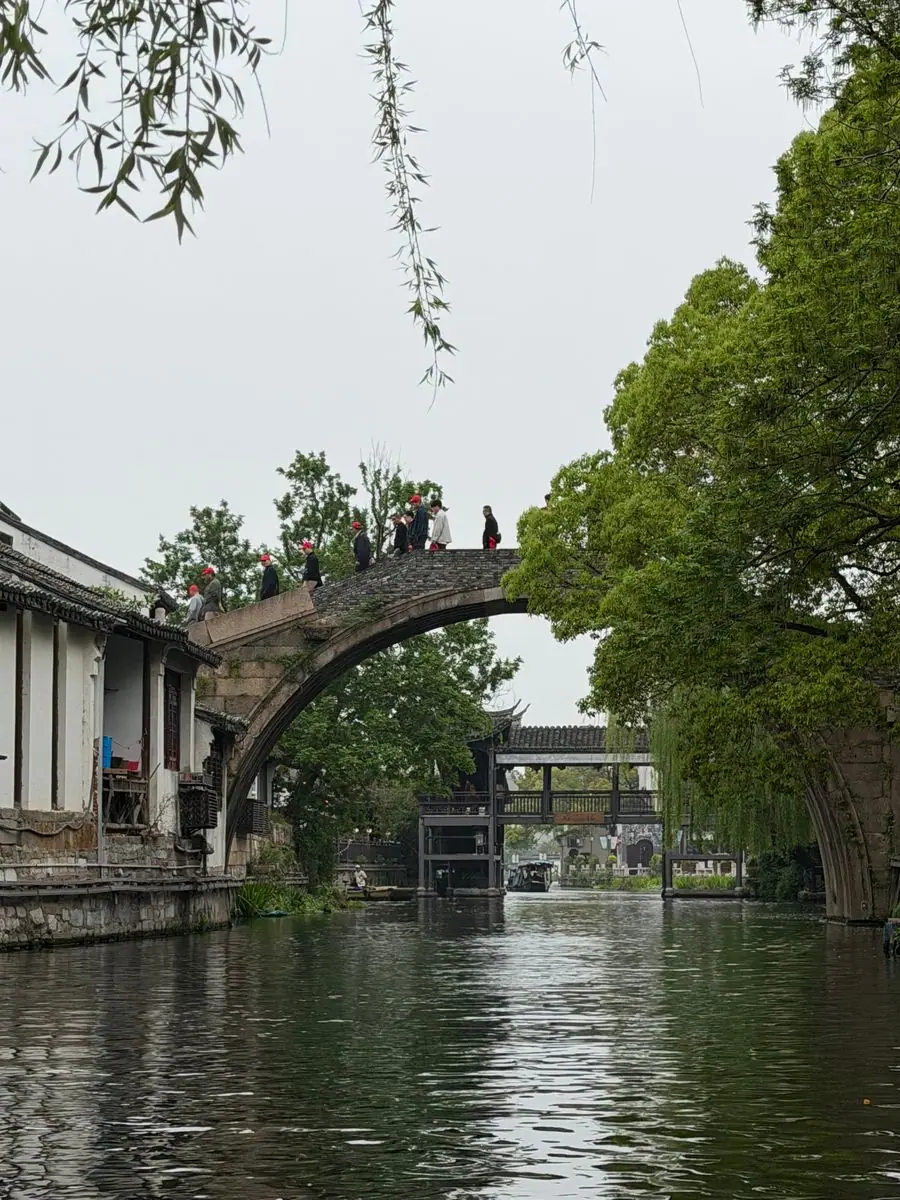
The larger, evening-lit western zone of canals, stone bridges and Ming-Qing lane houses — Wuzhen at its most photogenic and the top pick.
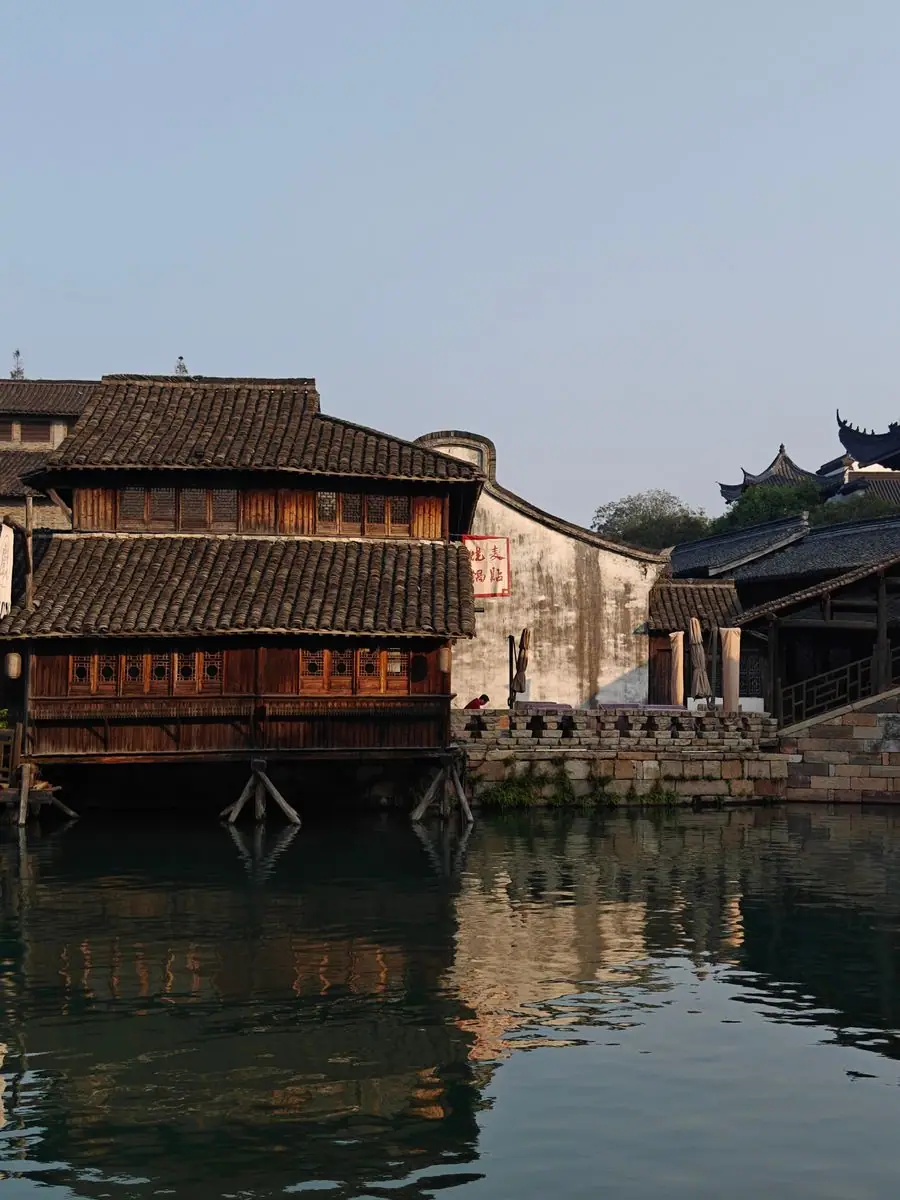
Mu Xin Art Museum 木心美术馆
The riverside museum of Wuzhen-born artist Mu Xin, with calm white galleries and a lakeside garden — a quiet, modern counterpoint.
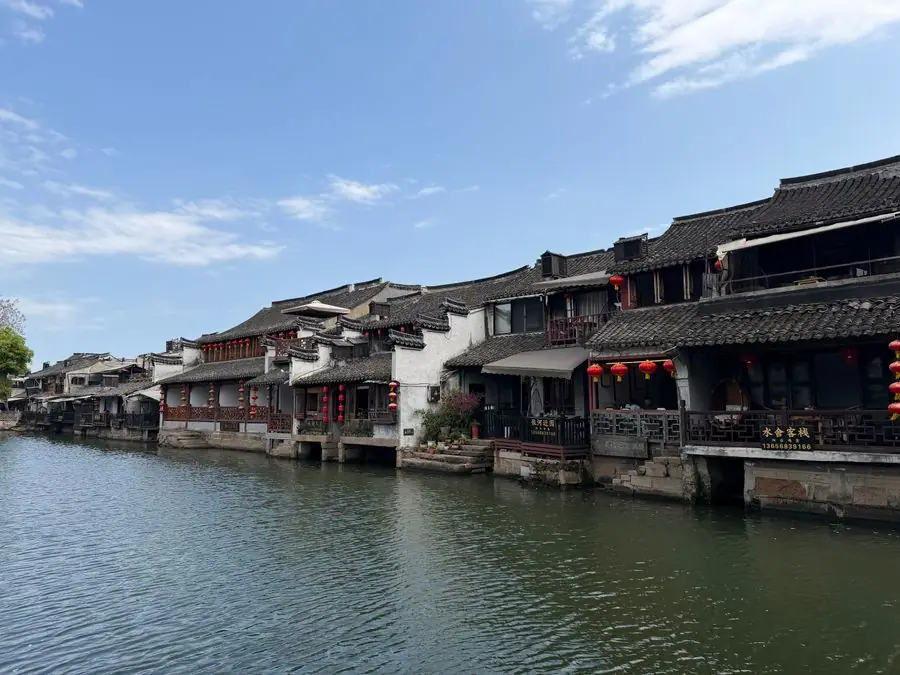
Wuzhen Grand Theatre 乌镇大剧院
The striking twin-shell theatre at the west end of Xizha, home to the Wuzhen Theatre Festival — view the exterior and catch a show.
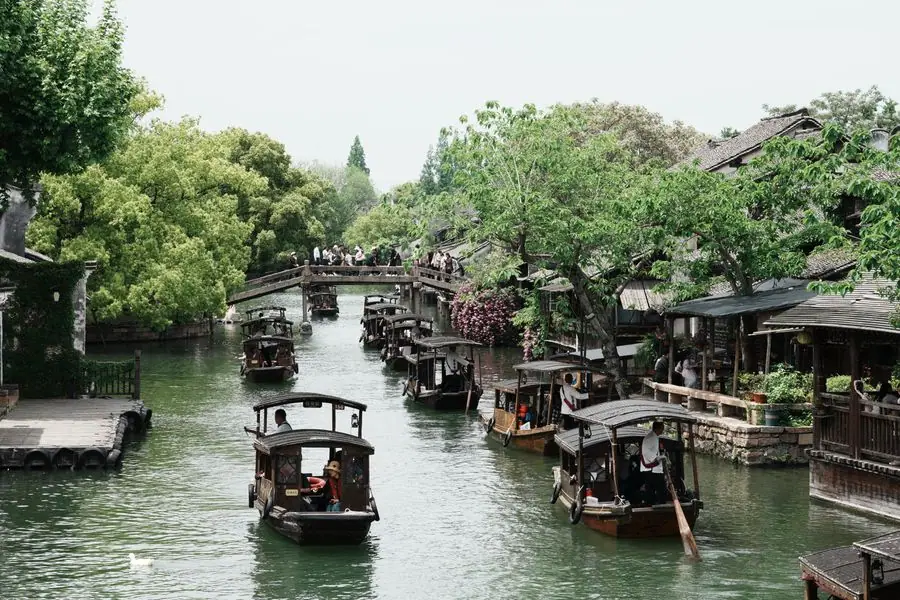
Water Market 水上集市
The morning riverside market in Xizha where boats sell produce and breakfast at dawn — the most atmospheric free show in town.
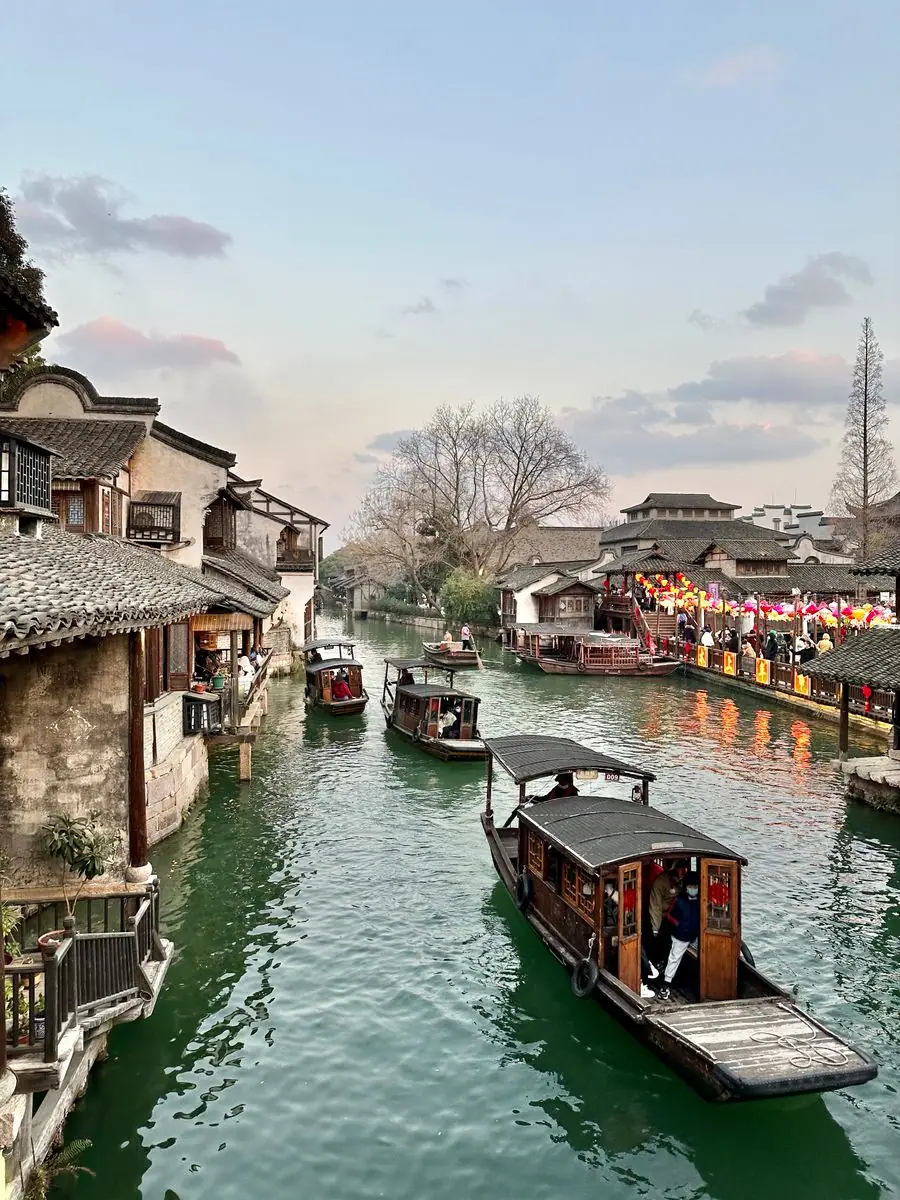
Indigo Print Workshop 蓝印花布作坊
The blue-and-white dye workshop where you watch indigo cloth printed and dried on tall frames — Wuzhen oldest craft in action.
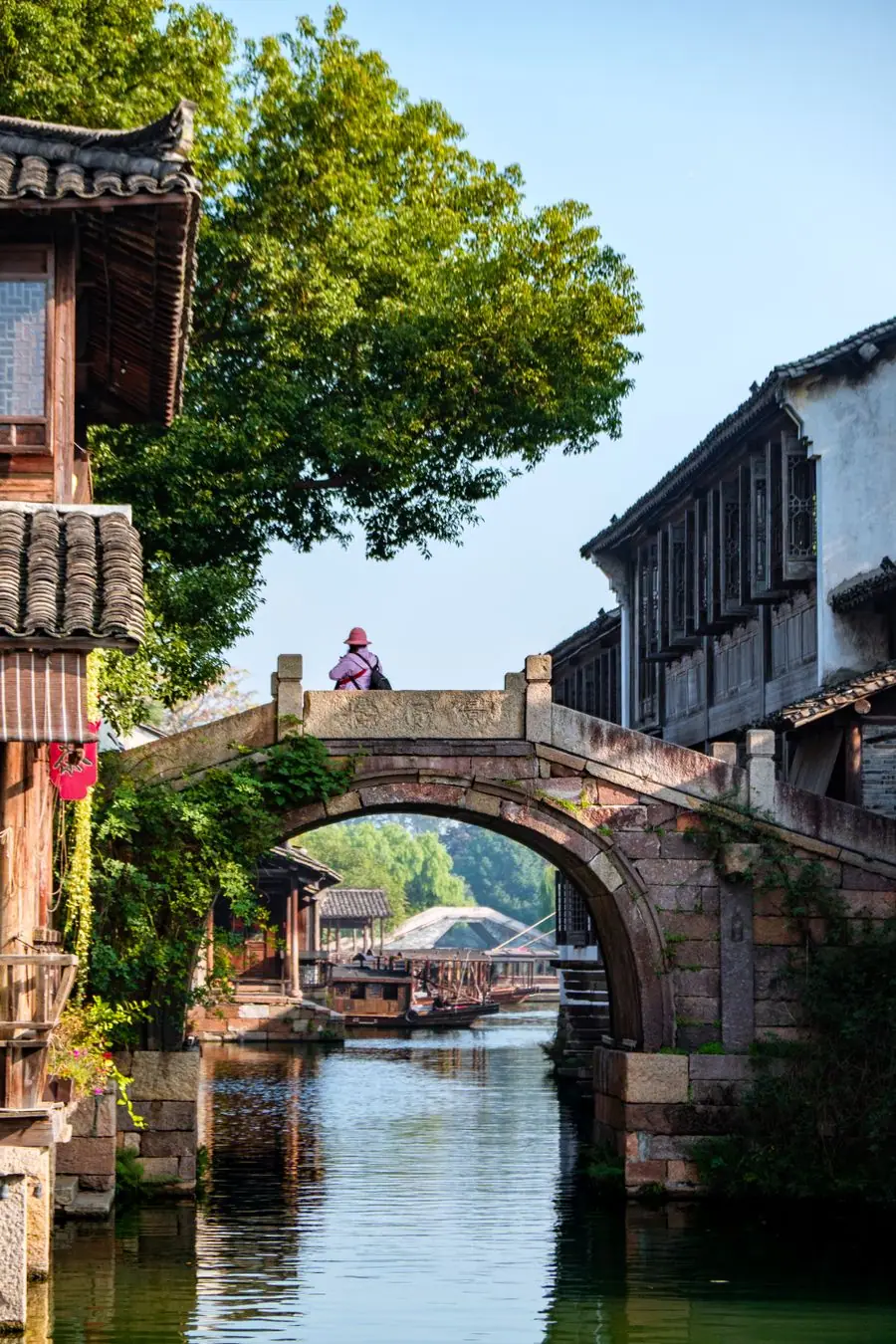
Zhaoming Academy 昭明书院
The rebuilt Song-era academy in Xizha, a quiet courtyard of books and a tall library tower by the canal — good for a calm break.
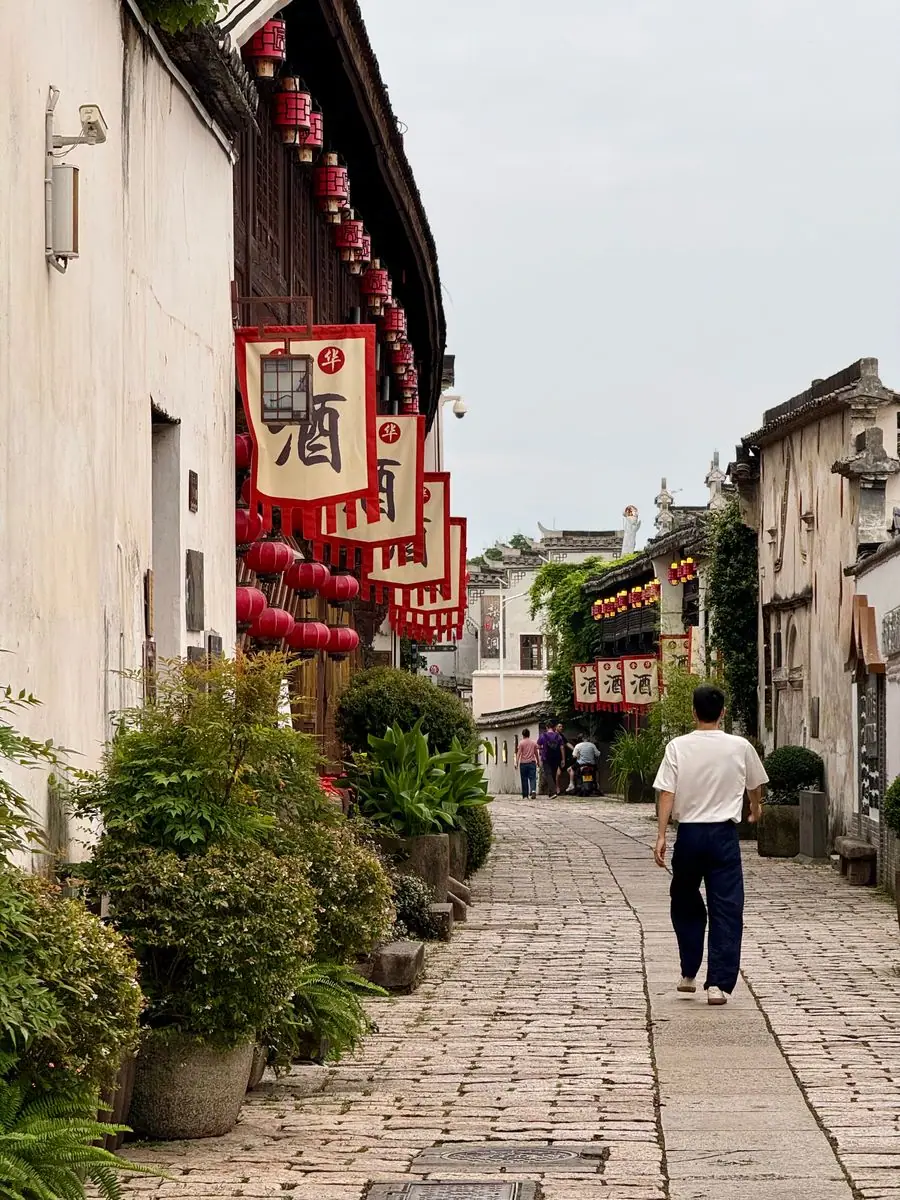
Wuzhen Old Post Office 乌镇老邮局
The century-old post office in Xizha where you can still send a stamped postcard — a photogenic red-walled riverside stop.
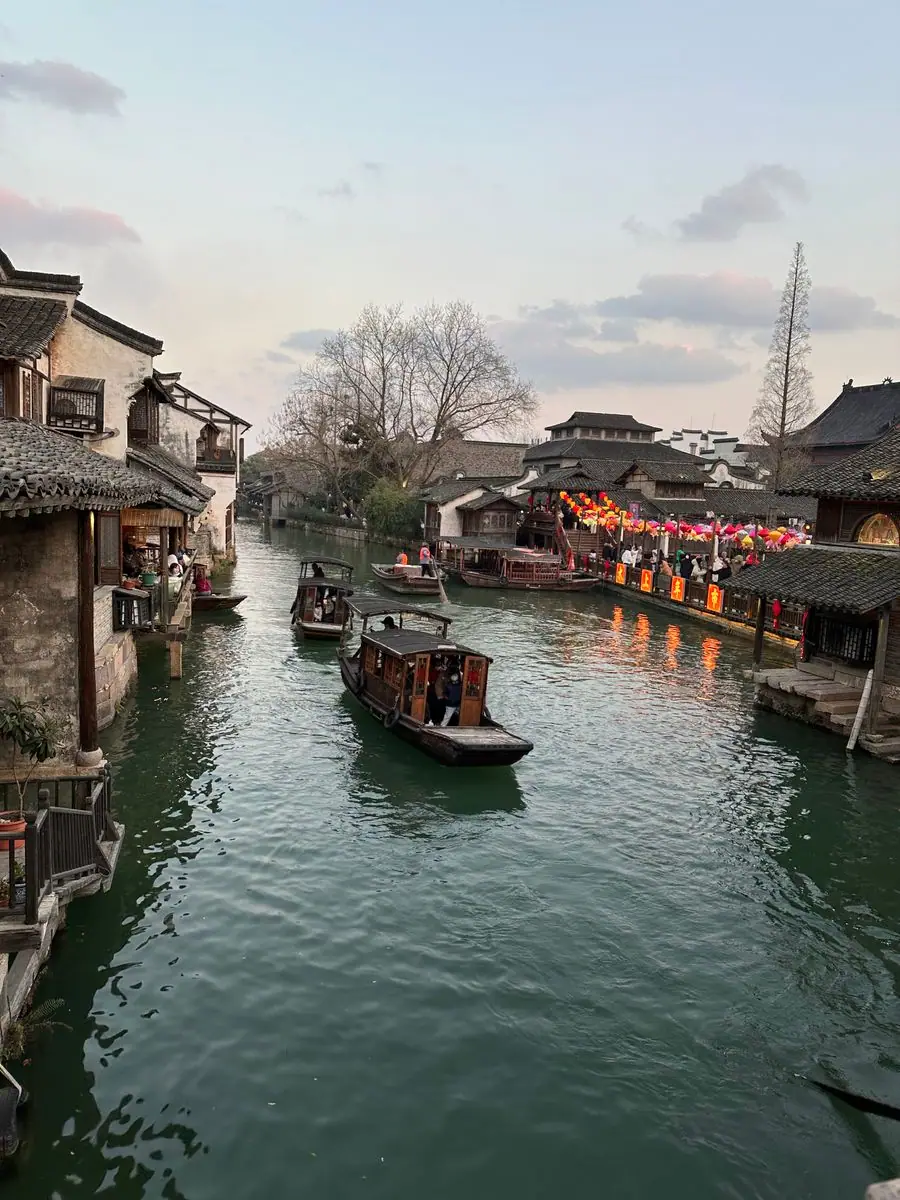
Canal Boat Ride 摇橹船
A slow wooden wupeng boat ride through the Xizha canals at day or under the lanterns at night — the town best seen from the water.
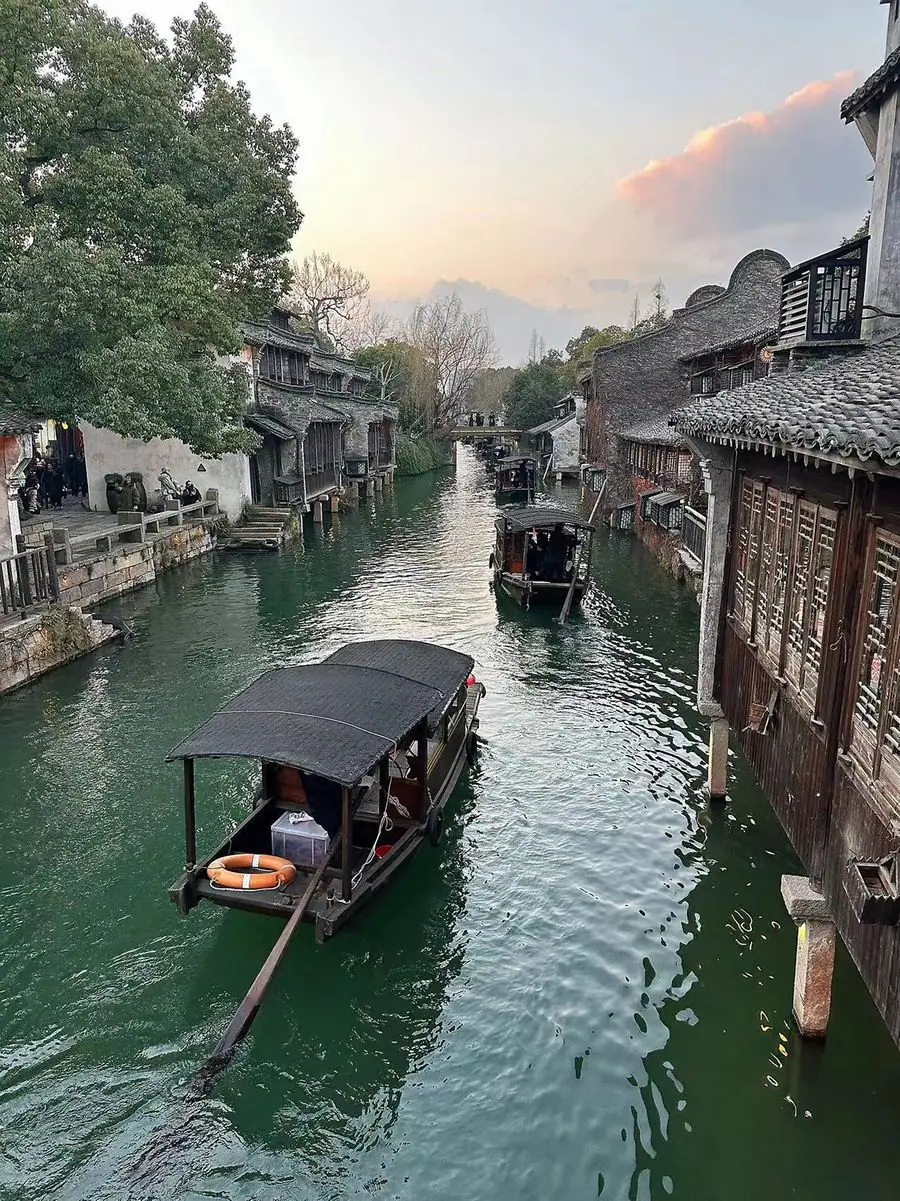
Yue Lao Temple 月老庙
The Xizha love shrine to the Moon Elder, where visitors tie red cords and wish for romance — a small, popular photo stop.
East Scenic Zone
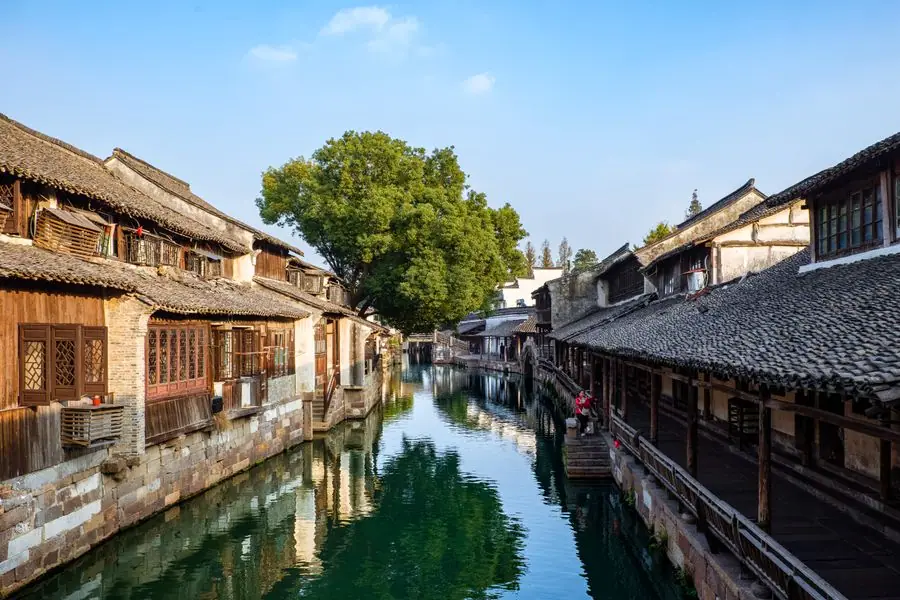
East Scenic Zone (Dongzha) 东栅
The smaller, traditional morning zone of workshops, museums and the Mao Dun residence — the classic old-Wuzhen walk.
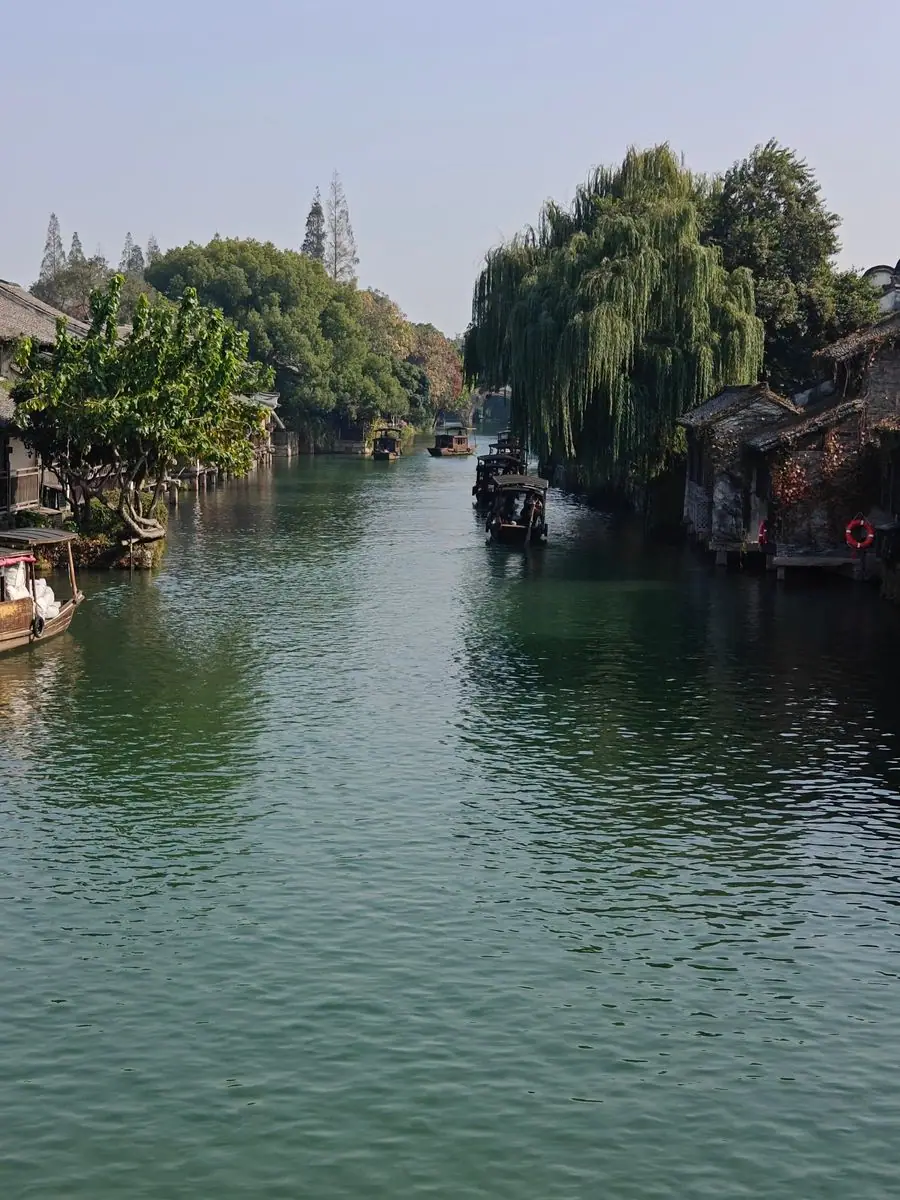
Former Residence of Mao Dun 茅盾故居
The restored childhood home of writer Mao Dun, a Qing-era courtyard with manuscripts and family rooms inside the East Zone.
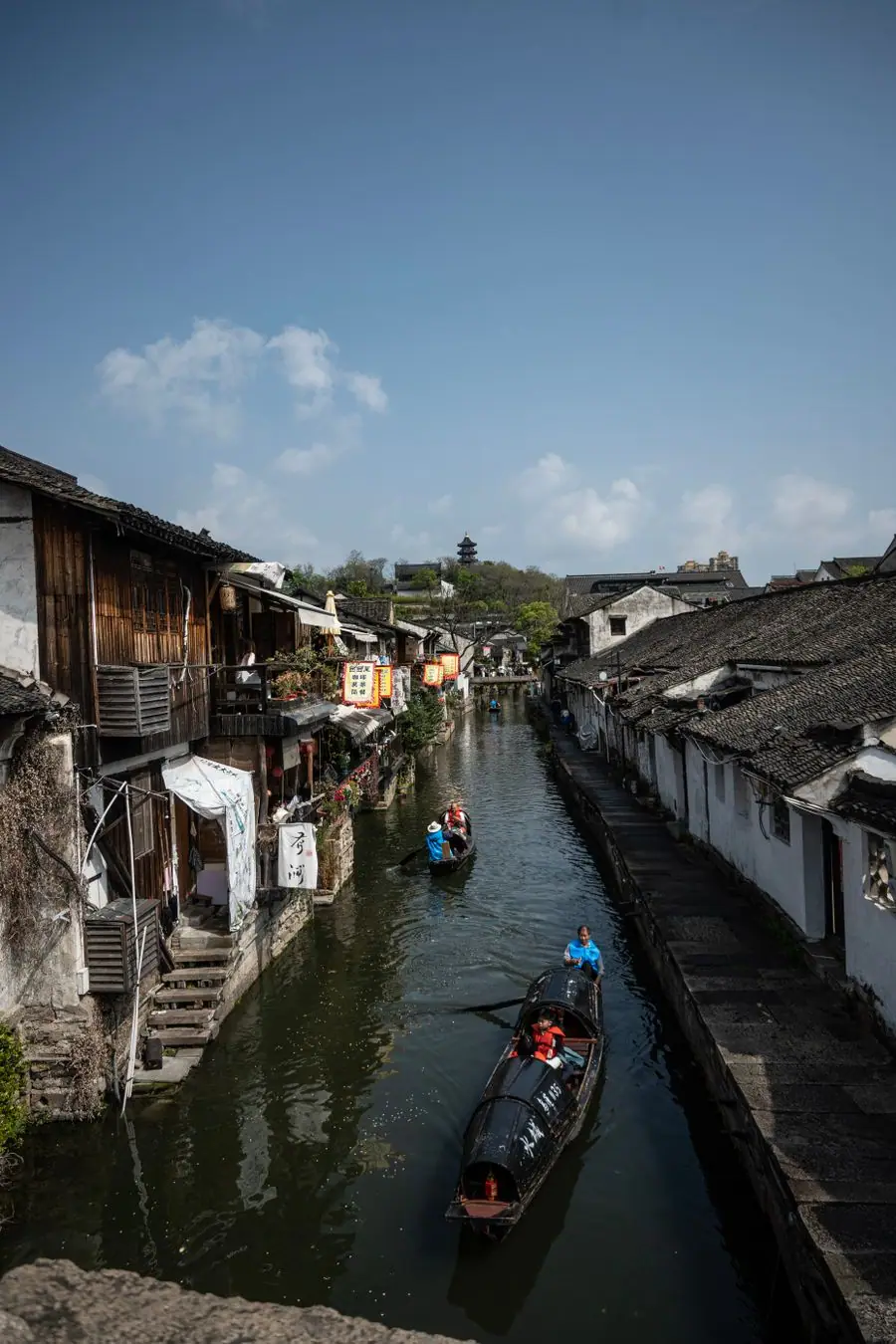
Sanbai Wine Workshop 三白酒坊
The three-grain (rice, wheat, sorghum) liquor workshop in Dongzha, with fermenting vats and a free tasting of Wuzhen Sanbai wine.
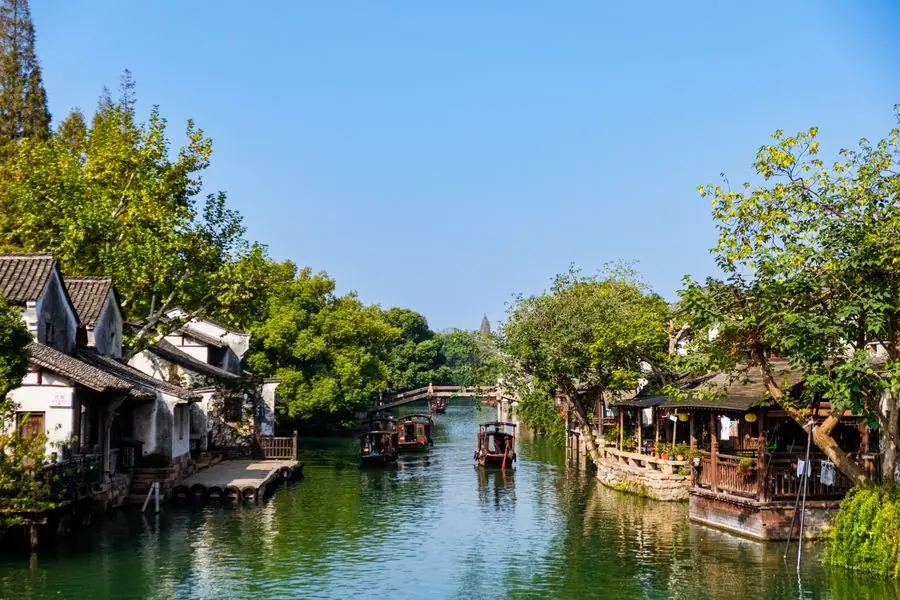
Shadow Puppet Theater 皮影戏馆
The Dongzha puppet stage where carved leather figures act out folktales to music — short, charming shows through the day.
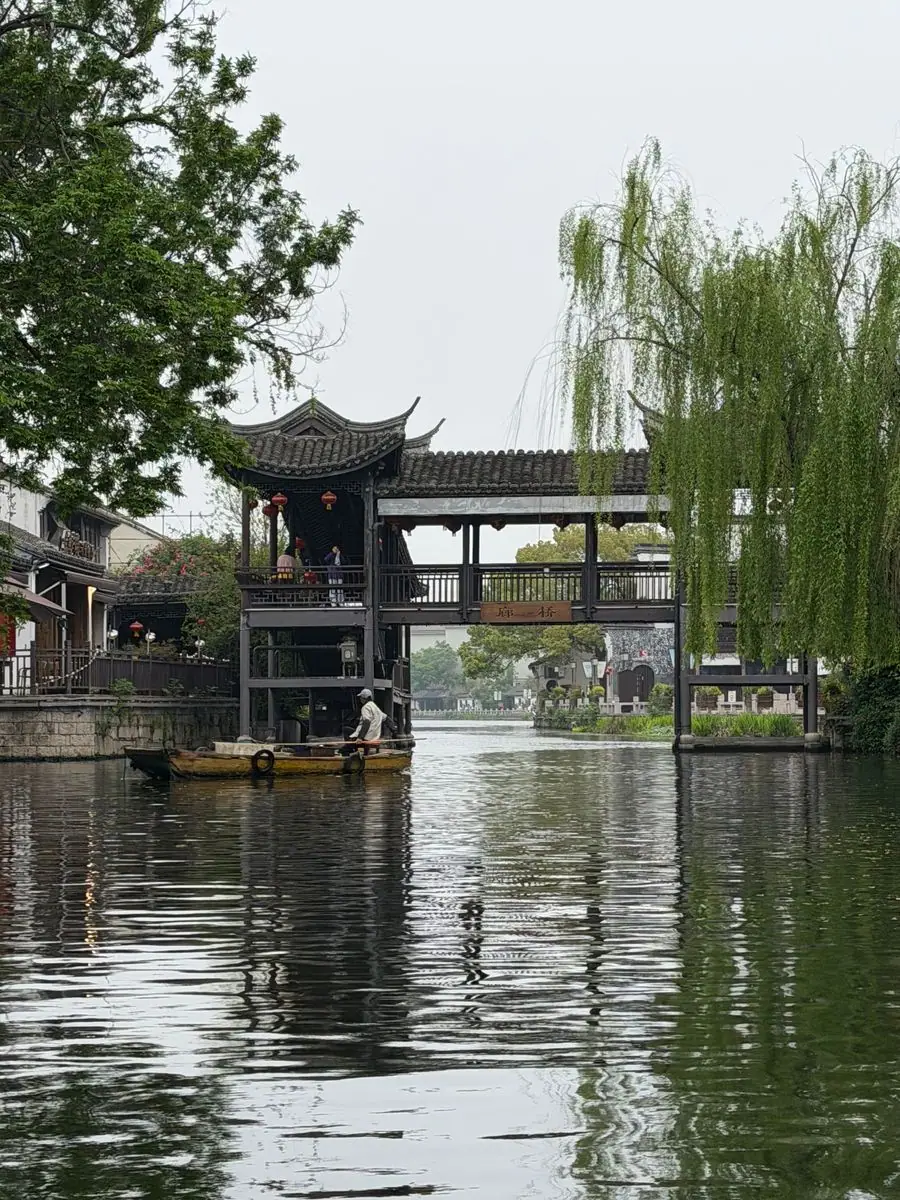
Jiangnan Hundred Beds Museum 江南百床馆
The museum of carved wooden beds from the Ming, Qing and republican eras — dozens of ornate four-poster and canopy pieces.
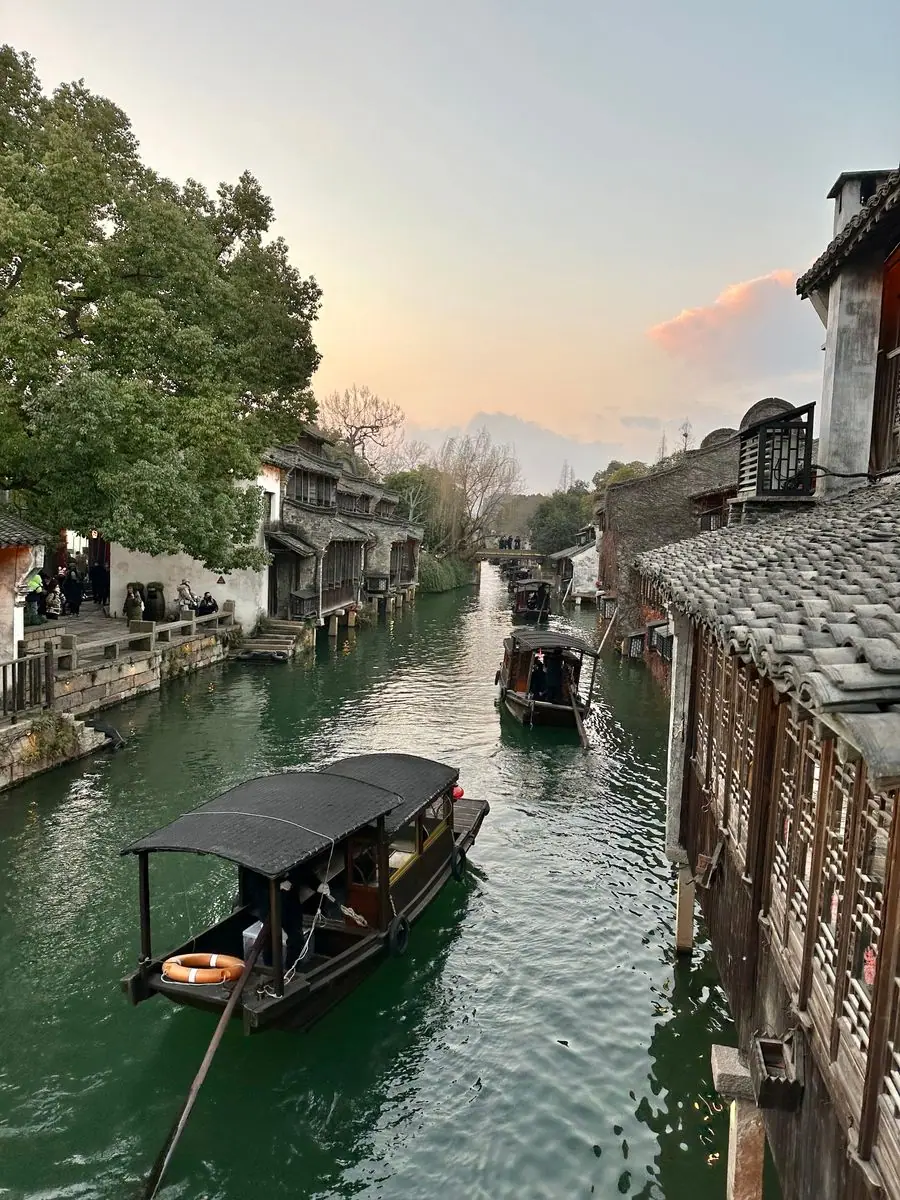
Wuzhen Folk Customs Museum 江南民俗馆
The Dongzha museum of local life — wedding rites, festivals and old trades shown in period rooms and dioramas.
Xiuzhen Temple 修真观
The Dongzha Taoist temple on the old theatre square, with a carved gate and a small morning fair of fortune-tellers and snacks.
Where to stay in Wuzhen
Rates are for a standard double room in 2026. Staying inside West Scenic Zone (Xizha) lets you enjoy the lit canals after day-trippers leave, but rooms cost more and you check in through the zone gate. Confirm the USD price at booking.
Luxury
$120–260 / nightWaterside boutique resorts inside West Scenic Zone (Xizha) with canal views and spa, plus top Tongxiang stays.
Upper mid-range
$60–120 / nightComfortable hotels at the Xizha edge and in Tongxiang town, 10–30 min from the gates; $60–120 / night.
Mid-range
$35–60 / nightClean Chinese business hotels in Tongxiang and near the bus hub; $35–60 / night.
Budget
$18–35 / nightGuesthouses just outside the gates — basic doubles with character; $18–35 / night.
Hostels
$12–18 / nightSocial backpacker hostels near the East Zone, dorms and privates; $12–18 / night.
Souvenirs & local crafts
Easy to pack, easy to explain at customs — and far cheaper at a supermarket than at a scenic stall.
-
Indigo Printed Cloth (Lan Yin Hua Bu)
Wuzhen’s oldest craft — blue-and-white patterned fabric from the dye workshops, sold as scarves, bags and wall hangings.
-
Sanbai Rice Wine
The local three-grain liquor in small ceramic jars; a light, sweet souvenir that packs and ships easily.
-
Silk & Embroidery
Jiangnan silk scarves and hand-embroidered pouches, a regional classic found in the lane shops of both zones.
-
Mao Dun Books
Editions and translations of the Wuzhen-born writer’s novels, plus themed stationery from the residence gift shop.
-
Wooden Shadow Puppets
Carved leather-and-wood puppet figures from the Dongzha shadow-play stage — a small, unusual gift that packs flat.
Getting around Wuzhen
Wuzhen is car-light and walkable at its core, with no metro — trains, buses, taxis, DiDi and bikes cover the rest, and the gateway is Tongxiang on the Shanghai–Hangzhou high-speed line.
- High-speed rail
- Tongxiang Railway Station (桐乡站) on the Shanghai–Hangzhou high-speed line is the gateway: Hangzhou is about 20–30 min, Shanghai about 40–60 min, Suzhou about 40 min.Trains use real-name booking with a passport; buy through 12306 or a travel app and show the same passport at the gate.
- Long-distance bus
- Long-distance coaches run from Hangzhou, Shanghai and the Tongxiang Bus Station straight to the Wuzhen bus hub by the scenic zones; book at the station or via apps.
- Metro & bus
- There is no metro in Wuzhen or Tongxiang; the town is compact and pedestrian, with shuttle buses linking the East and West zones.
- Taxis
- Taxis and the local shuttle link Tongxiang Station, the two scenic zones and the bus hub; fares are short and cheap.
- Ride-hailing
- DiDi runs inside Alipay with an English map and card payment — the easiest way to ride from Tongxiang Station to the gates without cash.
- Shared bikes
- The town core is pedestrian; shared bikes suit the flat ride from the bus hub or the approach roads, but not the lanes inside the zones.
- Intercity carpool
- Ride-pooling from Hangzhou and Shanghai exists but is awkward for foreigners; book a driver, or take the high-speed rail plus the shuttle.
Plan your 1, 2 or 3 days in Wuzhen
Pick the length of your stay. Each plan is its own page, anchored at the city centre and written from real traveller itineraries — including splits for sightseeing, shopping, landscape, families and older travellers.
Wuzhen in 1 Day
The West Zone canals, Mu Xin museum, a boat ride and the East Zone museums on timed loops.
Read the plan → 2-dayWuzhen in 2 Days
Day one on Xizha and the night canals, day two Dongzha museums and a boat ride.
Read the plan → 3-dayWuzhen in 3 Days
Add the Grand Theatre, the Water Market at dawn, Zhaoming Academy and a slower pace.
Read the plan →Frequently asked questions
- Do I need a visa for Wuzhen?
- Wuzhen has no international airport or 144-hour transit port, so arrange a Chinese visa before you fly unless you already qualify for visa-free entry through a major gateway like Shanghai or Hangzhou. Check the current list with a consulate before booking.
- When is the best time to visit Wuzhen?
- March–May and September–November bring mild, less humid weather and the clearest canal light. Summer (Jun–Aug) is hot and sticky; winter is cold but quiet with the prettiest empty-morning photos. Avoid the May Day and National Day holidays if you dislike crowds.
- How do I get to Wuzhen?
- Take the high-speed train to Tongxiang Station (about 20–30 min from Hangzhou, 40–60 min from Shanghai), then a short taxi, DiDi or shuttle bus to the scenic zones. Long-distance coaches also run directly from Hangzhou and Shanghai to the Wuzhen bus hub.
- Should I buy the Xizha or Dongzha ticket?
- Xizha (about $21) is the larger, evening-lit zone and the better value for most visitors; Dongzha (about $15.50) is the traditional morning museum walk. A combined pass (about $26.80) saves money if you do both. Verify the exact fees on site.
- How many days do I need in Wuzhen?
- One full day covers Xizha and a boat ride; add a second for Dongzha’s museums and the Mu Xin Art Museum without rushing; a third lets you linger at the Water Market at dawn and the Grand Theatre. The town is compact, so even a half day hits the highlights.
- Can foreigners stay inside the West Scenic Zone?
- Yes — many boutique hotels sit inside Xizha, and staying overnight lets you enjoy the lit canals after the day-trippers leave. You check in through the zone gate with your passport; book ahead during the theatre festival and holidays.
- Is Wuzhen walkable, and can I use a card?
- The core is pedestrian and easy on foot, with shuttle buses between the zones. Set up Alipay with an international card and passport for DiDi and the shops; carry some cash too, as small workshops may prefer it.
Page last reviewed: 2026-11-02.