Leshan 2026: Giant Buddha, Mount Emei & a 1–3 Day Plan
Leshan is home to the 71 m Leshan Giant Buddha, the world’s largest stone Buddha, and is the gateway to Mount Emei, a sacred misty peak an hour southwest. Visit the Buddha early to beat the cruise bottleneck, take a full day for Emei’s Golden Summit, and use the high-speed rail from Chengdu. Below: the history, the food, where to sleep, what to buy, every major sight with its own guide, transport, and 1/2/3-day plans.
History & culture
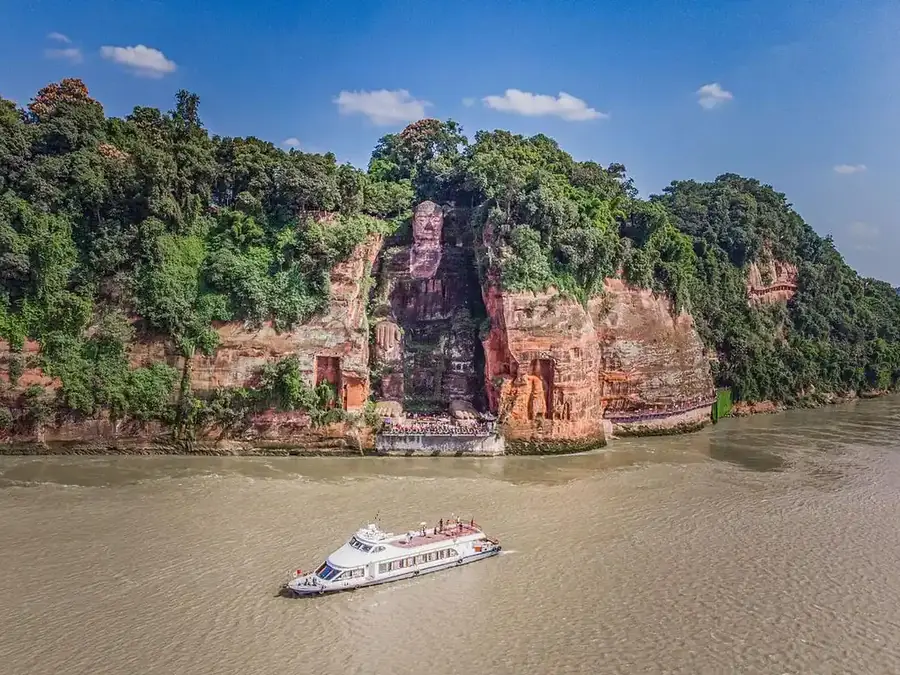
Leshan grew where the Min, Dadu and Qingyi rivers meet, and in the Tang dynasty (713–803) the giant Maitreya Buddha was carved into Lingyun Hill over some 90 years under the monk Hai Tong. The cliff face became one of China’s great Buddhist sites and a landmark of the Sichuan river trade.
Mount Emei, southwest of the city, has been a sacred Buddhist mountain since the 1st century and by the Tang era was one of China’s Four Sacred Mountains, dedicated to the bodhisattva Samantabhadra (Puxian). Monasteries such as Baoguo and Wannian drew pilgrims for over a thousand years.
In 1996 UNESCO listed the Leshan Giant Buddha and Mount Emei together as a single World Heritage Site, recognising both the carved cliff Buddha and the living mountain temple landscape.
Today Leshan is the practical gateway: the Giant Buddha is a short trip east of the centre, and Emei an hour southwest, so most visitors base themselves in the city and fan out to both.
Best time to visit Leshan
Leshan sits in the warm Sichuan basin, while Mount Emei rises to 3,099 m and stays cool and often misty at the top. Spring and autumn are best for both the Buddha and the mountain.
Budget for Leshan: hotels from $10 a night, average ticket $$6.89 — see the full cost breakdown, or start from a ready-made route.
Cuisine of Leshan
Signature dishes worth seeking out — prices are typical per-person or per-dish ranges, not fixed quotes.
-
Qiaojiao Beef (跷脚牛肉)
Leshan’s signature beef soup — tender slices in a clear, herbal broth with chilli dip; the everyday local bowls you’ll see at every corner.
-
Sweet-Skin Duck (甜皮鸭)
Leshan’s candied roast duck: crisp skin glazed sweet, meat juicy — a take-home favourite sold by the half bird.
-
Bobo Chicken (钵钵鸡)
Cold skewered chicken and offal in a numb-spicy sesame-and-chilli sauce, grabbed by the stick from the cold case — a Leshan street staple.
-
Mala Douhua (麻辣豆腐脑)
Leshan’s savoury tofu pudding dressed with chilli oil, peanuts and crispy bits — breakfast or a snack, never sweet like the southern version.
-
Emei Mountain Tea (峨眉山茶)
Green tea grown on Emei’s misty slopes, light and fragrant; drunk hot in the mountain temples and sold loose in the city.
-
Leshan Egg Cake (蛋烘糕)
A small griddle cake puffed with egg and filled sweet or savoury — cheap, warm and everywhere in the old-town lanes.
Every major sight — with its own guide
Right after the food above, here are the sights — each one links to its own full guide (what to see, how to get there, facilities and the best season). Names follow each sight's official English signage.
Leshan (Lingyun Hill)
Leshan Giant Buddha 乐山大佛
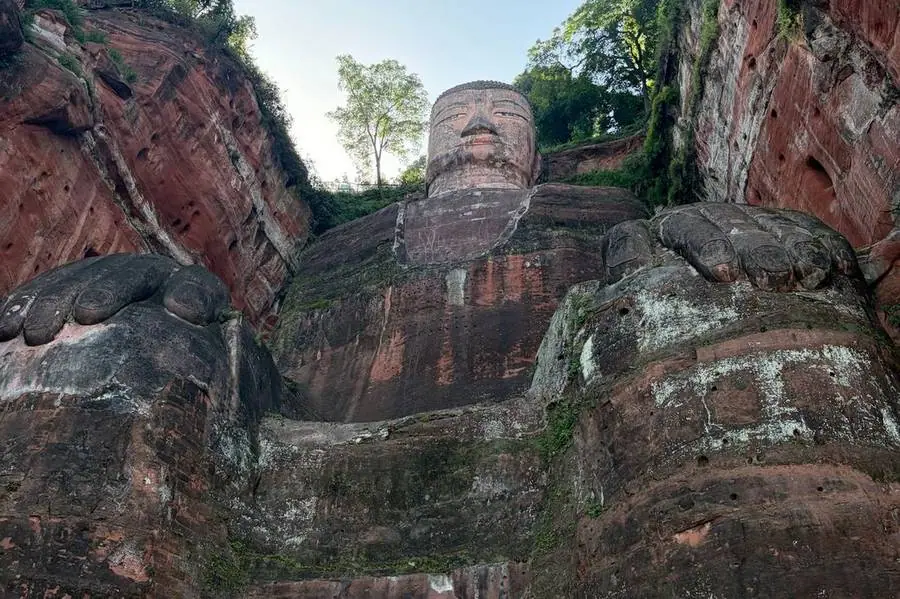
The 71 m Tang-dynasty Buddha carved into Lingyun Cliff above the Min River — the world’s largest stone Buddha and the headline of any Leshan trip.
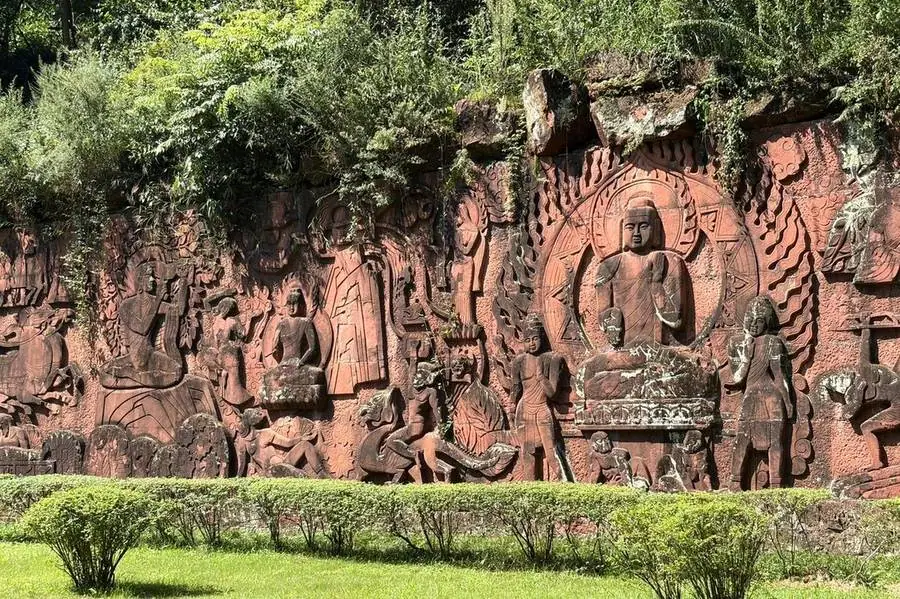
Oriental Buddha Park 东方佛都
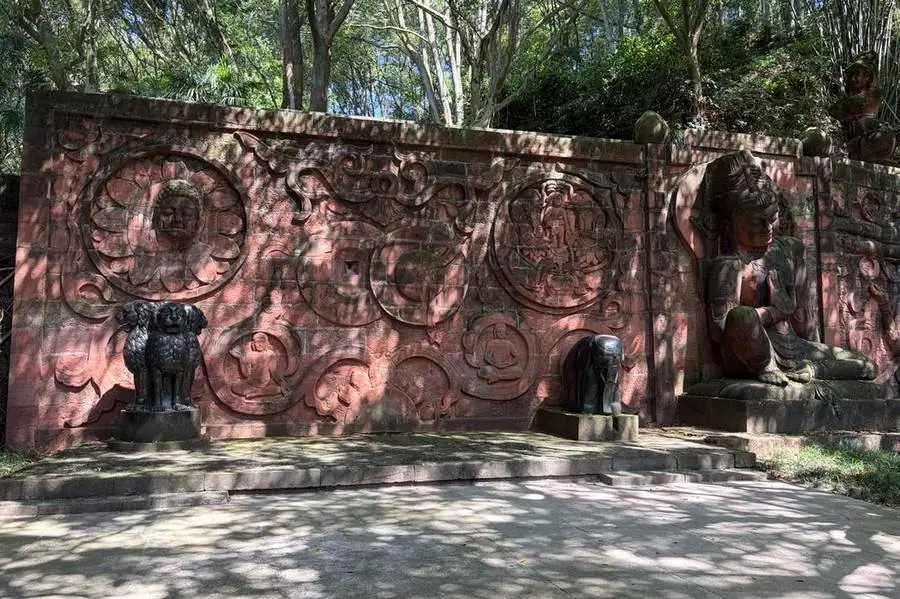
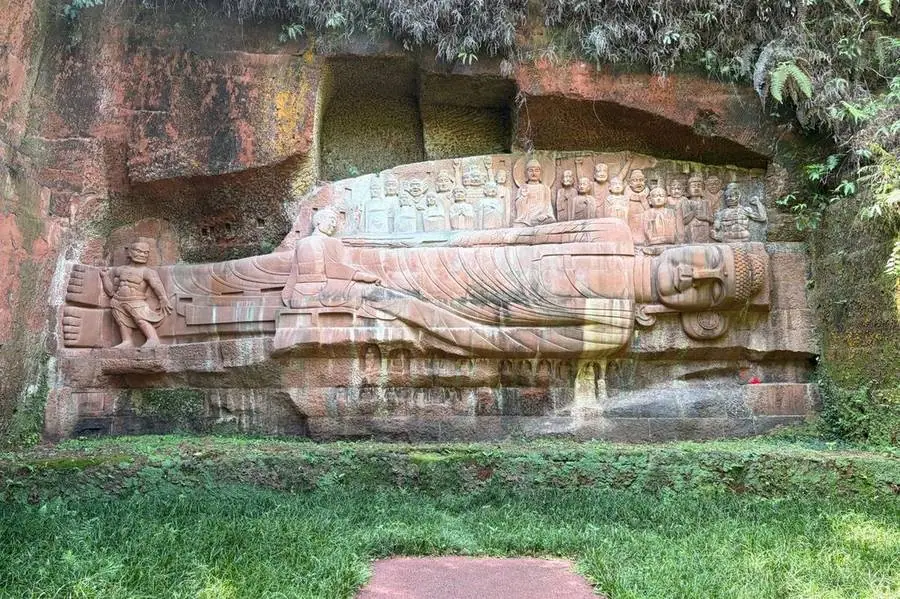
The sculpture park beside the Giant Buddha with hundreds of carved Buddha and arhat figures in cliffs and caves — a quieter, artistic follow-on to the main cliff.
Mount Emei
Mount Emei 峨眉山
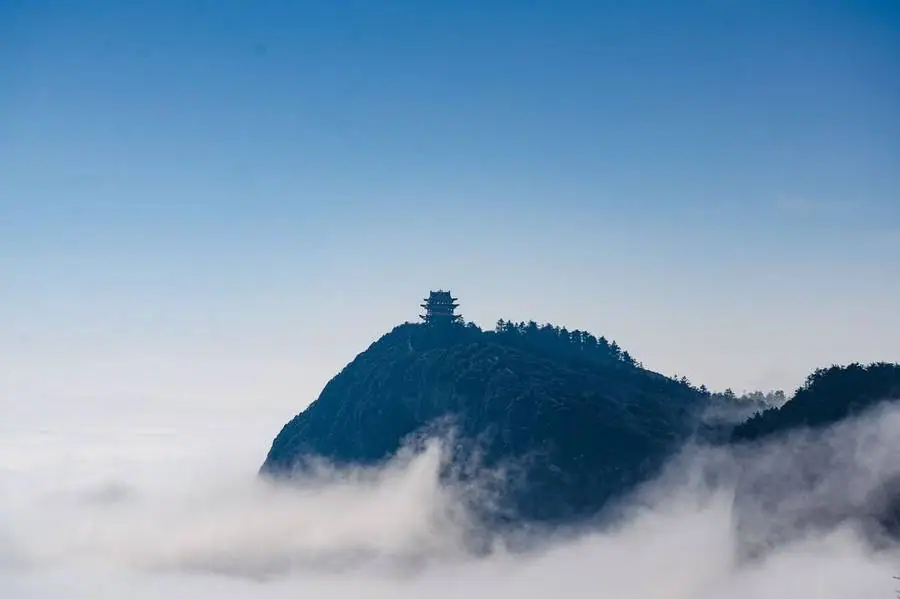
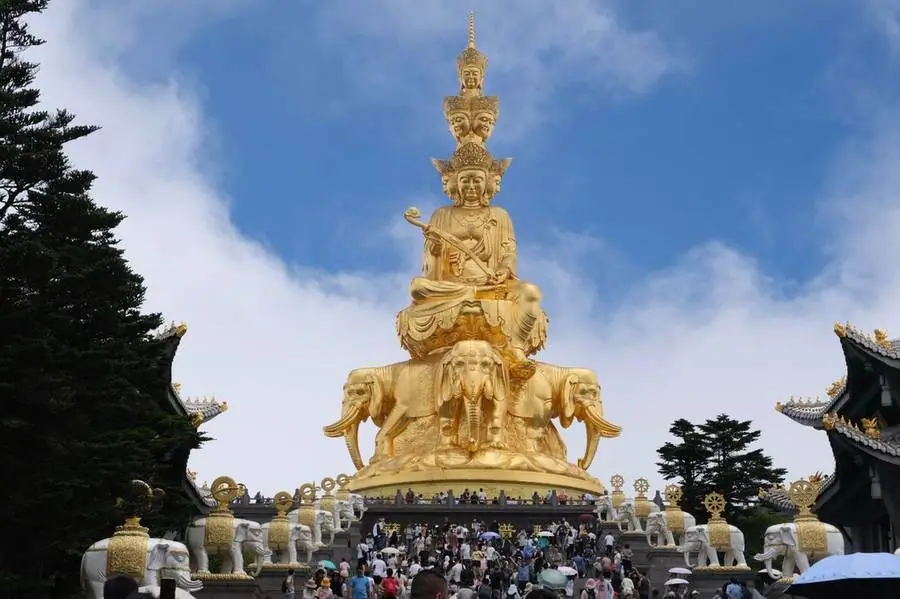
The sacred 3,099 m Buddhist peak, a UNESCO site of misty forests, monasteries and the golden Samantabhadra statue on the Golden Summit — a full-day excursion southwest of the city.
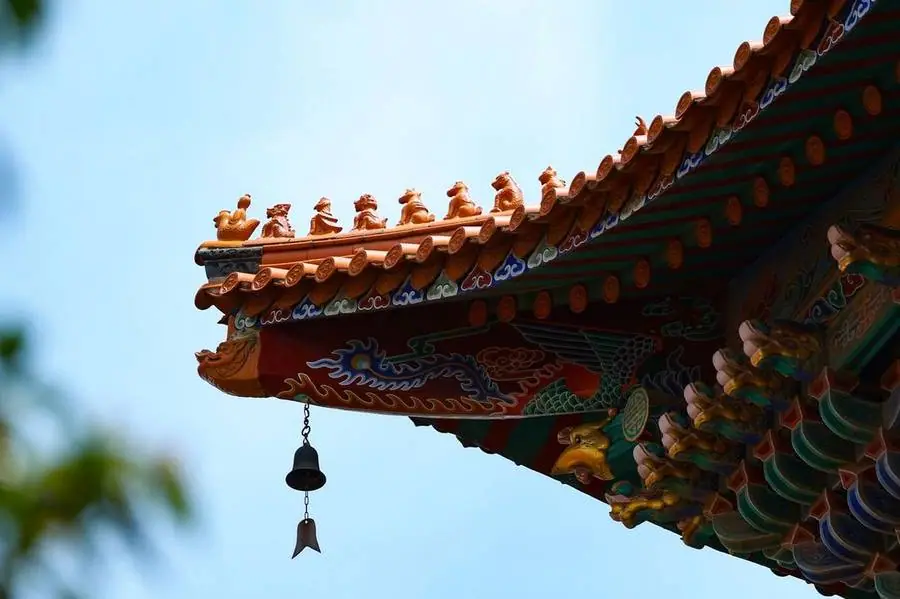
Wannian Temple 万年寺
One of Emei’s oldest and most important monasteries, famous for its brick dome hall and the bronze samantabhadra statue inside.
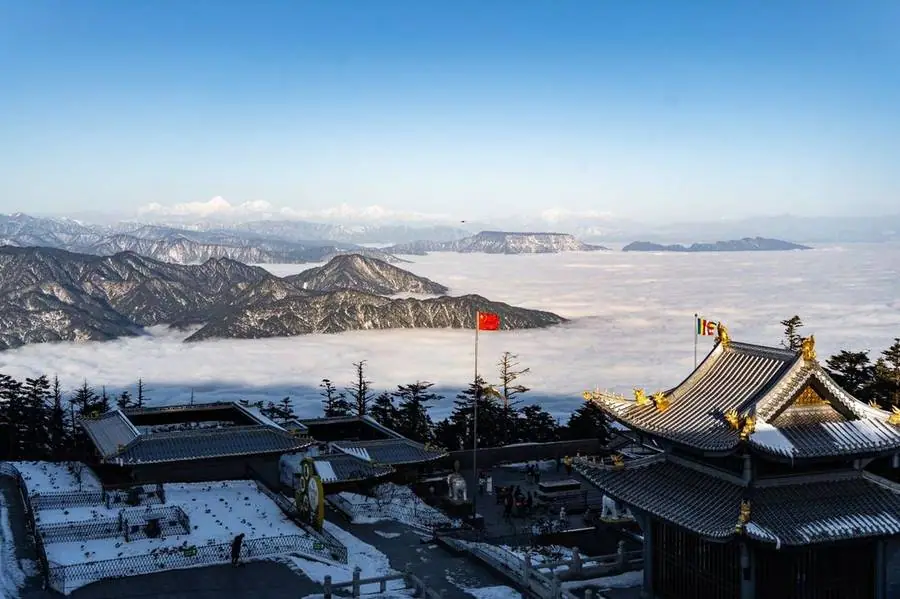
Qingyin Pavilion 清音阁
The much-photographed "clear-sound" pavilion where two mountain streams meet below Emei’s green peaks — a flat, scenic walk on the middle trail.
Mount Emei (base)
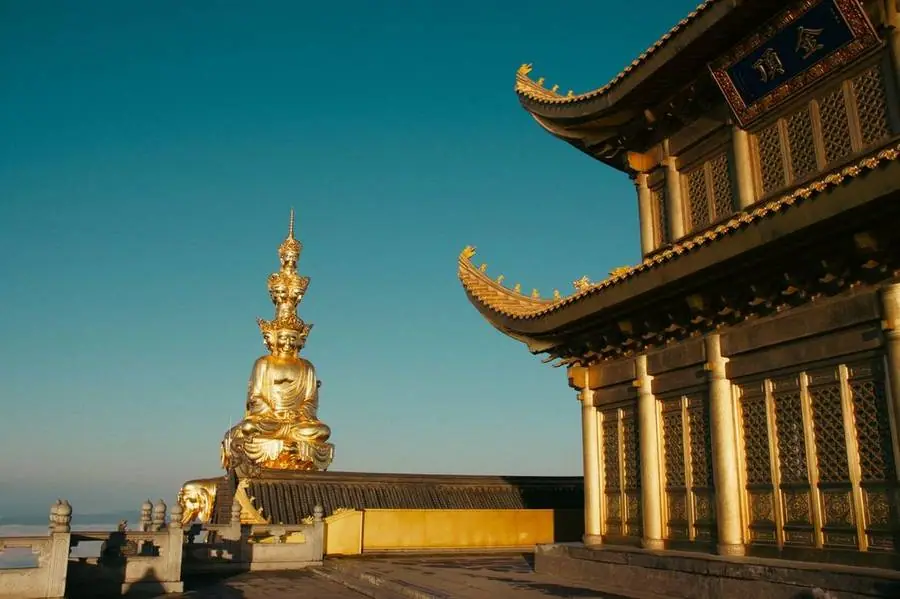
Baoguo Temple 报国寺
The grand first monastery at the foot of Mount Emei, with layered halls, a large bronze bell and the gateway to the mountain pilgrimage.
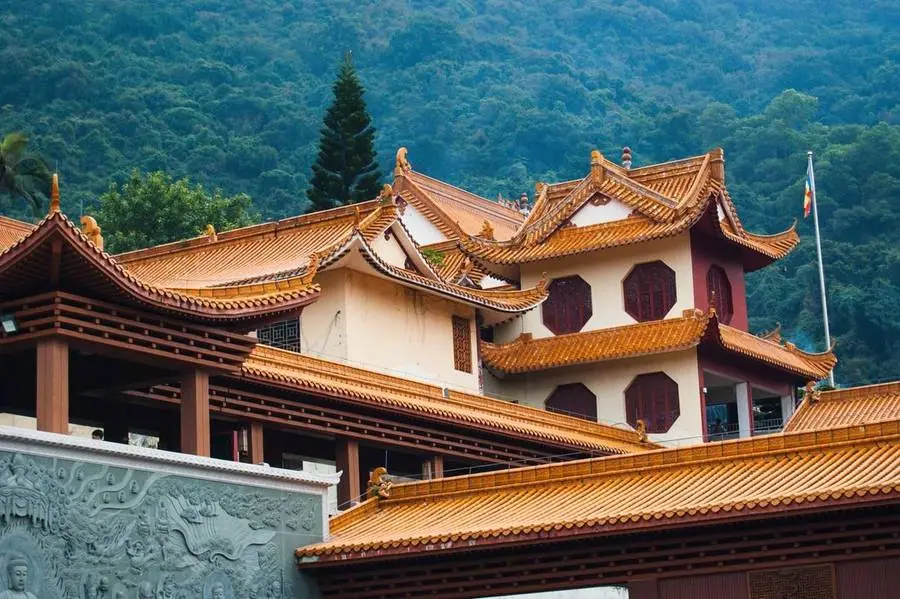
Fuhu Temple 伏虎寺
The "Tiger-Subduing" temple just inside the Emei base, a quiet framed gateway and hall set among bamboo and forest.
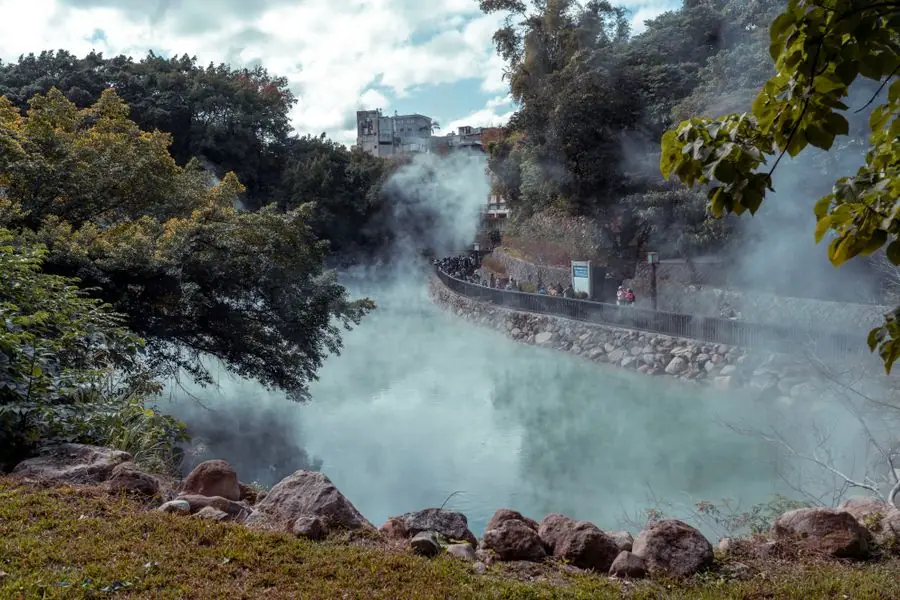
Emei Hot Springs 峨眉温泉
The mineral hot-spring resorts at the foot of Mount Emei, where you soak in outdoor and indoor pools after a day on the mountain — a relaxing end to the trip.
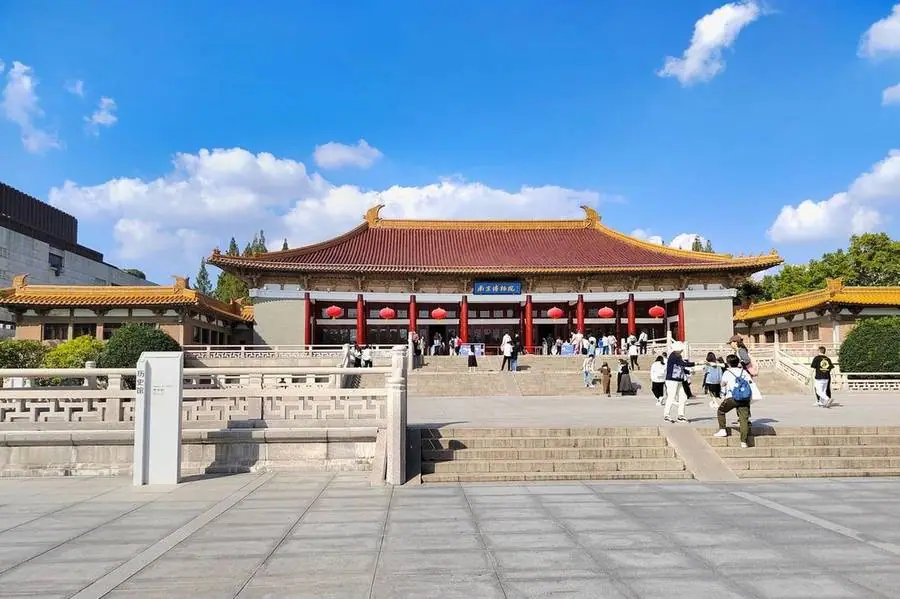
Emei Mountain Museum 峨眉山博物馆
The museum at the Emei base covering the mountain’s geology, plants, Buddhist art and the Giant Buddha link — a cool, quick orientation before the climb.
Leshan (Wuyou Hill)
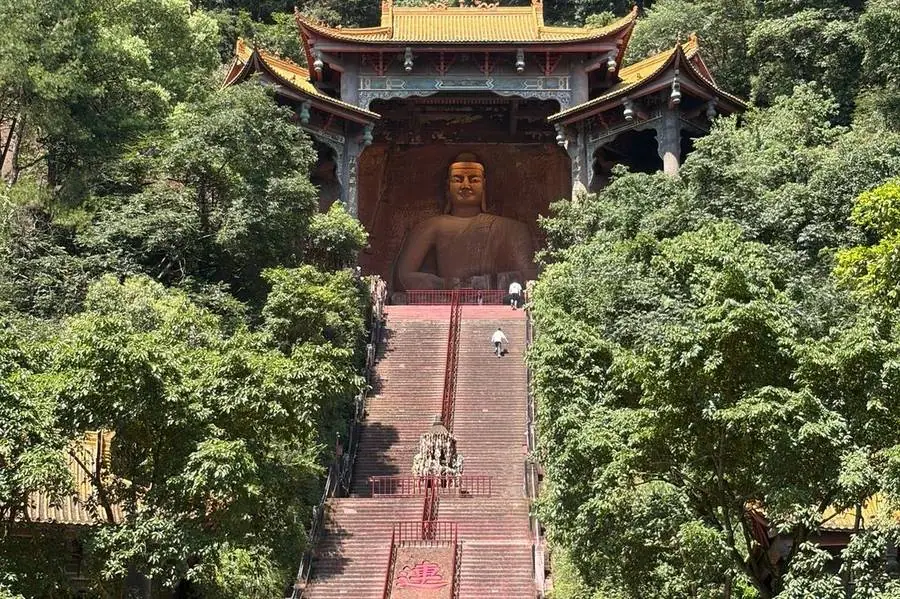
Mount Emei (summit)
Leshan city
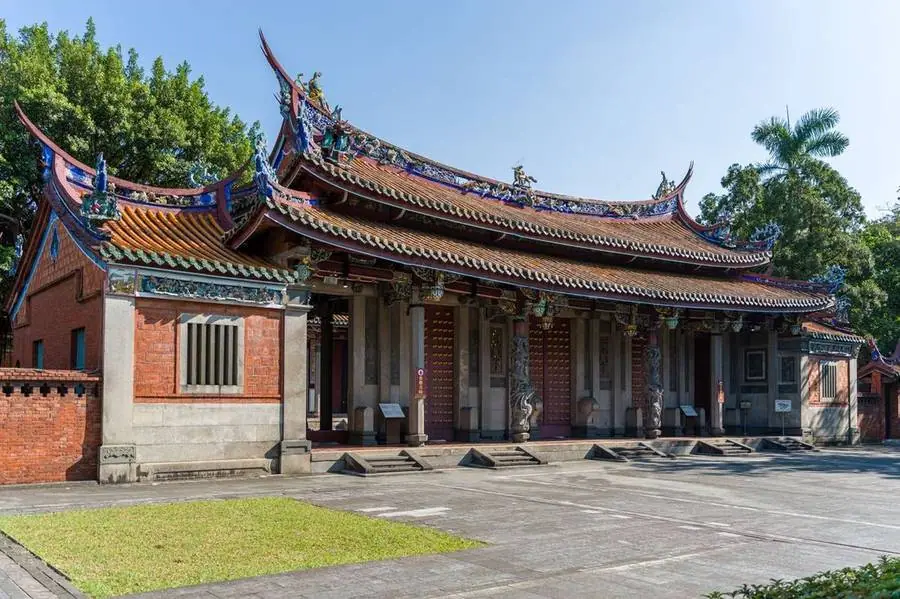
Leshan Confucian Temple 乐山文庙
The quiet city Confucian temple (Wenmiao) with a red-walled courtyard and old trees, a calm step back from the food streets of the old core.
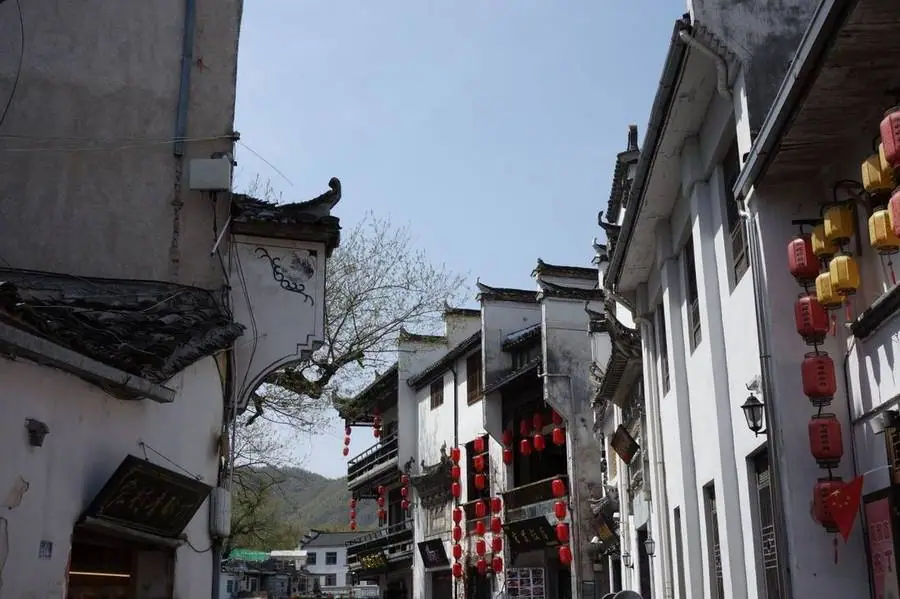
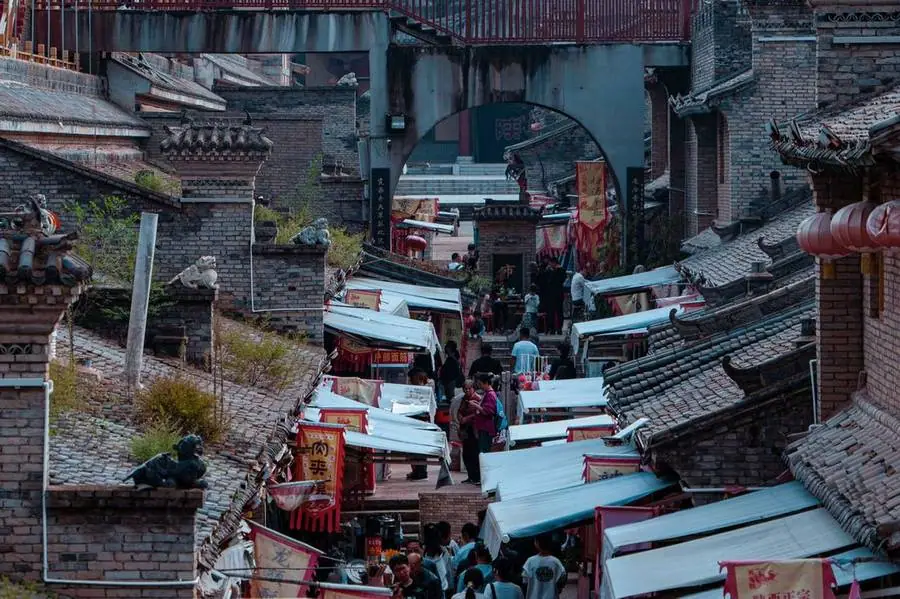
Jiading Old Town 嘉定古城
The old Jiading core of Leshan — riverside lanes, the Confucian temple and food streets where you eat Qiaojiao beef and sweet-skin duck by night.
Where to stay in Leshan
Rates are for a standard double room in 2026. Leshan is cheaper than Chengdu; the two clusters are the old Jiading core (walk to food streets) and the high-speed station (easy to Emei). Confirm the USD price at booking.
Luxury
$90–180 / nightRiverside and Emei-foot resorts with spas and mountain views, plus the top hotels near the high-speed station.
Upper mid-range
$45–90 / nightComfortable hotels a short ride from the Giant Buddha and the station, with lifts and breakfast; $45–90 / night.
Mid-range
$25–50 / nightClean Chinese business hotels in the city centre and near the bus station; $25–50 / night.
Budget
$15–30 / nightGuesthouses around the old town and the Buddha entrance — basic doubles with character; $15–30 / night.
Hostels
$10–18 / nightSocial backpacker hostels near the station and the old core, dorms and privates; $10–18 / night.
Souvenirs & local crafts
Easy to pack, easy to explain at customs — and far cheaper at a supermarket than at a scenic stall.
-
Emei Mountain Tea
Loose green tea from Emei’s slopes — the classic Leshan buy, light, fragrant and easy to pack or ship home.
-
Leshan Bamboo Weaving
Fine bamboo baskets and trays hand-woven in the Leshan countryside — a light, genuinely local craft.
-
Buddhist Carvings & Charms
Small Buddha statues, prayer beads and charms from the Buddha-park shops — meaningful gifts near the UNESCO site.
-
Sichuan Peppercorn & Spice Packs
Vacuum-packed Sichuan pepper and chilli mixes from the food streets — bring the mala flavour home.
-
Emei Medicinal Herbs
Dried mountain herbs and teas sold at the Emei base, used in local tonics; buy from marked shops.
Getting around Leshan
Leshan is compact and walkable around the old core; Mount Emei is a 40 km day trip reached by bus, train or tour. There is no metro. High-speed rail links Leshan to Chengdu in about an hour.
- High-speed rail
- Leshan Railway Station sits about 5 km south of the centre on the Chengdu–Leshan and Leshan–Emei high-speed lines; Chengdu is about 1 hour by train.Trains use real-name booking with a passport; buy through 12306 or a travel app and bring the same passport to the gate.
- Long-distance bus
- Long-distance and tourist buses run from Leshan Bus Station to Mount Emei (about 1 hour) and to Chengdu; local buses reach the Giant Buddha and Wuyou Hill.
- Metro & bus
- There is no metro in Leshan. The Giant Buddha area is on foot; get around by bus, taxi or DiDi.
- Taxis
- Taxis start around $1.50 and are metered; a ride from the station to the Giant Buddha is about $3–5.
- Ride-hailing
- DiDi runs inside Alipay with an English map and card payment — the easiest way to hail a car without Chinese cash or a phone plan.
- Shared bikes
- Shared bikes (Alipay Haibike / Meituan) suit the flat rides along the river and the old town; the Giant Buddha steps are for walking only.
- Intercity carpool
- Ride-pooling exists but is awkward for foreigners; for Mount Emei and Luocheng, book a driver, shuttle or join a tour.
Plan your 1, 2 or 3 days in Leshan
Pick the length of your stay. Each plan is its own page, anchored at the city centre and written from real traveller itineraries — including splits for sightseeing, shopping, landscape, families and older travellers.
Leshan in 1 Day
The Giant Buddha, Wuyou Temple, Oriental Buddha Park and old town — or swap in a Mount Emei day trip.
Read the plan → 2-dayLeshan in 2 Days
Day one on the Giant Buddha and city sights, day two Mount Emei and its temples.
Read the plan → 3-dayLeshan in 3 Days
Add Baoguo and Wannian temples, the hot springs, Emei Mountain Museum and Luocheng Ancient Town.
Read the plan →Frequently asked questions
- Do I need a visa for Leshan?
- Leshan has no 144-hour transit port, so arrange a Chinese visa before you fly, usually via Chengdu, unless you already qualify for visa-free entry through a major gateway. Check the current list with a consulate before booking.
- When is the best time to visit Leshan?
- March–May and September–November are mild and clear, best for both the Giant Buddha walk and the Emei climb. Avoid Labour Day (May 1–5) and National Day (Oct 1–7) if you dislike crowds. Summer is hot and rainy in the city but cool on Emei.
- How do I get to the Leshan Giant Buddha?
- It is about 5 km east of the centre across the Min River. A DiDi or taxi is about $3–5, or take a local bus. Arrive before 9 am to beat the cruise and stairway bottleneck — the cliff walk sells timed entries.
- Is Mount Emei worth a day trip from Leshan?
- Yes — about 40 km and 1 hour by bus or train. Give it a full day: take the scenic cable car to the Golden Summit for the golden Samantabhadra statue and the sea of clouds. Book the entry and cable car ahead on clear weekends.
- How much does the Leshan Giant Buddha cost?
- About $8.50–11.30 by season for the Lingyun cliff walk, with the river cruise about $9.90 extra. Child, student and senior discounts exist but are written for Chinese ID holders, so budget the full foreign price and verify on site.
- Can foreigners visit these sites?
- Yes — all listed attractions are open to foreign passport holders and use real-name ticketing with your passport. None of the 16 sites in this guide restrict foreign nationals.
- How many days do I need in Leshan?
- One day covers the Giant Buddha and the old town; two adds Mount Emei; three lets you add the hot springs, Wannian Temple and the boat-shaped Luocheng Ancient Town without rushing.
Page last reviewed: 2026-11-02.