Jinan Travel Guide 2026: Baotu Spring, Daming Lake and the City of Springs
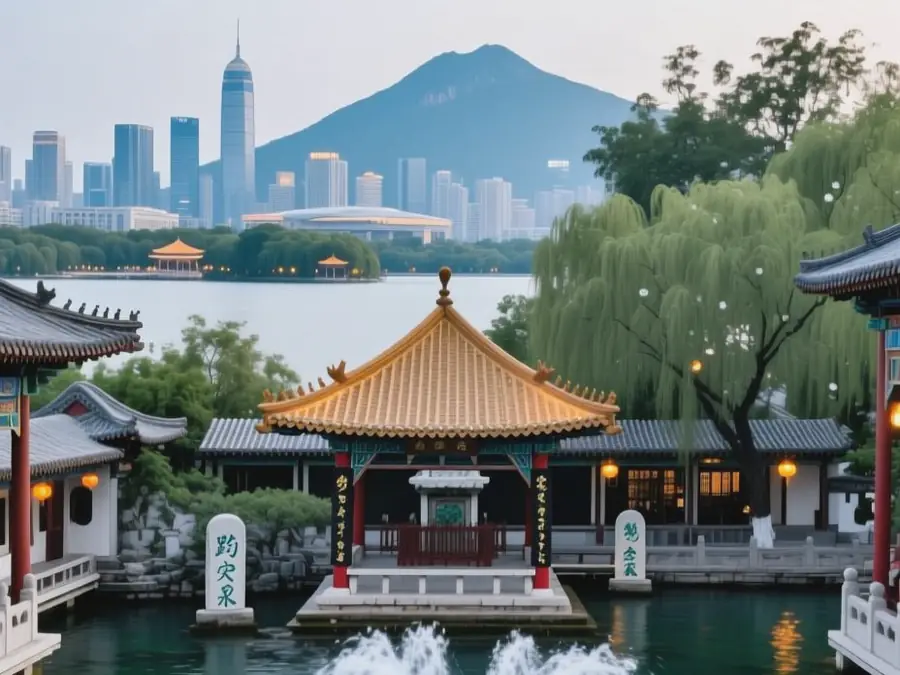
Jinan is the capital of Shandong and the city China calls the 'City of Springs' — more than seventy named springs bubble up through the old town, feeding the lakes and the moat that give the centre its green, watery character. Its headline sights are Baotu Spring, where three streams erupt from the ground year-round; Daming Lake, the willow-shaded 'first spring lake' at the heart of the city; and Thousand Buddha Mountain, the wooded hill studded with cliff-carved Buddhas on the southern edge of town. Beyond the centre lie the Sui-dynasty Four Gate Pagoda, the mountain temples of Lingyan, and the autumn colour of Red Leaves Valley. Below: the best time, the history, the food, where to stay, every major sight with its own guide, transport, and 1/2/3-day plans.
History & culture
Jinan's story is the story of its water. The springs rise where the limestone plateau of southern Shandong meets the alluvial plain, and they have watered the city for two thousand years — the Han historian records Jinan (then Licheng) as a commandery of the Qi state, and the springs gave the region its name, the 'City of Springs'. The old town grew around the springs, the moat and the canals that still thread the centre.
Jinan was a centre of Confucian and Buddhist learning through the Wei, Sui and Tang dynasties — Thousand Buddha Mountain was carved with cliff Buddhas from the Sui (581–618), the Four Gate Pagoda was built in the same Sui century as China's oldest surviving stone pagoda, and Lingyan Temple became one of the great monasteries of Shandong. The Song poet Li Qingzhao, China's most famous woman poet, was born here, and her memorial stands in Baotu Spring park.
Under the Ming and Qing the city was the seat of the Shandong provincial administration and a canal-era market town; the Qing scholar's 'Silk Road of springs' made Jinan a stop on the road between Beijing and the south. The German-built Jinan Railway (1904) and the opening of the port turned it into a modern provincial capital, and the 1948 Liberation Pavilion on the moat marks the founding of the People's Republic here.
Today Jinan is a provincial capital of rail and industry — the high-speed lines to Beijing, Shanghai and Qingdao meet here — but its face is still the springs: Baotu, Black Tiger, Five Dragon and the rest, the moat, the willows and the lake, kept as public parks at the centre of a modern city.
Best time to visit Jinan
Jinan has a temperate continental climate: hot, humid summers and cold, dry winters, with the springs flowing strongest and clearest in spring and autumn.
Budget for Jinan: hotels from $14 a night, average ticket $$10.14 — see the full cost breakdown, or start from a ready-made route.
Cuisine of Jinan
Signature dishes worth seeking out — prices are typical per-person or per-dish ranges, not fixed quotes.
-
Lu cuisine (Shandong cai)
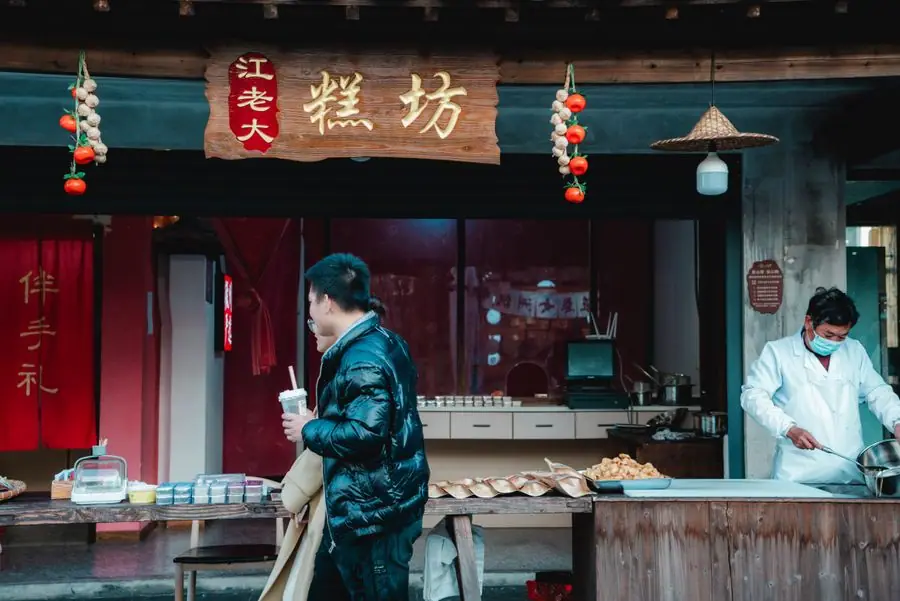
Jinan is the home of Lu (Shandong) cuisine, one of China's eight great traditions — the courtly, savoury cooking of the north. Signature dishes: sweet-and-sour carp (tangcu liyu), stir-fried kidney flower (baocao yaohua) and braised pork in soy (baocui). The classic local institution is the 'Chaoyi Xing' (超意兴) canteen for the pork-on-rice (bazirou), and the old houses around Qushuiting for the formal Lu dinner.
-
Spring-water tofu and vegetables
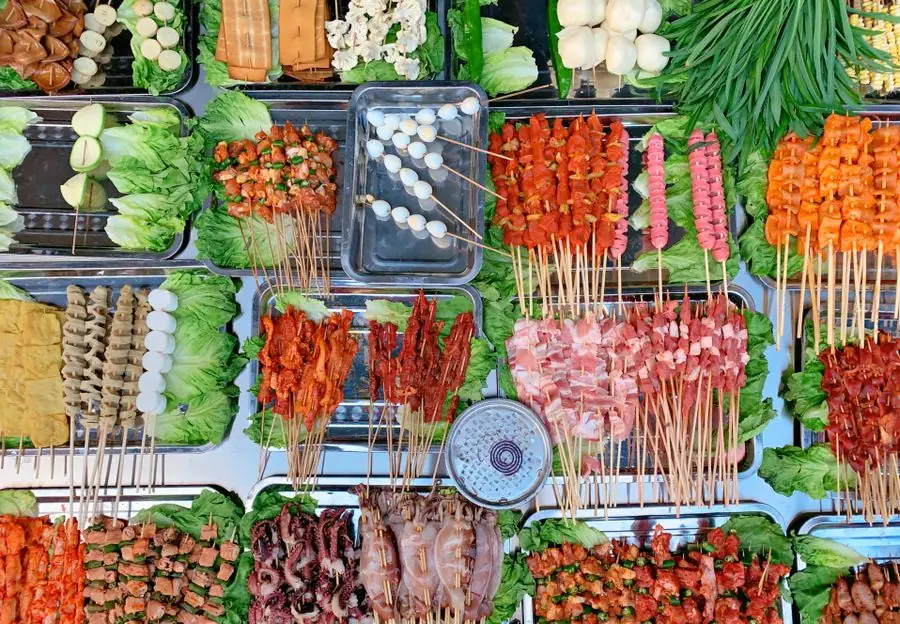
The city cooks with its own spring water — spring-tofu (quanshui doufu), spring-water noodles and the blanched seasonal greens of the old town, eaten at the small restaurants around Baotu Spring and Daming Lake where the water is the point.
-
Oil-spin (youxuan) and sweet foam (tianmo)
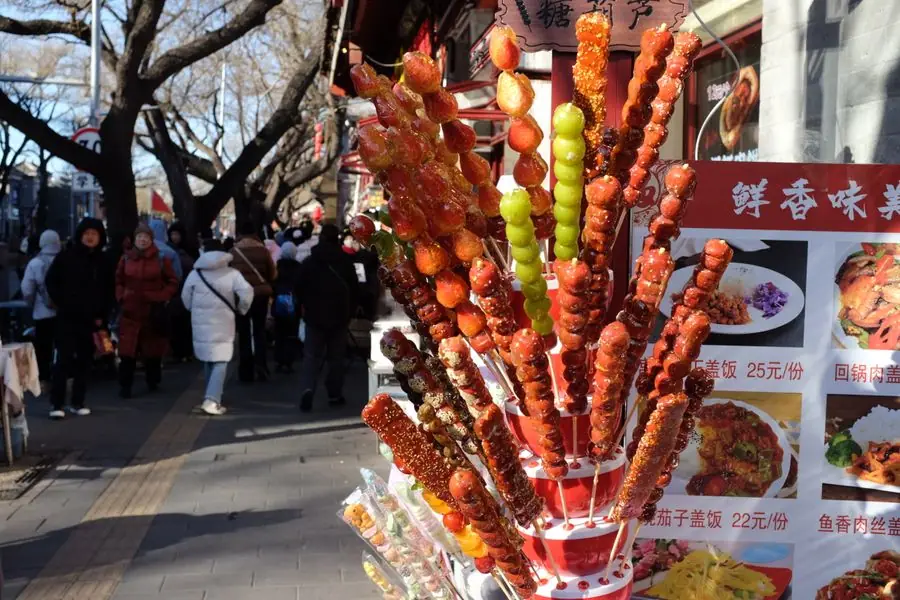
The old breakfast canon: youxuan, the spiral sesame flatbread crisp outside and layered inside, and tianmo, a savoury millet-and-vegetable porridge (despite the name, it is not sweet) — the working breakfast of the lanes, best at the morning stalls around the old town.
-
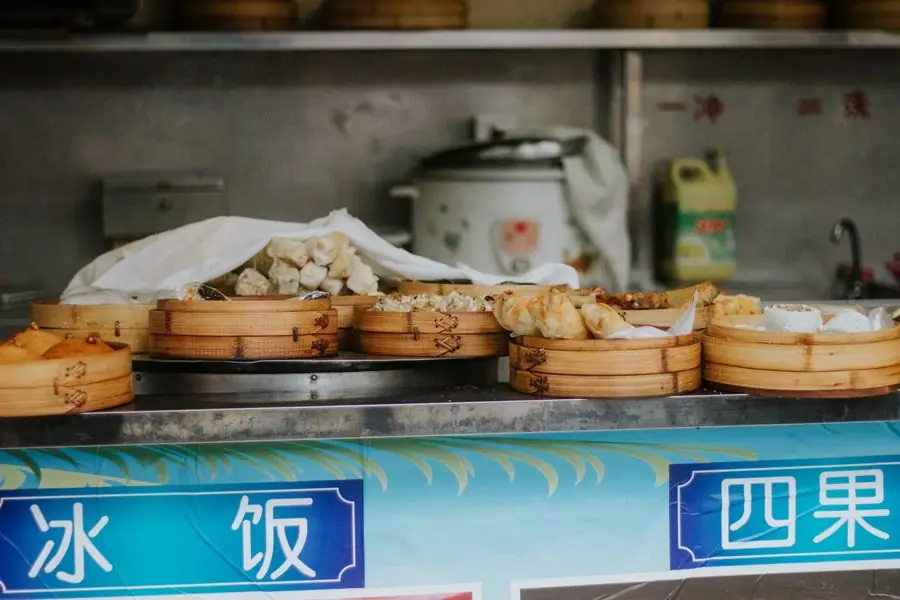
Baotu Spring buns (baotu baozi)
The local steamed bun — thin-skinned, soupy, filled with pork or crab — eaten at the old houses near the spring; the Qushuiting branch of the old 'Caobao' (草包包子) brand is the institution.
-
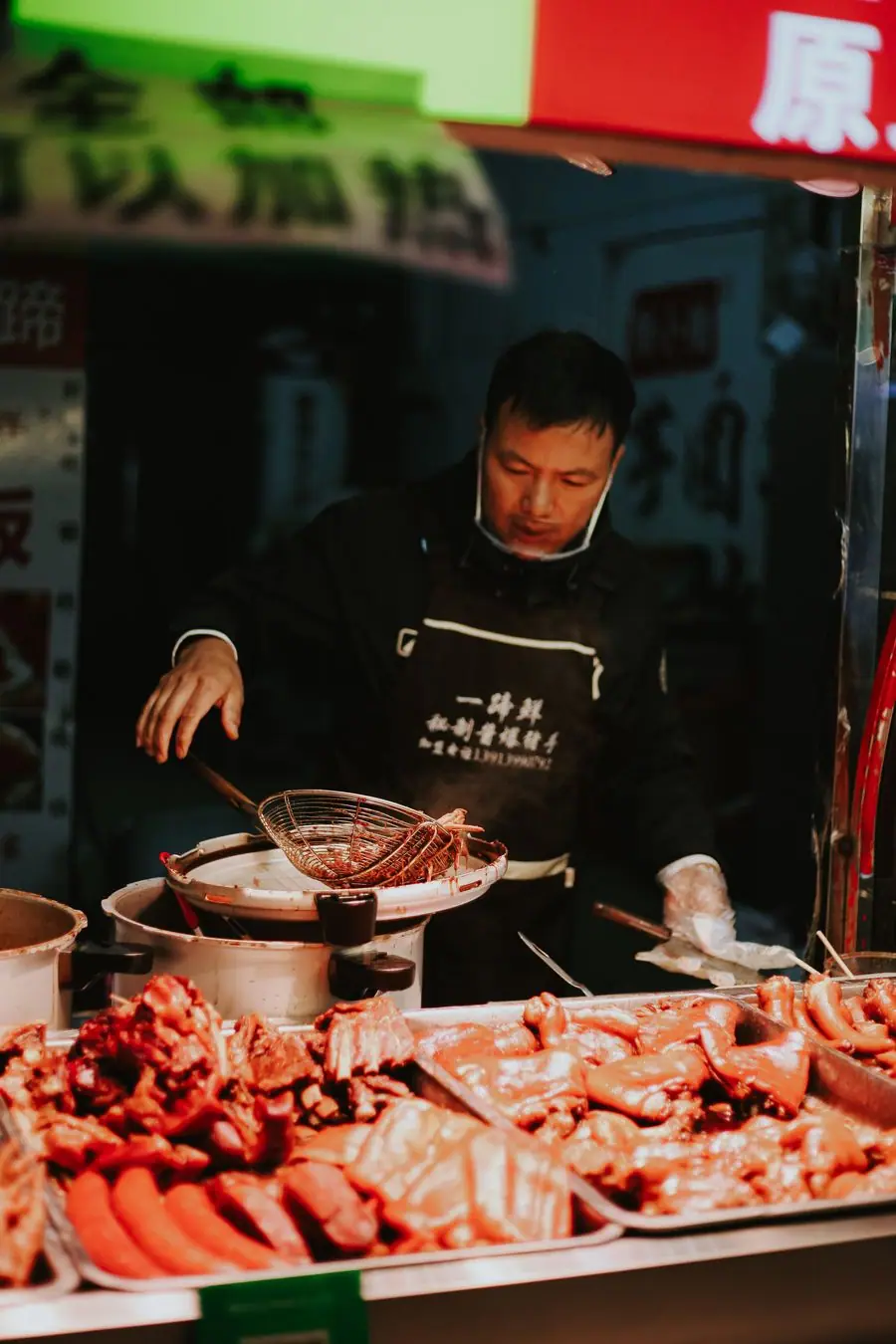
Jinan barbecue and night market
The evening food: yangrou chuan (mutton skewers), grilled fish and the night-market stalls of Huanlian (环联夜市) and Kuanhouli (宽厚里) — the casual, cheap, late plan after the springs close.
Every major sight — with its own guide
Right after the food above, here are the sights — each one links to its own full guide (what to see, how to get there, facilities and the best season). Names follow each sight's official English signage.
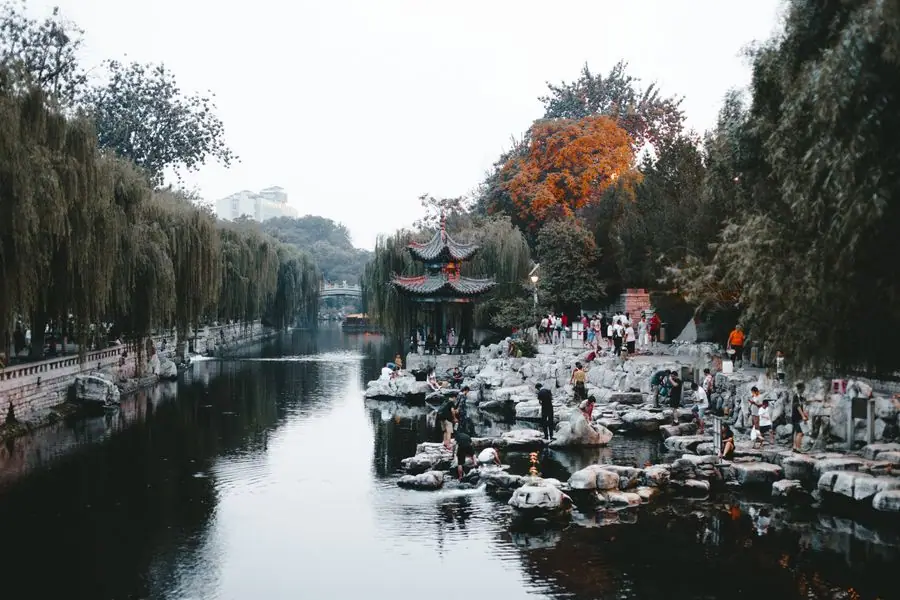
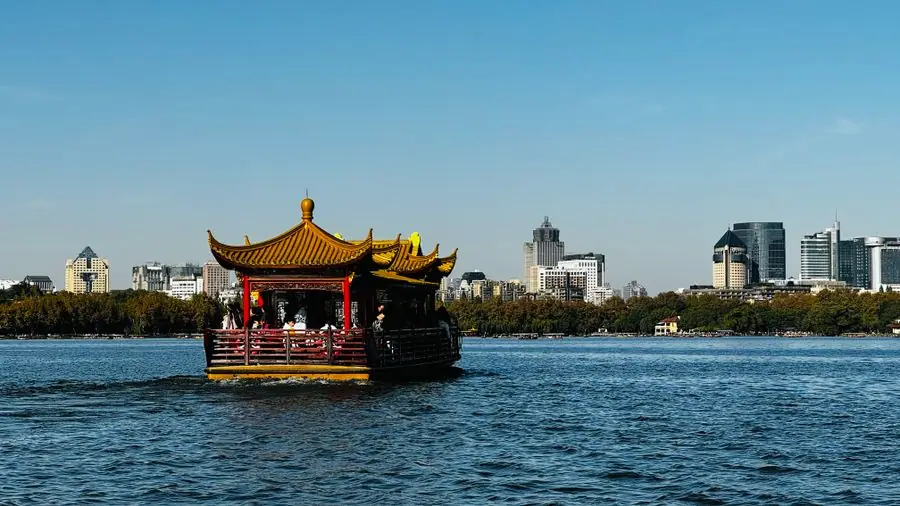
Lixia District, ~1.5 km E on the moat
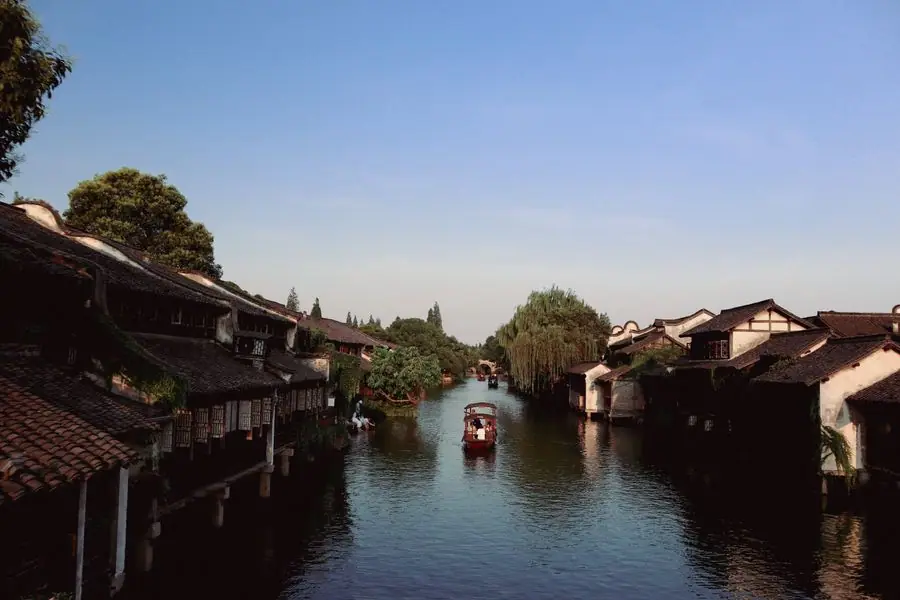
Black Tiger Spring 黑虎泉
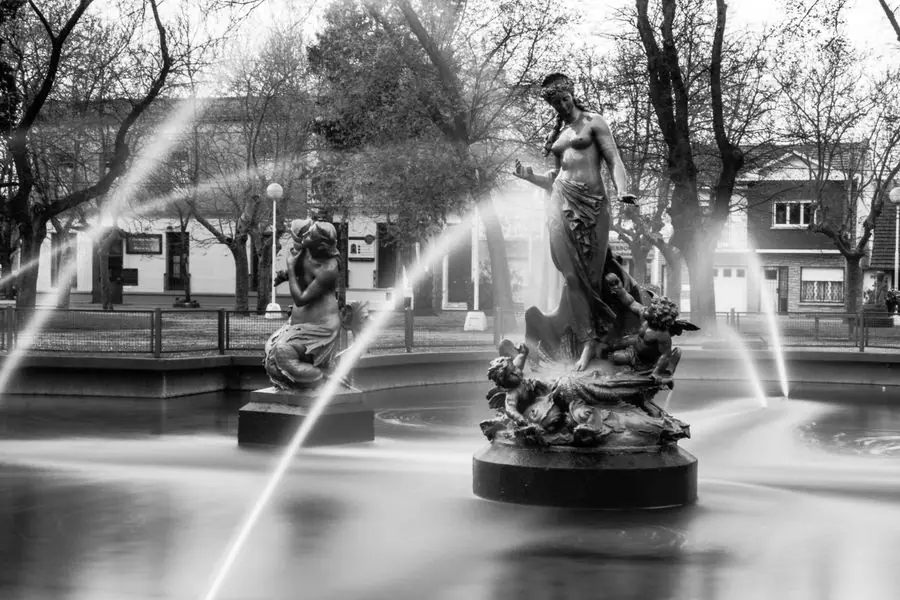
One of the four great spring groups of Jinan and the second of the seventy-two named springs — water surges from three stone tiger heads into a square pool, roaring in the wet season, beside the old city moat and across from Liberation Pavilion. It is the most 'living' of the springs: citizens come with bottles and buckets to draw the cold, clear water, and the moat walk links it to Baotu Spring and Daming Lake. The name comes from the tiger-shaped spouts and the roar of the water.
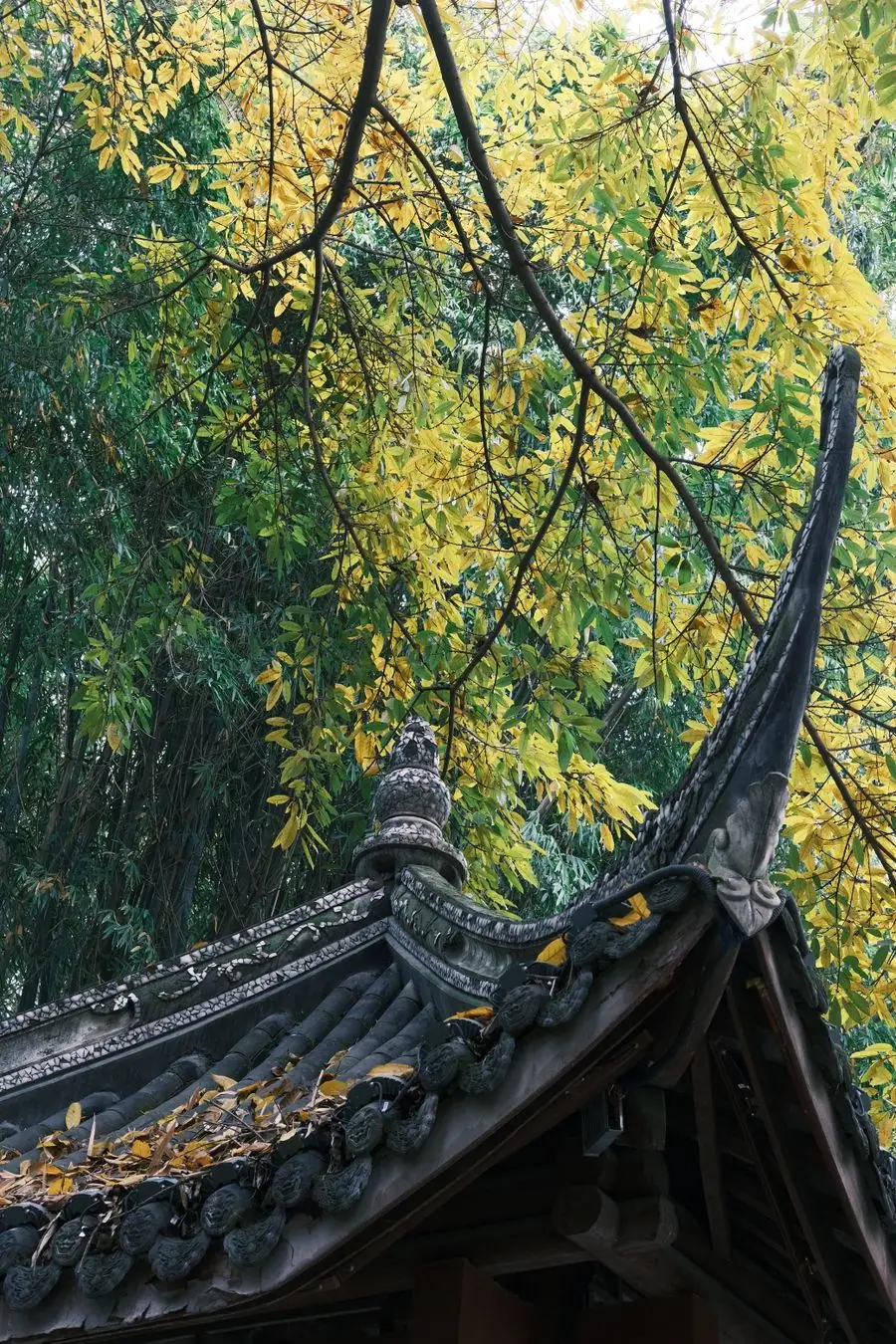
Liberation Pavilion 解放阁
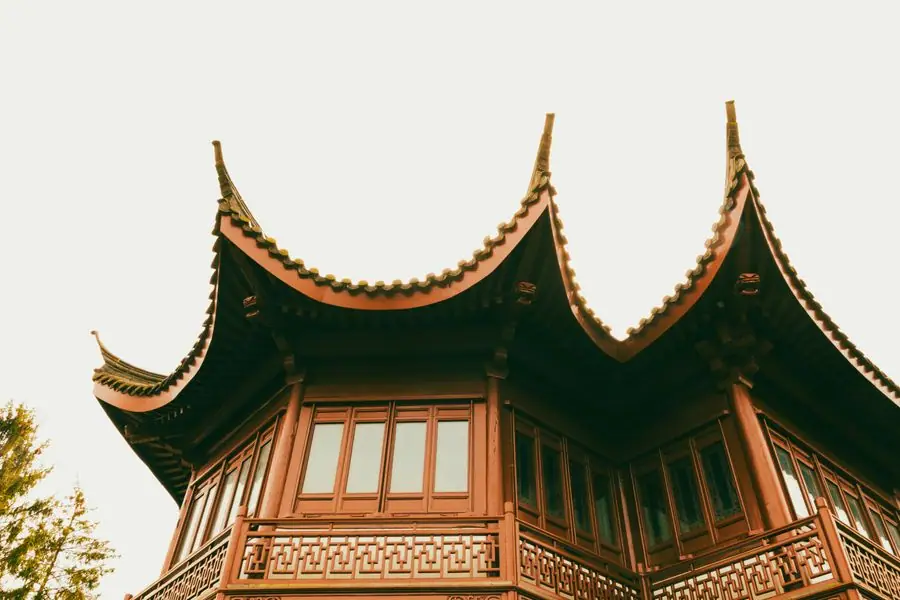
The memorial pavilion on the old city moat, where the People's Liberation Army entered Jinan in 1948 — a two-storey red pavilion on the east bank of the moat, opposite Black Tiger Spring, with a small museum of the battle inside and a rooftop view over the water and the old town. It is the city's patriotic landmark and the eastern anchor of the spring-water walk.


Where to stay in Jinan
Stay in the old centre around Quancheng Square, Baotu Spring and the moat — the springs, the lake, the restaurants and the metro are all walkable, and the train stations are a short ride away. The High-tech (Hi-tech) zone to the east has the new business hotels; Hongjialou and the university district are quieter and closer to the cathedral; the Zhangqiu and Licheng fringes are only worth it for the wildlife park or the mountain resorts.
Budget
$14–28 / nightChain hotels (Hanting, JI, 7 Days) around Quancheng Square and the railway stations, plus guesthouses near the old town; clean doubles and foreign-passport registration is routine at the chains.
Mid-range
$35–70 / nightJI Hotel, Vienna and local full-service hotels downtown and by the moat — the sweet spot; spring-view rooms cost a little more, and Hongjialou is the quiet alternative.
Splurge
$85–170 / nightThe international chains and the new business hotels in the Hi-tech zone and by the Olympic centre — pools, city views and the corporate crowd.
Souvenirs & local crafts
Easy to pack, easy to explain at customs — and far cheaper at a supermarket than at a scenic stall.
-

Lu cuisine condiments and vinegar
Jinan's cooking heritage: the local mature vinegar, the sesame paste and the packaged Lu-cuisine sauce kits sold at the supermarkets — the edible gift for a food-minded visitor.
-

Zhangqiu iron wok (Zhangqiu tie guo)
The hand-forged iron woks of Zhangqiu district, a century-old craft and a practical, famous Jinan product — heavy, smooth and built to last, sold at the cookware shops and markets.
-
Spring-water products
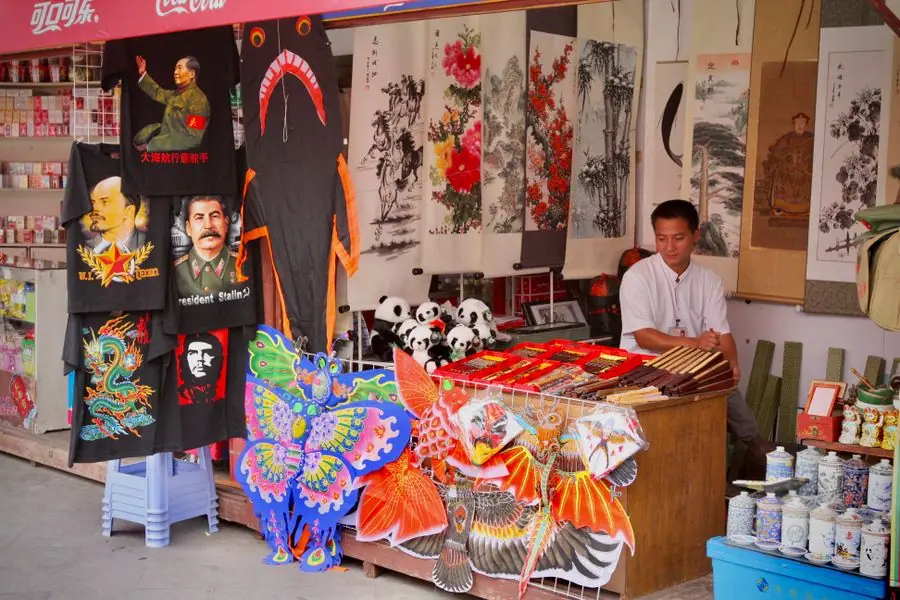
Spring-themed teas, the 'spring' mineral water and the branded spring-water souvenirs from Baotu Spring park — the city's own calling card in a bottle or a tin.
-
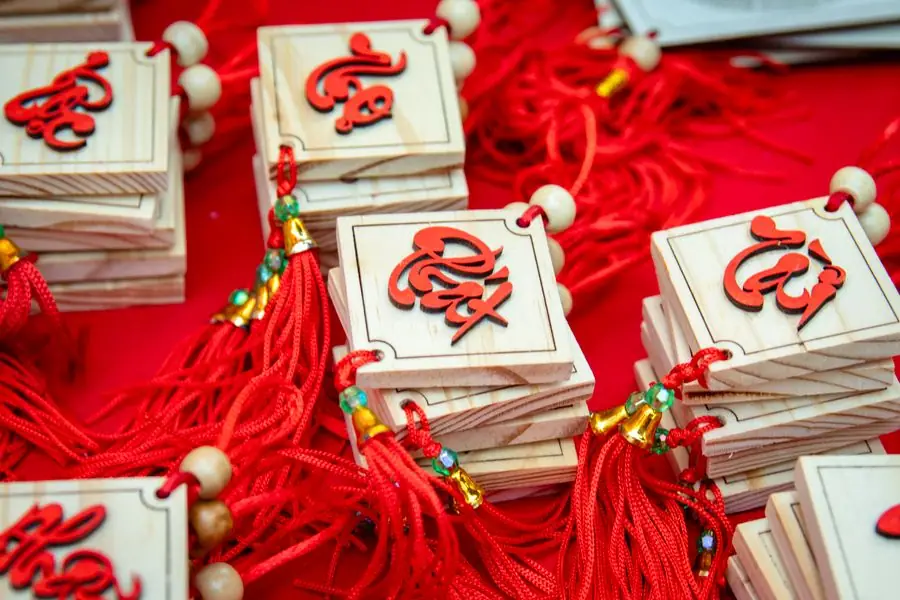
Shandong peanuts and chestnuts
The province's nuts — roasted peanuts and the sweet chestnuts of the Taihang foothills — bagged at the markets, easy to carry and genuinely local.
-
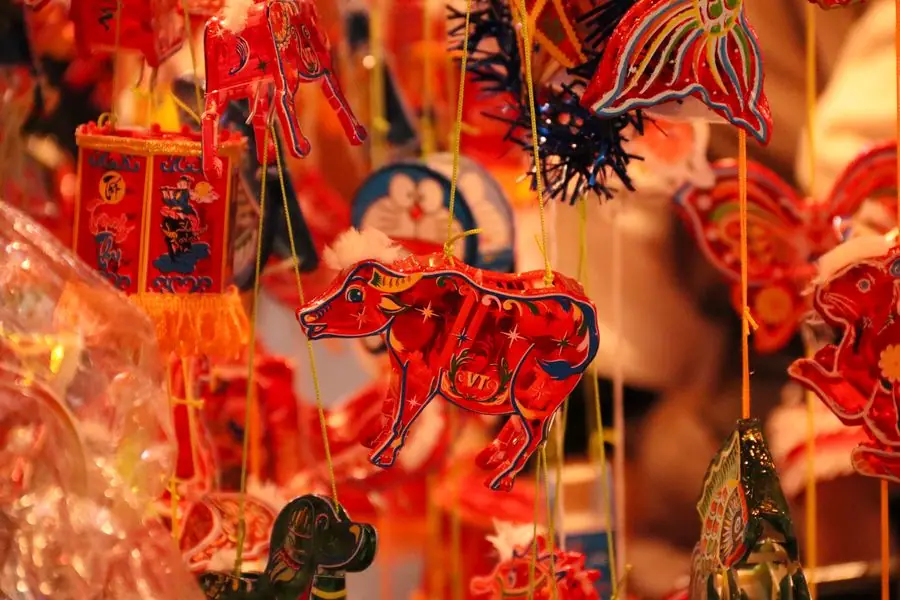
Li Qingzhao and Confucian stationery
Books, prints and calligraphy sets themed on Li Qingzhao (Jinan's poet) and Confucius — the cultural gift, sold at the museums and the old-town shops.
Getting around Jinan
Jinan runs on buses, a growing metro (lines 1/2/3) and taxis, with three railway stations and one airport the real gateways.
- High-speed rail
- Jinan West (Jinan Xi) is on the Beijing–Shanghai high-speed line: Beijing South about 1.5 h, Shanghai Hongqiao about 3.5 h, Tianjin about 1 h; Jinan Station (city centre) and Jinan East serve the regional lines. Add a metro or taxi to the centre.
- Long-distance bus
- City buses are cheap (about $0.28 / RMB 2) and cover the whole centre including Baotu Spring, Daming Lake and the moat; the airport bus links Yaoqiang to downtown.
- Metro & bus
- Metro lines 1/2/3 run across the city; line 2 reaches Hongjialou, line 3 reaches the airport and the Olympic centre — tap the Alipay or WeChat transit QR code.
- Taxis
- Taxis are metered with a low flag fall (about $1.13 / RMB 8); the airport is about $11–14 (RMB 80–100) to the centre, the stations about $3–4 (RMB 20–30).
- Ride-hailing
- DiDi is the default for the outlying temples and the mountain resorts.
- Shared bikes
- Shared e-bikes are everywhere at about $0.28–0.56 (RMB 2–4) a ride — the practical way around the car-free old town and the moat loop.
- Intercity carpool
Plan your 1, 2 or 3 days in Jinan
Pick the length of your stay. Each plan is its own page, anchored at the city centre and written from real traveller itineraries — including splits for sightseeing, shopping, landscape, families and older travellers.
Jinan in one day: the spring-water old town
Morning at Baotu Spring and the adjoining Five Dragon Pool, the moat walk to Black Tiger Spring and Liberation Pavilion, lunch on Qushuiting Street, then Daming Lake and the lit Chaoran Tower at dusk, ending on Quancheng Square's musical fountain.
Read the plan → 2-dayJinan in two days: + Thousand Buddha Mountain and Hongjialou
Day two climbs Thousand Buddha Mountain for the cliff Buddhas and the city panorama, visits the Shandong Museum and Art Gallery, and finishes at the Gothic Sacred Heart Cathedral (Hongjialou) and the old commercial streets of Jing San Road.
Read the plan → 3-dayJinan in three days: + the southern mountains
Give the third day to the south: the Sui-dynasty Four Gate Pagoda and the mountain temples of Lingyan, or — in autumn — the red foliage of Red Leaves Valley and the waterfalls of Jiuru Mountain, back in the evening.
Read the plan →Frequently asked questions
- When is the best time to visit Jinan?
- April–May and September–October are mild and dry, the springs full and the willows or autumn leaves at their best. Summer is hot and rainy; winter is cold but good for museums and hotpot.
- Do I need a visa for Jinan?
- Good news: Jinan Yaoqiang International Airport is one of China's 240-hour visa-free transit ports, so eligible nationals (57 countries, transiting to a third country) can enter visa-free and stay up to 10 days — Shandong is one of the provinces covered by the scheme. Otherwise arrange a Chinese visa in advance; check the current qualifying list with a consulate before booking.
- What is the 'City of Springs'?
- Jinan sits where the limestone plateau meets the plain, and more than seventy named springs bubble up through the old town — Baotu, Black Tiger, Five Dragon and the rest — feeding the moat, the lakes and the canals. The water is the city's defining feature, kept as public parks at the centre.
- How much do the sights cost?
- Many are free: Daming Lake, the moat springs (Black Tiger, Five Dragon), Qushuiting Street, Quancheng Square, Liberation Pavilion, Four Gate Pagoda, the cathedral and the Shandong museums. The paid ones: Baotu Spring $5.63 (RMB 40), Thousand Buddha Mountain $3.94 (RMB 28), Lingyan Temple $5.63 (RMB 40), Jiuru Mountain $11.13 (RMB 79), Red Leaves Valley $12.68 (RMB 90), Jinan Zoo $3.38 (RMB 24), and Jinan Wildlife World $13.94 (RMB 99).
- How many days do I need?
- Two days covers the spring-water old town and Thousand Buddha Mountain; three adds the southern mountains (Four Gate Pagoda, Lingyan, or Red Leaves Valley / Jiuru in autumn). Add a fourth for the museums and the Hongjialou cathedral quarter.
- How do I get around?
- There is a metro (lines 1/2/3) and cheap buses (about $0.28 / RMB 2) across the centre, taxis start at about $1.13 (RMB 8), DiDi does the outlying temples, and shared e-bikes are the way around the car-free old town and the moat loop.
Page last reviewed: 2026-11-02.