Huangshan 2026: Yellow Mountain, Hongcun & Xidi on a 1–3 Day Plan
Huangshan is one name for two UNESCO sights: the granite peaks and sea of clouds of Yellow Mountain, and the white-walled Huizhou villages at its foot — Hongcun, Xidi and Tangmo. High-speed rail from Hangzhou and Shanghai drops you in a small, walkable city, so you can ride up the mountain one day and wander the villages the next. Real-name booking is the only friction; the scenery does the rest.

History & culture
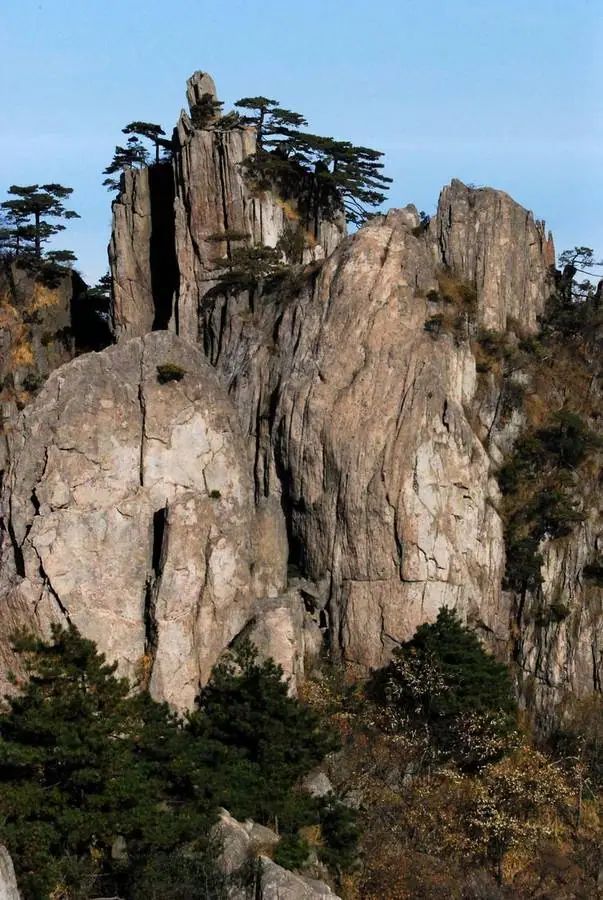
Huangshan takes its name from the Huangshan (Yellow Mountain) range, a sacred and scenic landmark for more than a thousand years. Tang-dynasty poets and later Ming and Qing scholars praised its "four wonders" — odd pines, strange rocks, a sea of clouds and hot springs — and it became the heart of the Huangshan School of Chinese landscape painting.
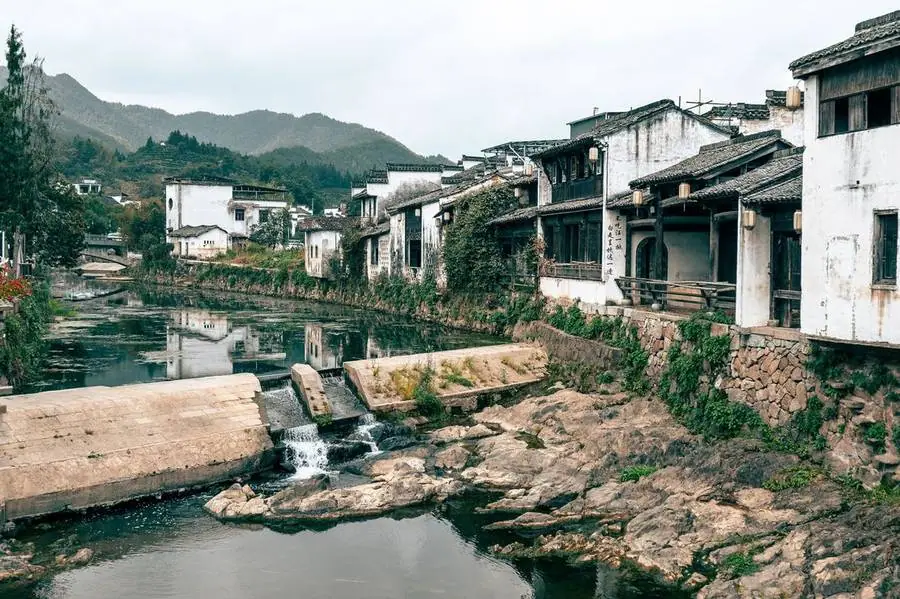
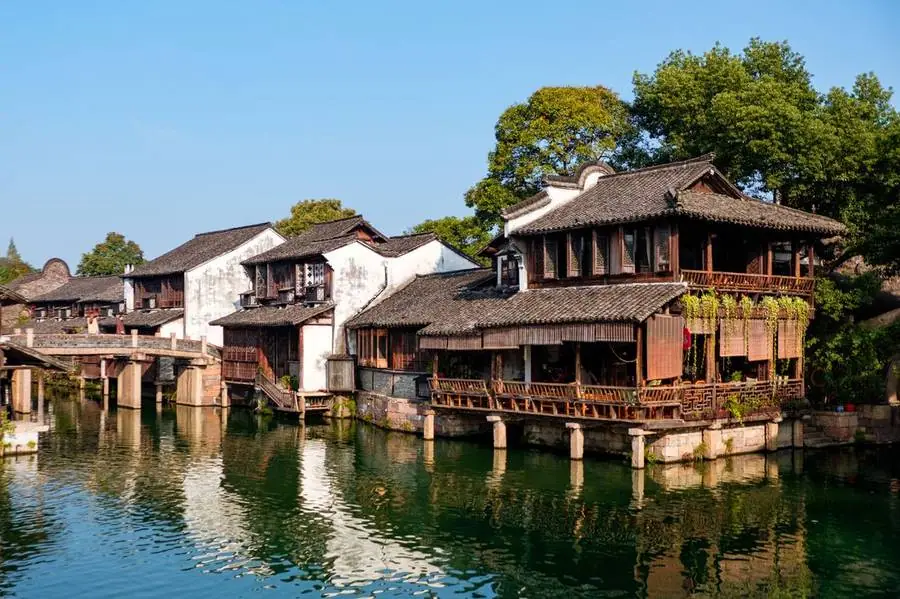
The surrounding lowlands are the heart of old Huizhou, a wealthy merchant region from the Song to Qing dynasties. Huizhou merchants built the white-walled, black-tiled villages you see today — Hongcun, Xidi, Chengkan and others — and the ink, paper and carving crafts that still define the area.
Modern Huangshan is a compact transport hub: high-speed rail reaches Shanghai, Hangzhou and Nanjing in a few hours, and the city funnels visitors up the mountain and out to the villages. The natural landscape became a UNESCO World Heritage site in 1990 and the ancient villages in 2000, which is why the mountain and the villages share one travel plan.
Best time to visit Huangshan
Huangshan is best in cool, clear weather with low cloud — spring and autumn give the best light for the granite peaks, the pines and the famous sea of clouds.
Budget for Huangshan: hotels from $18 a night, average ticket $$11.34 — see the full cost breakdown, or start from a ready-made route.
Cuisine of Huangshan
Signature dishes worth seeking out — prices are typical per-person or per-dish ranges, not fixed quotes.
-
Hairy Tofu (Mao Tofu)
A Huizhou speciality of fermented tofu with a furry white culture, fried and braised with chilli and scallion. An acquired taste and a village street-food rite of passage.
-
Stinky Mandarin Fish (Chou Gui Yu)
The signature Huizhou dish: freshwater fish cured, then steamed with pork, bamboo shoot and chilli until the "stink" turns sweet and savoury.
-
Huangshan Sesame Cake (Shaobing)
A small, flaky baked bun with sesame and a savoury pork or sweet filling; cheap, portable and sold hot from village bakeries.
-
Yi Pin Guo (One-Pot Casserole)
A layered earthenware hot pot of pork, chicken, tofu, dried bamboo and vegetables, slow-cooked and shared — the Huizhou family feast.
-
Steamed Pork with Preserved Mustard Greens
Pork belly steamed under sweet dried mustard greens until melting; a classic Huizhou home dish on most restaurant menus.
-
Huizhou Dried Bamboo Shoots
Tender dried bamboo shoots stir-fried with pork or braised in broth; a mountain-produce staple through the winter.
Every major sight — with its own guide
Right after the food above, here are the sights — each one links to its own full guide (what to see, how to get there, facilities and the best season). Names follow each sight's official English signage.
Huangshan Scenic Area
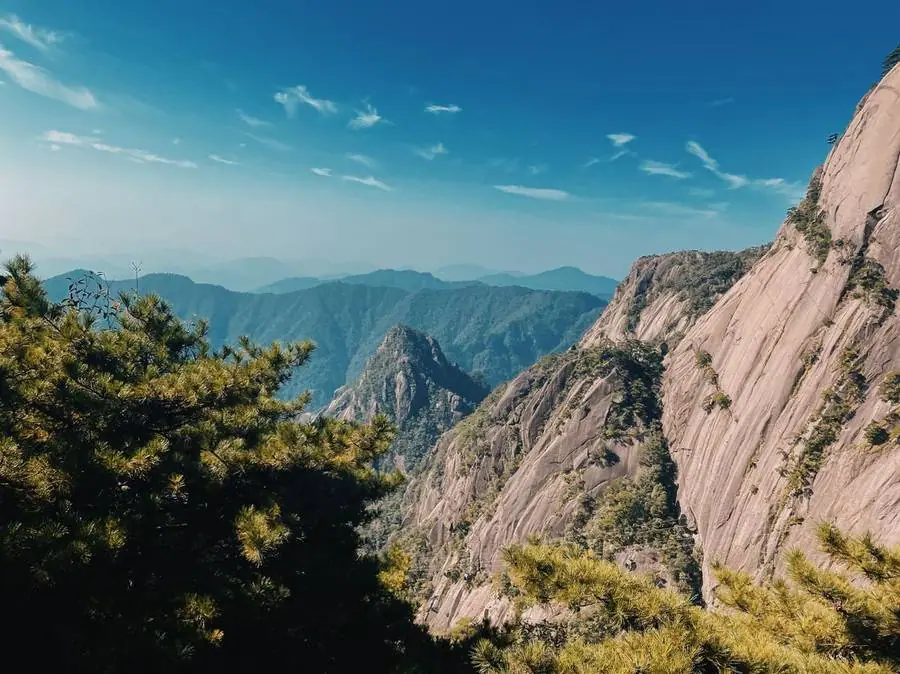
Mount Huangshan (Yellow Mountain) 黄山风景区
The UNESCO granite range of odd pines, strange rocks and a sea of clouds — Huangshan’s single must-see, booked real-name with your passport and reached by cable car or on foot.
Real-name booking with your passport is required through the official Huangshan Tourism platform; this is routine and foreign passports are accepted.
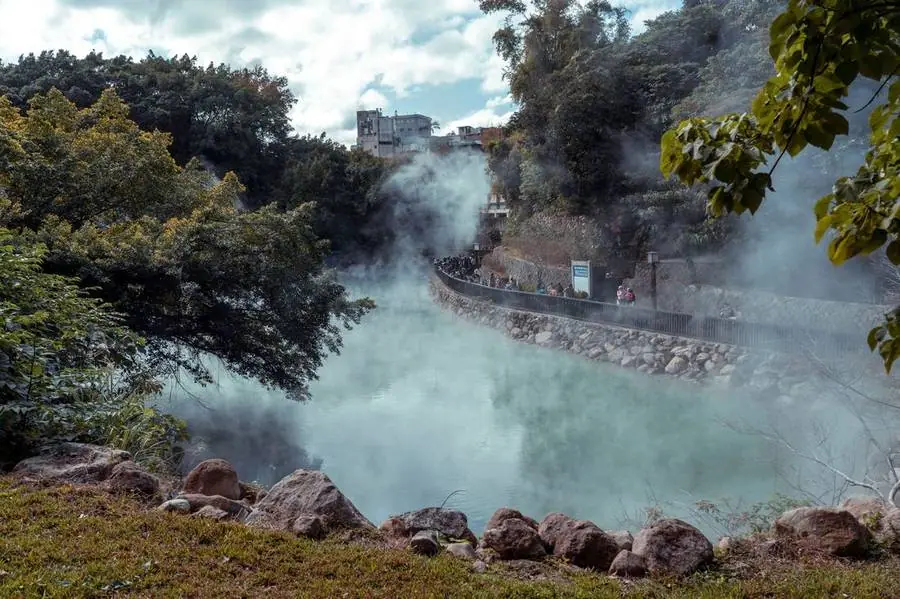
Huangshan Hot Springs 黄山温泉
The mountain’s historic "fourth wonder" — a hot-spring spa at the foot of Yellow Mountain, warm after a long descent or as a relaxed half-day.
Yi County (north)
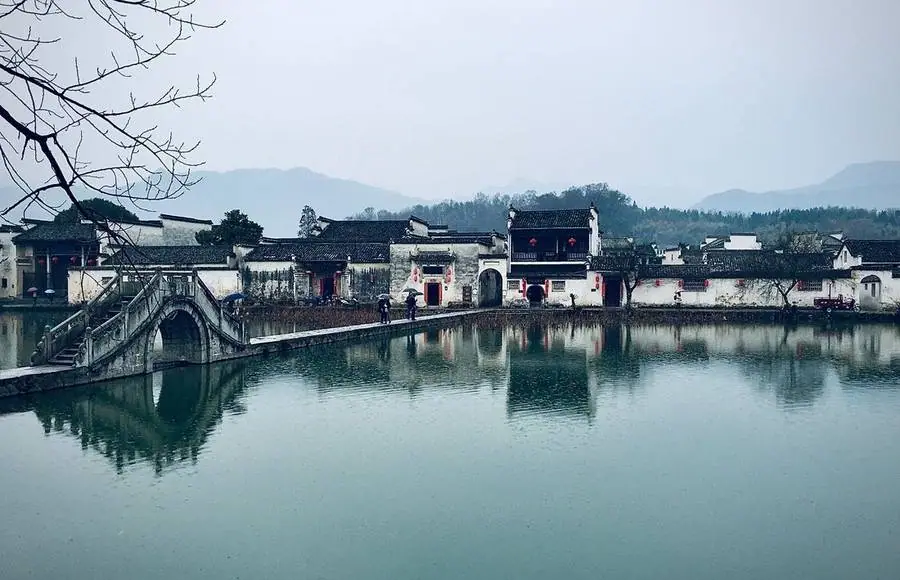
Hongcun Ancient Village 宏村
A UNESCO ox-shaped Huizhou village of white walls, black tiles and a crescent Moon Pond — the postcard of old China and a Crouching Tiger, Hidden Dragon film set.
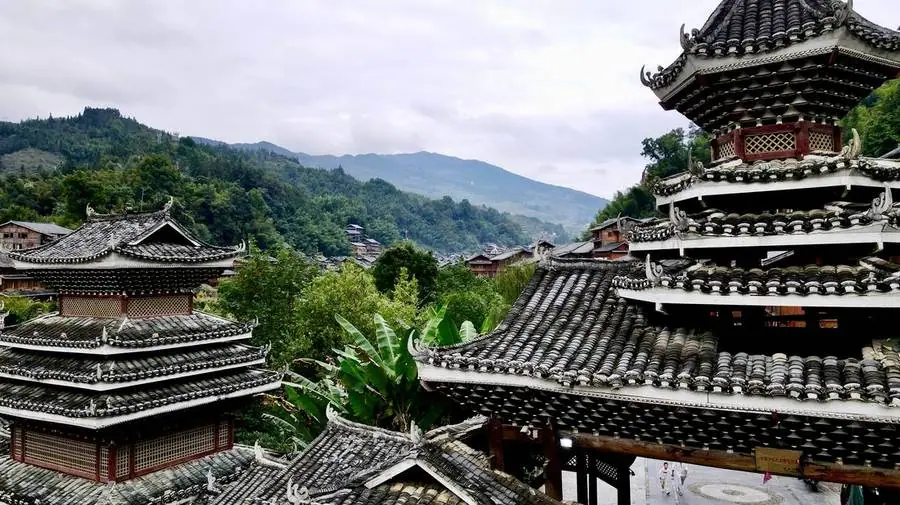
Xidi Ancient Village 西递
A quieter UNESCO Huizhou village of 300 Ming–Qing courtyard homes laid out like a ship, with carved gates and far fewer tour groups than Hongcun.
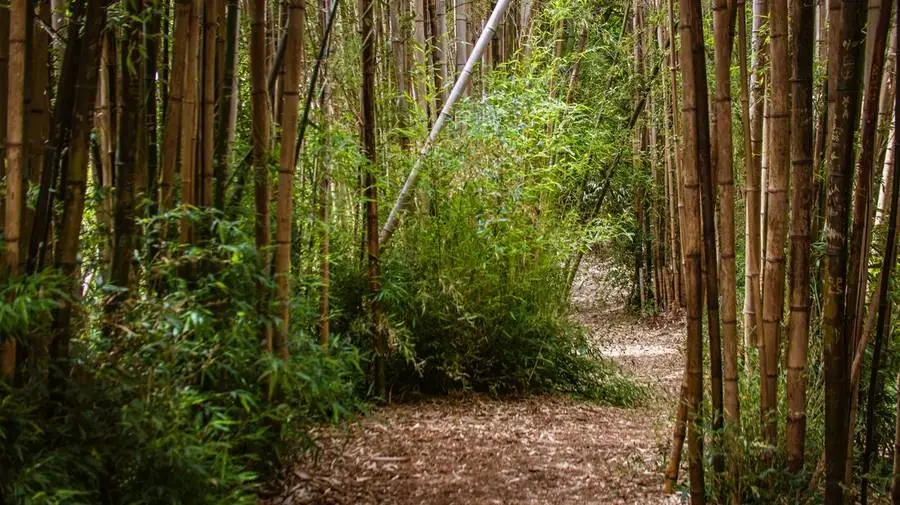
Mukeng Bamboo Sea 木坑竹海
A dense bamboo forest near Hongcun, filmed for Crouching Tiger, Hidden Dragon — a cool, green walk on raised boardwalks above the stalks.
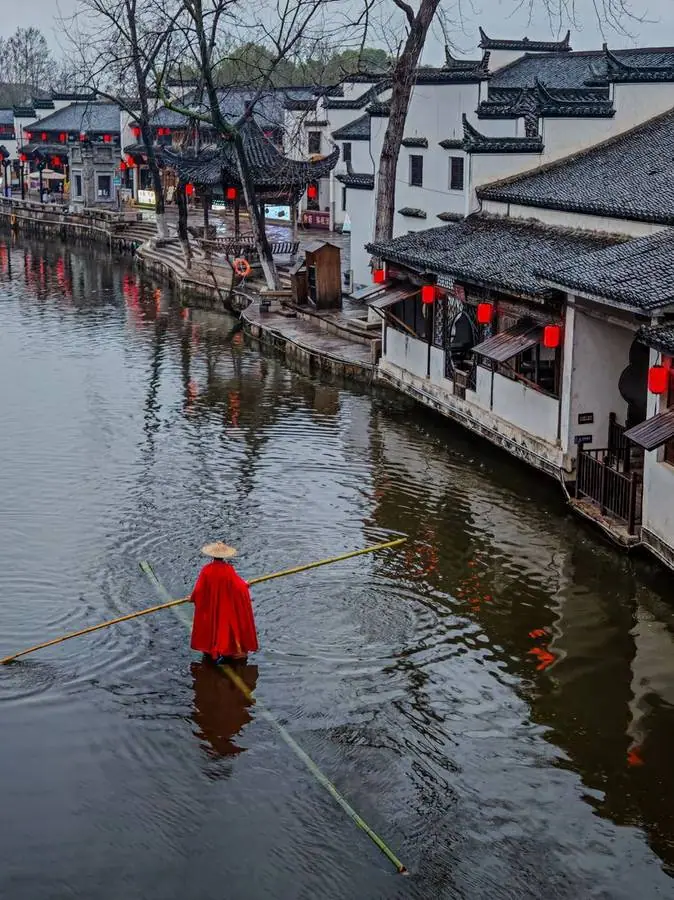
Nanping Ancient Village 南屏
A labyrinth of 72 alleys and Ming–Qing homes near Hongcun, famous as a film location and loved for its quiet, unchanged lanes.
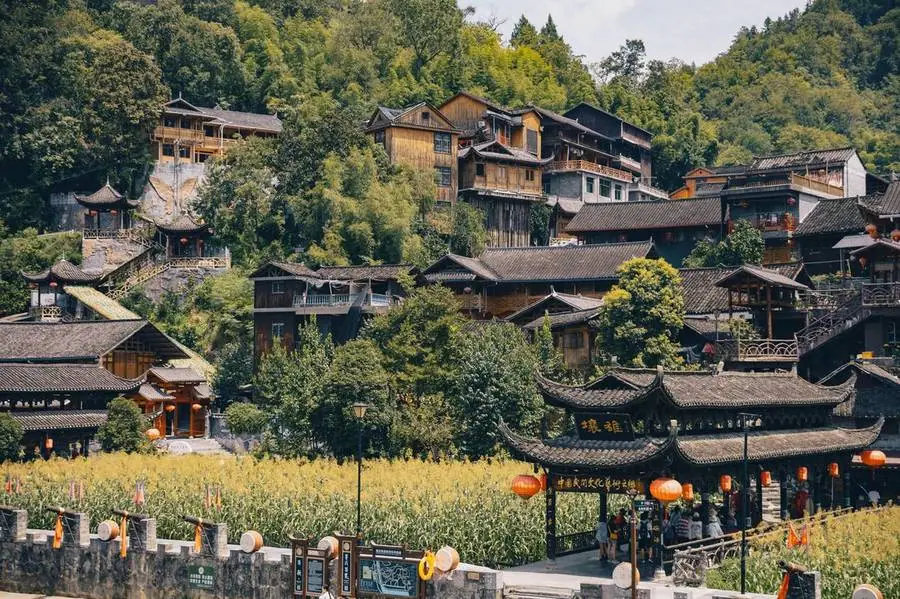
Lucun Woodcarving Houses 卢村木雕楼
A small village near Hongcun known for the "Woodcarving Lou" — a Qing merchant house whose gilded window screens are among the finest in Huizhou.
Huangshan City (Tunxi)
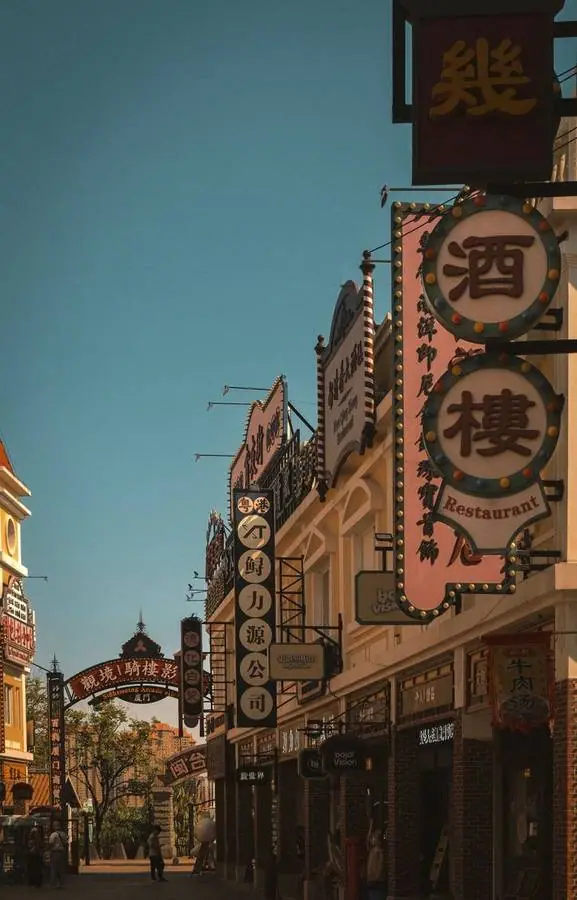
Huizhou District
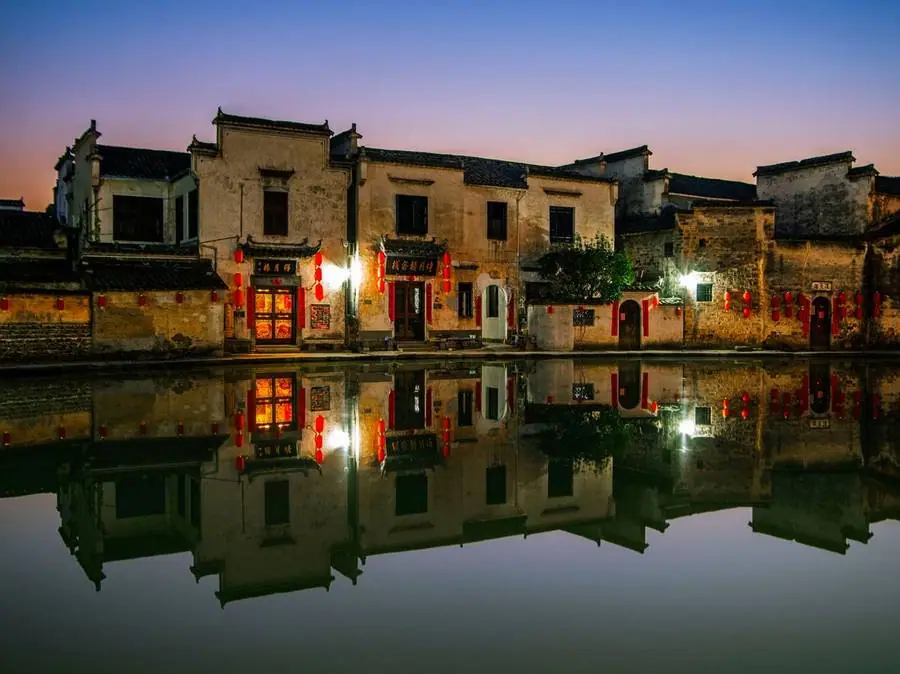
Tangmo Ancient Village 唐模
A small, calm Huizhou village built around a canal and a carved memorial arch, far less crowded than Hongcun and an easy half-day from the city.
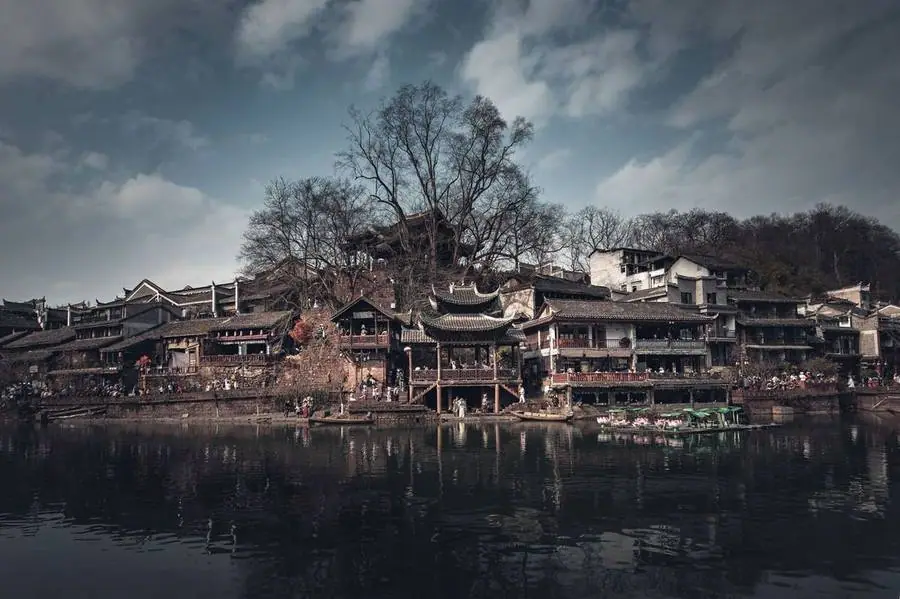
Chengkan Ancient Village 呈坎
A well-preserved Hui village laid out on a bagua (eight-trigram) plan, with two Ming ancestral halls and fewer visitors than the famous two.
Shexian
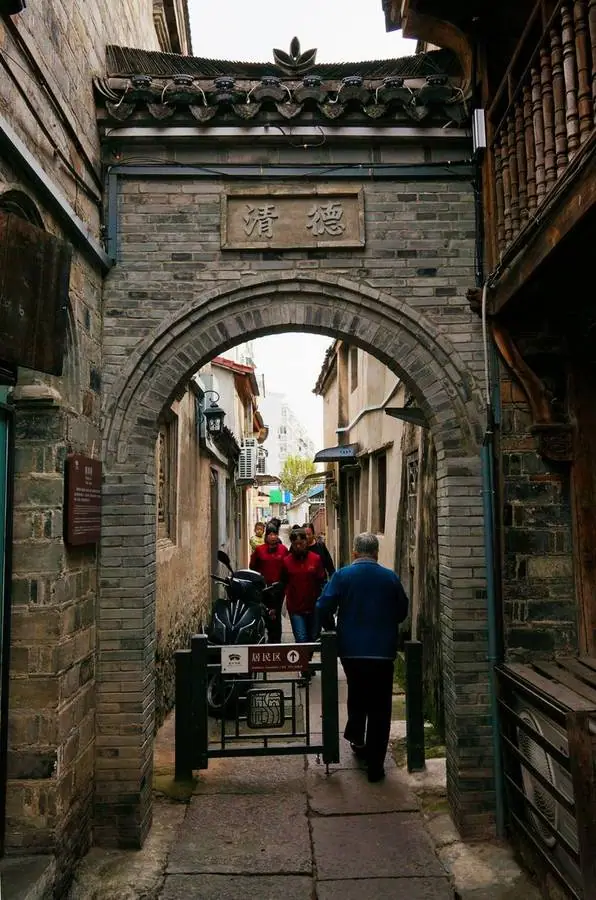
Huizhou Ancient City 徽州古城
The walled old seat of Shexian county, with a surviving city gate, the Xu Guo stone archway and quiet lanes of Hui architecture around the river.
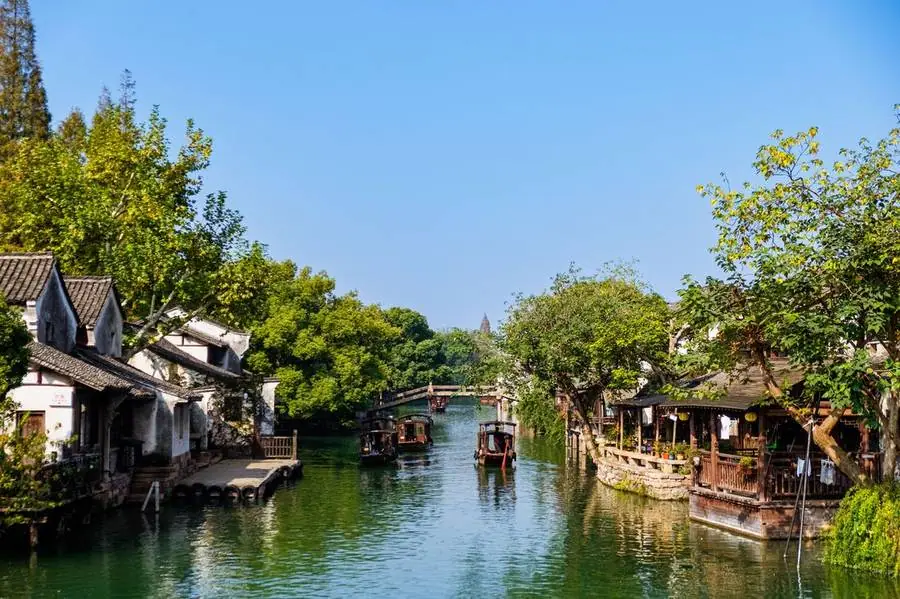
Tangyue Memorial Archways 棠樾牌坊群
A row of seven Qing-era stone merit archways outside Shexian, built to honour Huizhou family virtue — a compact, photogenic stop near the ancient city.
Yuliang Dam 渔梁坝
A 1,000-year-old river weir of dressed stone in Shexian, once the harbour of the Huizhou merchants; walk the dam and the old waterfront lane.
Huangshan District (north)
Where to stay in Huangshan
Rates are for a standard double room in 2026. Mountain-top hotels cost far more in peak season and sell out; village guesthouses let you photograph the lanes at dawn. Confirm the USD price at booking, as rates swing during National Day and Spring Festival.
Luxury (summit & city)
$120–300 / nightFive-star hotels in Tunxi and the summit hotels on the mountain (Beihai, Baiyun) for sunrise; book mountain hotels months ahead.
Upper mid-range
$60–120 / nightComfortable hotels around Tunxi and Tangkou (the south-gate town) with easy mountain access by car.
Mid-range
$35–60 / nightChinese business hotels and village guesthouses inside Hongcun and Xidi, 10–30 minutes from the core by car.
Budget
$18–35 / nightSimple guesthouses and hostels in Tunxi and the villages, basic but atmospheric and central.
Souvenirs & local crafts
Easy to pack, easy to explain at customs — and far cheaper at a supermarket than at a scenic stall.
-
Huangshan Maofeng Tea
One of China’s famous green teas, grown on the mountain’s lower slopes; buy loose-leaf from Tunxi tea shops.
-
Huizhou Ink Stick (Huimo)
Shexian is the historic home of Hui ink, a pine-soot ink stick pressed with incense and glue — a collectible craft since the Tang dynasty.
-
Shexian Inkstone (Sheyan)
One of China’s four great inkstones, carved from local stone in Shexian; a serious scholar’s gift.
-
Xuan Paper (Xuanzhi)
The fine Anhui paper used for Chinese brush painting and calligraphy; sold in shops across the city and the villages.
-
Huizhou Wood, Brick & Stone Carving
The "three carvings" of Huizhou architecture — wooden window screens, brick gates and stone drums — reproduced as small decorative panels.
Getting around Huangshan
Huangshan is a small, walkable city with one rail hub and a ring of villages. Set up Alipay for DiDi and the shared bikes before you arrive; the mountain and the villages need real-name booking.
- High-speed rail
- Huangshan North Railway Station is the high-speed hub, about 20 minutes north of the Tunxi core by car or bus.High-speed rail reaches Hangzhou in about 2.5 hours, Shanghai in about 3–3.5 hours and Nanjing in about 2 hours; the station is the gateway to both the mountain and the villages.
- Long-distance bus
- Tourist shuttle buses run from Huangshan North to Tangkou (south gate) and to Hongcun, Xidi and Shexian; long-distance coaches serve the city and the villages.
- Metro & bus
- There is no metro; the city runs cheap buses and a new rail link. Within Tunxi, walking and DiDi cover everything.
- Taxis
- Taxis start around $2 and are metered; flag one on the street or call via the DiDi app inside Alipay.
- Ride-hailing
- DiDi (inside Alipay) is the easiest way to hail a car with an English map and card payment; the 60–70 km runs to the mountain and the villages cost about $20–30.
- Shared bikes
- Shared bikes (Alipay Haibike / Meituan) suit flat Tunxi and the village lanes; the mountain itself is hiking-only.
- Intercity carpool
- For the mountain and distant villages, book a private driver or join a tour; ride-pooling apps are less useful for foreign visitors here.
Plan your 1, 2 or 3 days in Huangshan
Pick the length of your stay. Each plan is its own page, anchored at the city centre and written from real traveller itineraries — including splits for sightseeing, shopping, landscape, families and older travellers.
Huangshan in 1 Day
Tunxi Old Street, a village dash and an optional mountain cable-car loop, with timed routes.
Read the plan → 2-dayHuangshan in 2 Days
One day on the mountain, one day on Hongcun and Xidi, with village-stay and sunrise options.
Read the plan → 3-dayHuangshan in 3 Days
Add a second mountain day or the Huizhou ancient-city and Tangmo countryside circuit.
Read the plan →Frequently asked questions
- Do I need a visa for Huangshan?
- Huangshan Tunxi Airport and Huangshan North railway station fall within China’s 240-hour (10-day) visa-free transit zone for eligible nationalities flying on to a third country or region; otherwise arrange a Chinese visa before you fly. Check the current list with a consulate.
- How much is Mount Huangshan entrance?
- About $26.80 in peak season (Jan 21–Dec 19) and $21.10 in the winter window (Dec 20–Jan 20), with a 3-day, multi-entry ticket. Cable cars add $11.30–$14.10 one way. Book real-name with your passport on the official Huangshan Tourism platform; there are no on-site sales.
- Which ancient village is best?
- Hongcun is the headline — ox-shaped plan, Moon Pond, and a Crouching Tiger, Hidden Dragon film set. Xidi is quieter and more architectural. Both are UNESCO and about 30 minutes apart; a combo ticket covers both.
- Do the villages need booking?
- Yes, real-name tickets are sold online through the official WeChat mini-program, and the 3-day ticket lets you enter at dawn before the tour buses. Stay inside a village to photograph the lanes at 06:30 before the crowds arrive.
- How many days do I need in Huangshan?
- Two full days cover the mountain and one or two villages; three days let you add a second mountain sunrise or the Huizhou ancient-city and Tangmo countryside without rushing.
- When is the best time to visit Huangshan?
- April to May and September to November have the best light and the best chance of a sea of clouds. Avoid National Day (Oct 1–7) and May Day for fewer crowds; winter is cold but the snow scenery and low hotel prices are worth it.
- Can foreigners visit freely?
- Yes. No site in the Huangshan area legally bars foreign passport holders; all that is needed is real-name booking with your passport. Bring the same passport you booked with to the gate.
Page last reviewed: 2026-11-02.