Honghe 2026: Yuanyang Terraces, Jianshui & Hani Country — a 1–3 Day Plan
Honghe is the southeast of Yunnan — terraced mountains and Confucian market towns where the Hani people carved the rice terraces of Yuanyang into a UNESCO World Heritage landscape. The headline is the mirror-still terraces at sunrise, but the equal prize is Jianshui, a preserved Ming–Qing county town of scholarly lanes and famous purple pottery. Warm, easy by high-speed rail from Kunming, and far calmer than Lijiang. Below: the best time, the history, the food, where to stay, every major sight with its own guide, and 1/2/3-day plans.
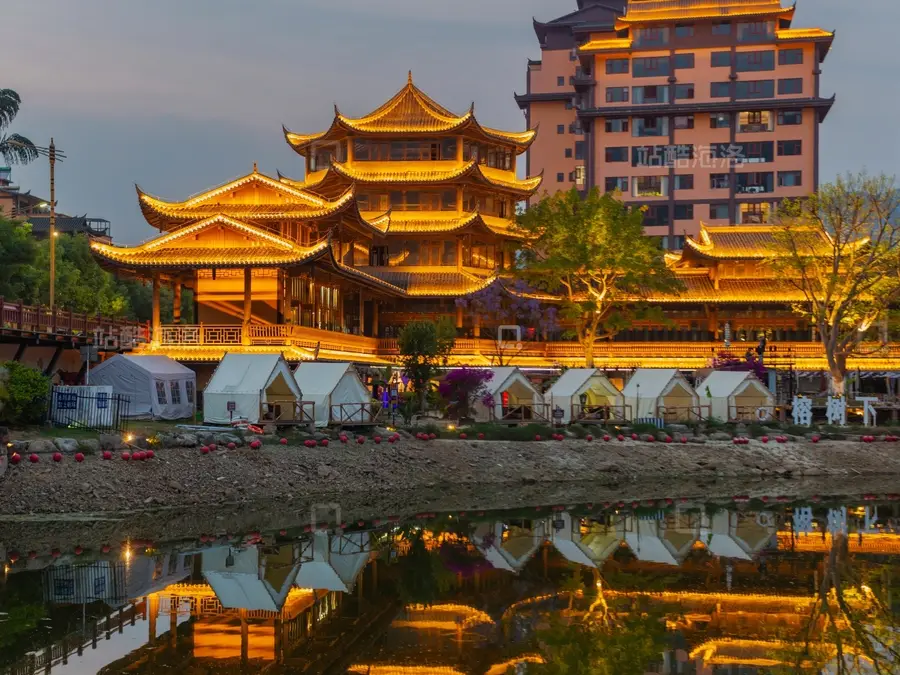
History & culture
Honghe is the homeland of the Hani people, who for over 1,300 years have carved the Ailao mountains into the cascading rice terraces of Yuanyang — a system of terrace, forest, village and water channel so integrated it is recognised by UNESCO as a cultural landscape shaped by human labour.
The prefecture seat is Mengzi, but the cultural jewel is Jianshui, which grew rich as a Confucian examination centre and trade town on the Yunnan–Vietnam route; its Ming–Qing scholarly quarter, the Confucian Temple (second-largest in China) and the Zhujia Garden survive almost intact.
Honghe was also the doorway of the French colonial footprint in Yunnan — the Yunnan–Vietnam railway (built 1903–1910) ran through Mengzi and Jianshui, leaving stone bridges, station buildings and the famous 'French bread' (a local baguette legacy) in the market towns.
The region is ethnically layered — Hani, Yi, Hui (Muslim), Miao and Han — and that mix shows in the food (the crossing-the-bridge noodles were born in Mengzi) and the crafts (Jianshui purple pottery, Mengzi tin).
Best time to visit Honghe
Honghe has a mild subtropical highland climate — warm, with a clear wet (May–Oct) and dry (Nov–Apr) season. For the terraces, the calendar is the opposite of what you'd guess: the fields are flooded and mirror-still in the dry season, not the green growing season.
Budget for Honghe: hotels from $14 a night, average ticket $$10 — see the full cost breakdown, or start from a ready-made route.
Cuisine of Honghe
Signature dishes worth seeking out — prices are typical per-person or per-dish ranges, not fixed quotes.
-
Crossing-the-bridge noodles (guoqiao mixian)
Honghe's claim to fame — born in Mengzi — a bowl of near-boiling broth brought separately with a tray of raw slices, greens and rice noodles you 'cross' into the soup at the table. The signature Yunnan dish, done best at its birthplace.
-
Jianshui grilled tofu (sha doufu)
Small fermented tofu cubes grilled over charcoal until blistered and smoky, dipped in chilli — the night-market icon of Jianshui, eaten by the piece at tiny stalls.
-
Steam-pot chicken (qiguo ji)
Chicken steamed in a special clay pot with Yunnan herbs until the broth is pure and fragrant — a Jianshui/Mengzi specialty, delicate and restorative.
-
Hani red-rice & sour bamboo
The terrace red rice of the Hani and their sour-bamboo-shoot salads — the everyday mountain cuisine of Yuanyang, earthy and unfussy.
-
Mengzi French bread legacy
A curious local relic of the Yunnan–Vietnam railway — a crusty 'French' baguette baked in Mengzi since the colonial era, used for sandwiches at the markets.
Every major sight — with its own guide
Right after the food above, here are the sights — each one links to its own full guide (what to see, how to get there, facilities and the best season). Names follow each sight's official English signage.
Jianshui county, ~80 km N of Mengzi
Jianshui Ancient Town 建水古城
The cultural jewel of Honghe — a near-intact Ming–Qing county town of scholarly lanes, the second-largest Confucian Temple in China, the lavish Zhujia Garden and the 17-arch Twin-Dragon Bridge (Shuanglong Qiao) across the village rivers. Far calmer and more authentic than Lijiang, with purple-pottery workshops and the best grilled tofu in the province. The best-preserved town in Yunnan.
Twin-Dragon Bridge (Shuanglong Qiao) 双龙桥
The 17-arch stone bridge just outside Jianshui — a Qing-dynasty span across two rivers with a three-storey pavilion in the middle, one of the most photographed bridges in Yunnan and the classic Jianshui sunset frame. Free, and a short e-bike ride from the old town.
Shiping county, ~60 km N of Mengzi
Where to stay in Honghe
Base in Jianshui (the best-preserved town, easy rail access) for culture and food, or in Yuanyang (the terrace towns of Xinjie / Bada) for sunrise over the paddies (book a terrace-view room ahead). Mengzi is the transport hub and the birthplace of the noodles. Foreign-passport registration is routine.
Budget
$14–28 / nightGuesthouses and chain hotels in Jianshui, Mengzi and the Yuanyang terrace towns; simple, comfortable, foreign-passport registration routine.
Mid-range
$35–60 / nightThe better courtyard hotels in Jianshui old town and the terrace-view lodges at Yuanyang; the sweet spot.
Splurge
$75–130 / nightThe top terrace-view resorts at Yuanyang (sunrise from your balcony) and the design hotels at Mile; book ahead for the Feb–April window.
Souvenirs & local crafts
Easy to pack, easy to explain at customs — and far cheaper at a supermarket than at a scenic stall.
-
Jianshui purple pottery (zitao)
The famous deep-clay pottery of Jianshui — iron-rich purple-brown ware, hand-thrown and incised with calligraphy, one of Yunnan's four famous ceramics. Buy from a registered workshop.
-
Mengzi tinware
Mengzi's historic tin craft — tea caddies, boxes and ornaments in pure tin, a legacy industry of the old trade town.
-
Terrace red rice
The nutty red rice grown on the Yuanyang terraces — sold in the Hani villages, the edible souvenir of the landscape.
-
Pomegranate & tropical fruit
Mengzi is famous for pomegranates and the warm south grows mango, lychee and banana — fresh and cheap in season at the markets.
-
Hani embroidery
Hand-embroidered Hani and Yi clothing and bags in bright geometric patterns — bought directly from the village women at the terraces.
Getting around Honghe
Honghe is on the Kunming–Hekou high-speed line — Kunming to Mile ~40 min, to Jianshui ~1.5–2 h, to Mengzi ~2 h, to Hekou (the Vietnam border) ~2.5 h. Mengzi (Mengzi Nan) is the prefecture's main rail hub. From Jianshui or Mengzi, the Yuanyang terraces are ~1.5–2 h by road (mountain buses or a booked car); within the towns, e-bikes and taxis cover the short distances.
- High-speed rail
- Honghe is well covered by the Kunming–Hekou HSR: Kunming–Mile ~40 min, Kunming–Jianshui ~1.5–2 h, Kunming–Mengzi ~2 h, Kunming–Hekou ~2.5 h. Mile, Jianshui, Mengzi, Gejiu, Kaiyuan and Hekou all have stations.
- Long-distance bus
- Mountain buses run Jianshui/Mengzi to the Yuanyang terrace towns (Xinjie, Bada) in ~1.5–2 h; local town buses link the sights.
- Metro & bus
- None — Honghe is a prefecture of towns and terraced mountains.
- Taxis
- Taxis and e-bike taxis in Jianshui, Mengzi and Mile are cheap; the terrace towns have local vans.
- Ride-hailing
- DiDi works in Jianshui, Mengzi and Mile; coverage thins toward the terraces.
- Shared bikes
- Excellent in Jianshui's flat old town (rent an e-bike) and pleasant on the terrace rim roads.
- Intercity carpool
- Shared vans run from the bus stations to the terrace towns; the HSR plus a local van is the cheap standard.
Plan your 1, 2 or 3 days in Honghe
Pick the length of your stay. Each plan is its own page, anchored at the city centre and written from real traveller itineraries — including splits for sightseeing, shopping, landscape, families and older travellers.
Honghe in one day: Jianshui ancient town
The culture hit: Jianshui's Confucian Temple, the Zhujia Garden and the Twin-Dragon Bridge, with grilled tofu at the night market.
Read the plan → 2-dayHonghe in two days: + Yuanyang terraces
Day two heads to the Yuanyang terraces for the sunrise at Laohuzui or Duoyishu and the mirror paddies — the reason most people come.
Read the plan → 3-dayHonghe in three days: + Mile & Alu Caves
Give the third day to Mile's Dongfengyun art town and hot springs, or the Alu karst caves at Luxi — or a deeper Yuanyang sunrise loop.
Read the plan →Frequently asked questions
- When is the best time to visit Honghe?
- November–April for the Yuanyang terraces — the paddies are flooded and mirror-still, with the best light February–April before planting. Avoid the rainy summer (Jun–Aug) when the terraces are green but often cloud-wrapped and muddy. Jianshui and the towns are pleasant year-round.
- How do I get to Honghe?
- Take the Kunming–Hekou high-speed rail: Kunming to Jianshui ~1.5–2 h, to Mengzi ~2 h, to Mile ~40 min. From Jianshui or Mengzi, the Yuanyang terraces are ~1.5–2 h by mountain bus or a booked car. Within the towns, e-bikes and taxis cover the short hops.
- Where should I base for the terraces?
- Stay in the Yuanyang terrace towns (Xinjie / Bada) for sunrise over the paddies — book a terrace-view room ahead for the Feb–April window. For culture and food, base in Jianshui; for transport, Mengzi. A booked car lets you chain the scattered sunrise viewpoints.
- How much do the sights cost?
- The Yuanyang terraces multi-entry pass is about $14 (RMB 100); Jianshui's Zhujia Garden about $5 (RMB 35) and the Confucian Temple about $4 (RMB 30), the Twin-Dragon Bridge is free; Mile's Dongfengyun about $8 (RMB 60); the Alu Caves about $13 (RMB 90). Verify on site.
- How many days do I need in Honghe?
- Two days covers Jianshui and the Yuanyang sunrise; three adds Mile's art town and hot springs or the Alu caves. Base in Jianshui or Mengzi and do the terraces as an overnight.
- Is Honghe foreigner-friendly?
- Yes — no special permit restrictions; carry your passport for hotel registration and real-name ticketing. English is limited outside the HSR stations, so have your hotel write destinations in Chinese for drivers.
Page last reviewed: 2026-11-02.