Fuzhou Travel Guide 2026: The Capital of Fujian and Gateway to Pingtan
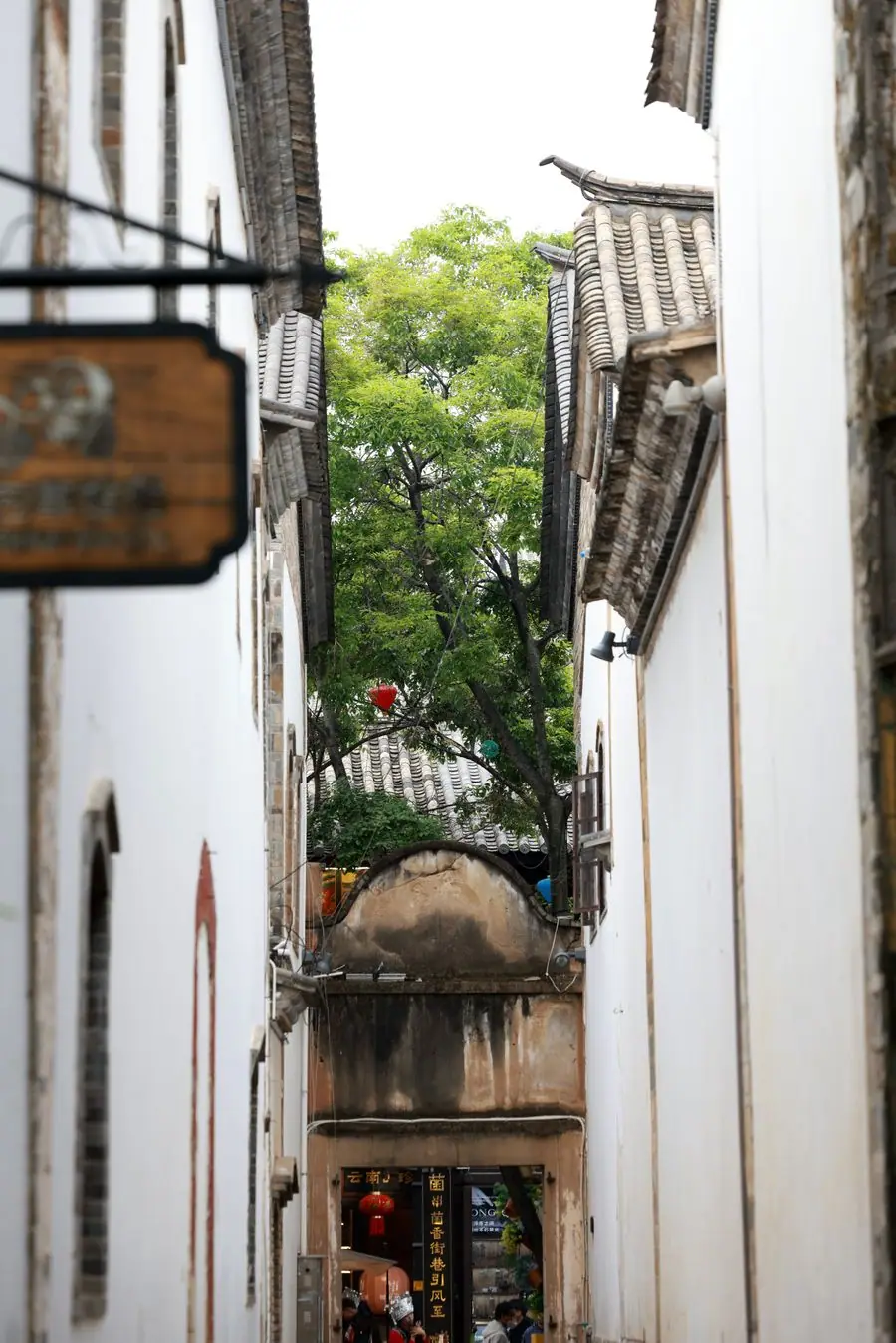
Fuzhou is the capital of Fujian and the Min River delta's great garden city — a metropolis of banyan trees, hot springs and lane houses that has been the province's political and cultural heart for two thousand years. The old town keeps the Three Lanes and Seven Alleys, the finest Ming-Qing residential quarter in the province; the Hualin Temple preserves one of China's oldest wooden halls; the river keeps the old consulate hill and the arcade docks; and an hour south, Pingtan island offers stone villages, windmill beaches and the famous 'blue tears' of the bioluminescent sea. Below: the best time, the history, the food, where to stay, every major sight with its own guide, transport, and 1/2/3-day plans.

History & culture
Fuzhou was founded as a city in 202 BC — the Min-yue capital Ye — and has been the seat of Fujian ever since. The banyan trees that give the city its nickname (Rongcheng, the Banyan City) were planted in the Tang, and the city has been a literary and examination centre for a millennium.
It was also one of the five treaty ports opened by the Treaty of Nanjing in 1842, and the centre of the Fujian missionary and merchant world: the consulates, churches and hill villas of Yantai and Guling date from that era, and the Mawei shipyard — China's first modern naval yard, founded 1866 — made the city the birthplace of the Chinese navy.
Lin Zexu, the commissioner who destroyed the British opium at Canton in 1839, was a Fuzhou man, and his hometown museum is one of the city's anchors; so is the tradition of scholarship the Three Lanes produced — Yan Fu, the translator of Darwin and Adam Smith, and Bing Xin, the writer, both lived in these lanes.
Modern Fuzhou is Fujian's capital and the delta's biggest city, but the old town's lanes, temples and the Min River waterfront keep their scale, and the outlying islands — Pingtan, China's fifth-largest — have become the province's beach escape.
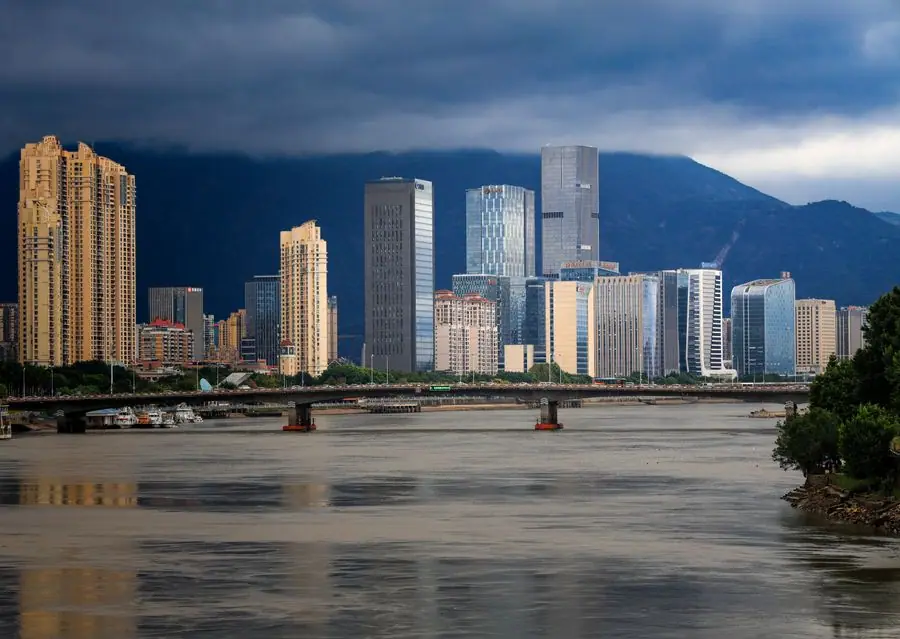
For visitors the city works on two levels: the old-town heritage core of Gulou, and the river-and-hill scenery of Cangshan and Jin'an, with Pingtan as the coastal third act.
Best time to visit Fuzhou
Fuzhou sits on the Min River delta near sea level in a humid subtropical zone: warm, wet and green, with long humid summers and short, mild winters.
Budget for Fuzhou: hotels from $16 a night, average ticket $$7.42 — see the full cost breakdown, or start from a ready-made route.
Cuisine of Fuzhou
Signature dishes worth seeking out — prices are typical per-person or per-dish ranges, not fixed quotes.
-
Buddha jumps over the wall (Fo tiao qiang)
Fuzhou's most famous dish and the summit of Min cuisine: a sealed jar of abalone, sea cucumber, tendon, duck and Shaoxing wine, slow-cooked until the aroma escapes — the legend says a monk jumped the wall to get at it. A banquet dish, ordered a day ahead.
-
Fuzhou fish balls (Yu wan)
The city's signature: minced eel or shark meat pounded into a hollow ball stuffed with pork filling, poached in a light broth — eaten by the bowl in the old-town shops from breakfast on.
-
Meat swallow (Rou yan)
The other Fuzhou classic: wontons whose 'skin' is pork meat pounded thin with sweet-potato starch, wrapped around a pork filling — the wrappers are made by rubbing raw meat on a board. The Tongli shop by the lanes is the institution.
-
Pot-side paste (Guo bian hu)
The Fuzhou breakfast: rice-milk soup ladled down the inside of a hot wok so it sets into soft sheets, scraped into the pot with seafood, mushrooms and a slick of shallot oil. Eaten with a youtiao at dawn.
-
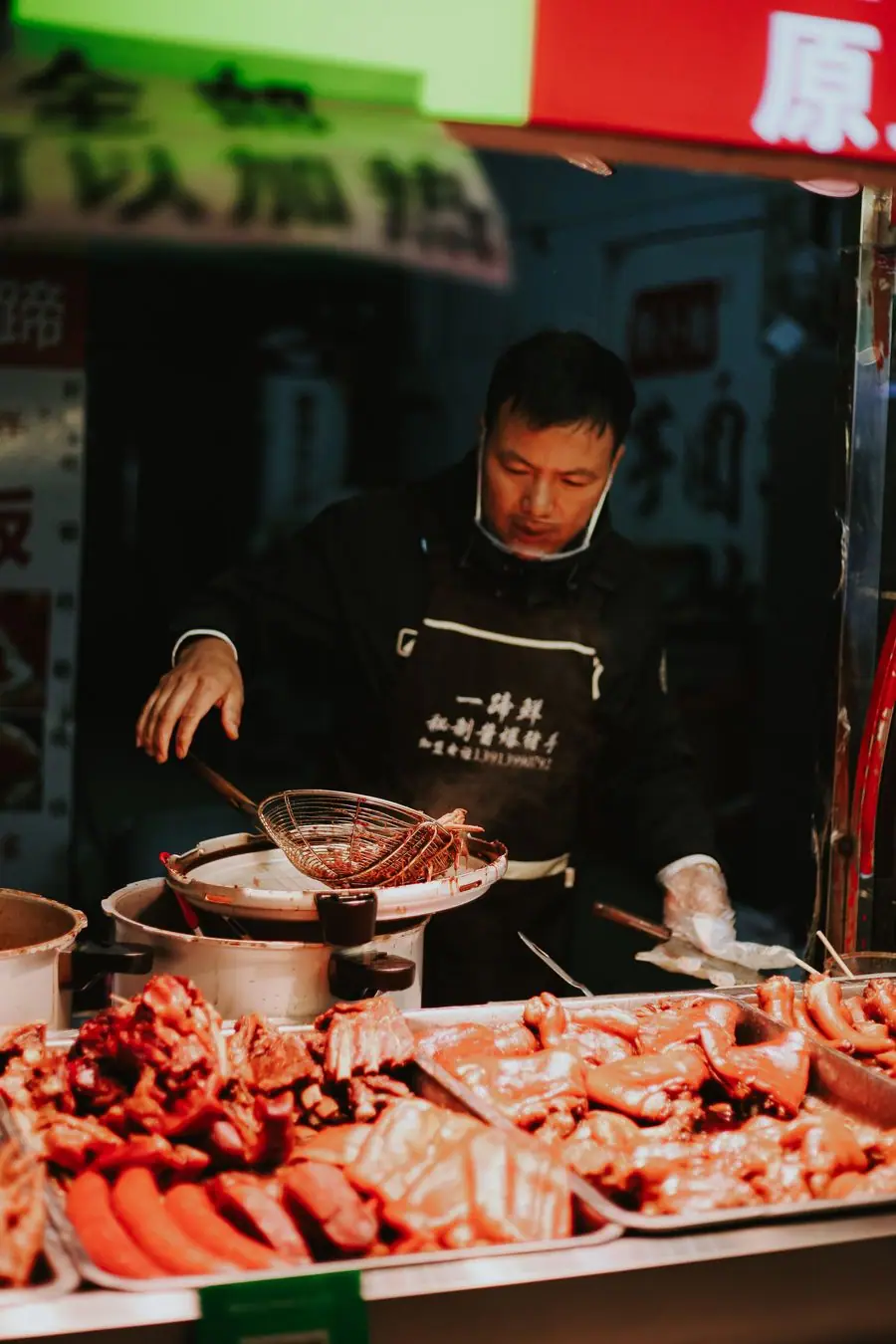
Lychee pork (Li zhi rou)
The Fujian sweet-sour classic: lean pork scored and fried until it curls like a lychee, glazed in a tomato-and-vinegar sauce — a home-cooking benchmark every Fuzhou family argues about.
Every major sight — with its own guide
Right after the food above, here are the sights — each one links to its own full guide (what to see, how to get there, facilities and the best season). Names follow each sight's official English signage.
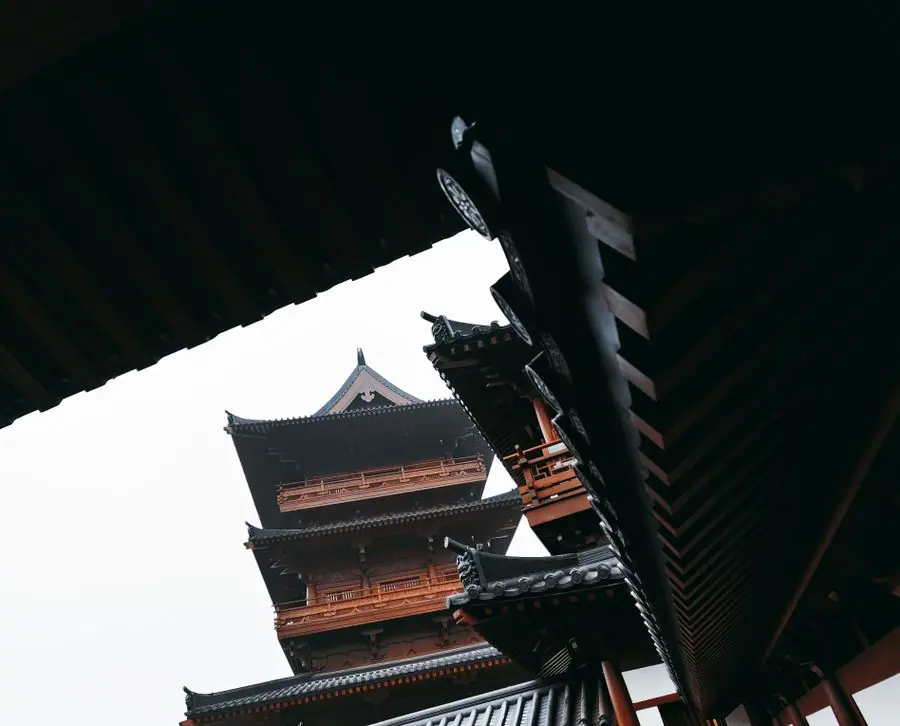
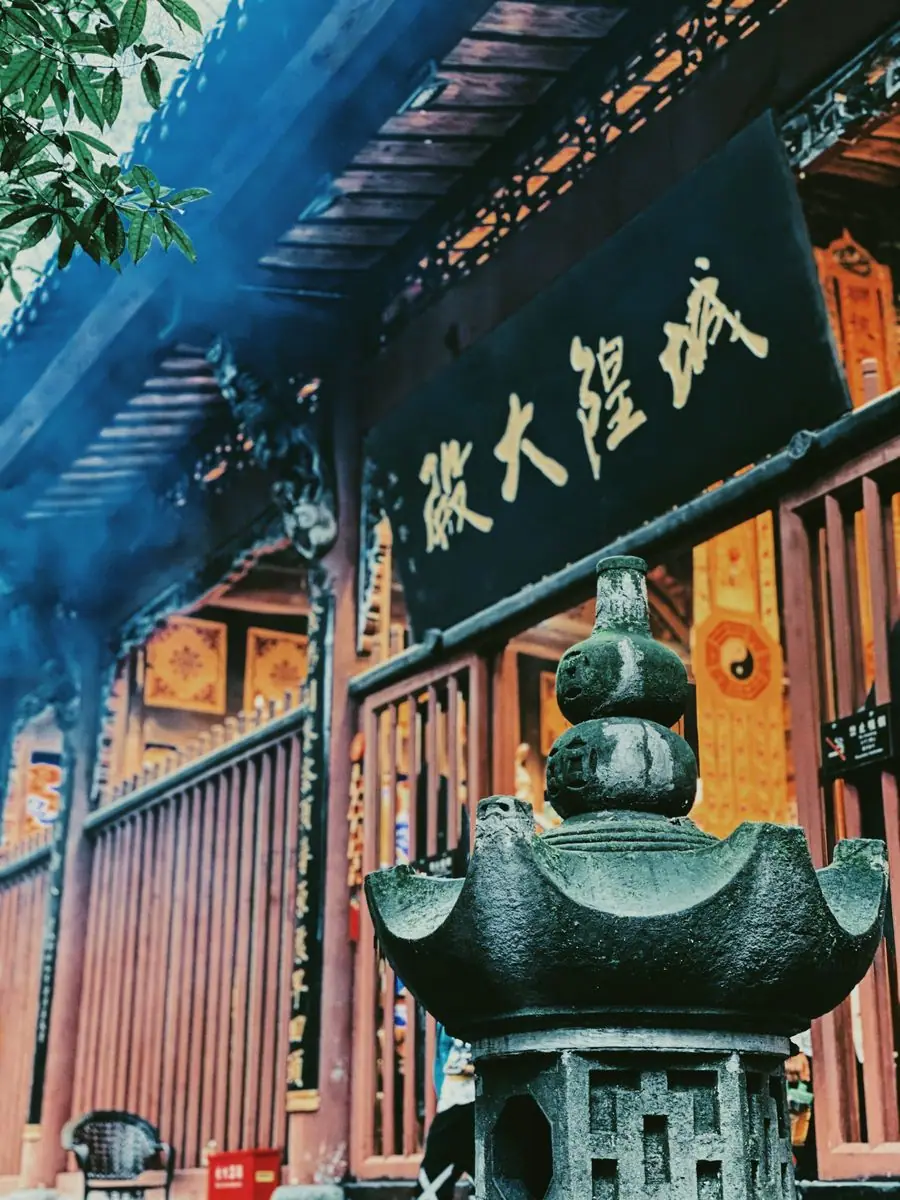
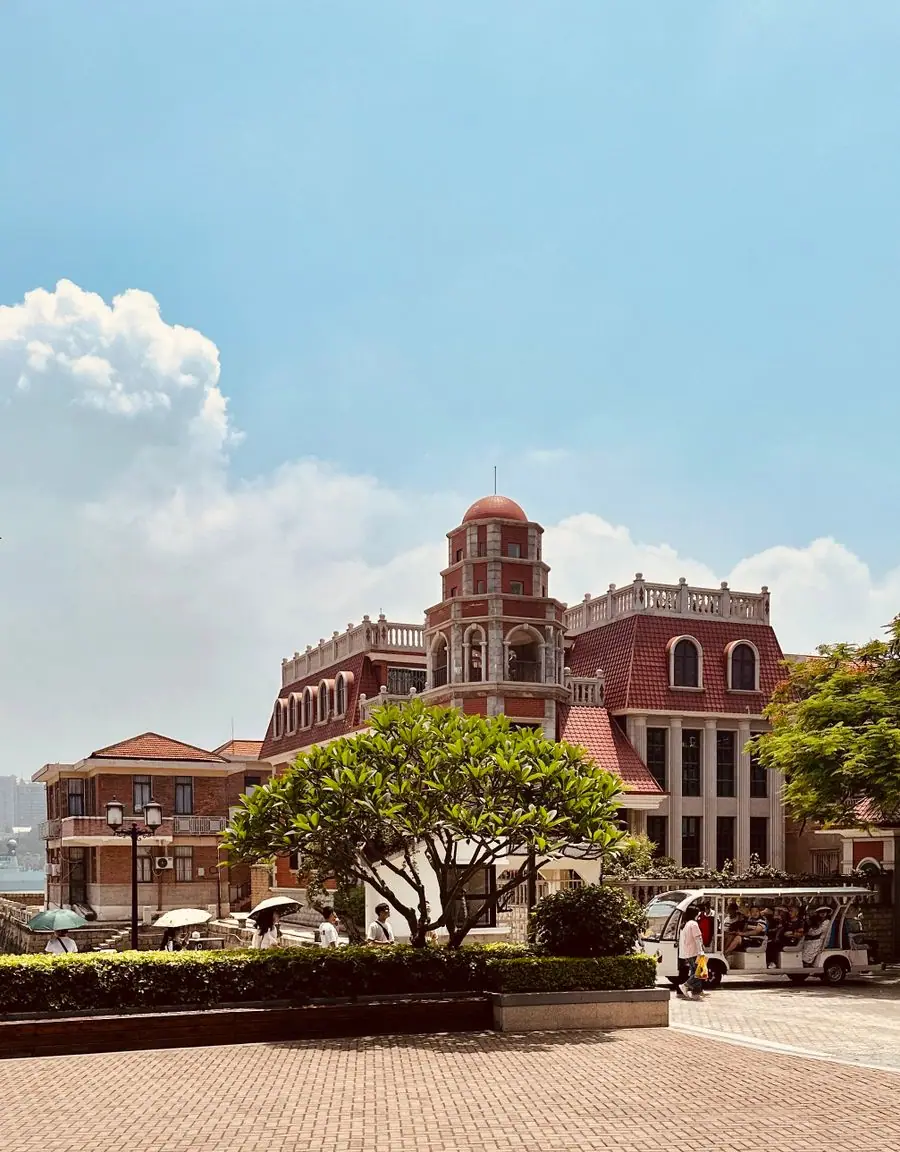
Fufei South Road, Gulou, ~1.5 km N
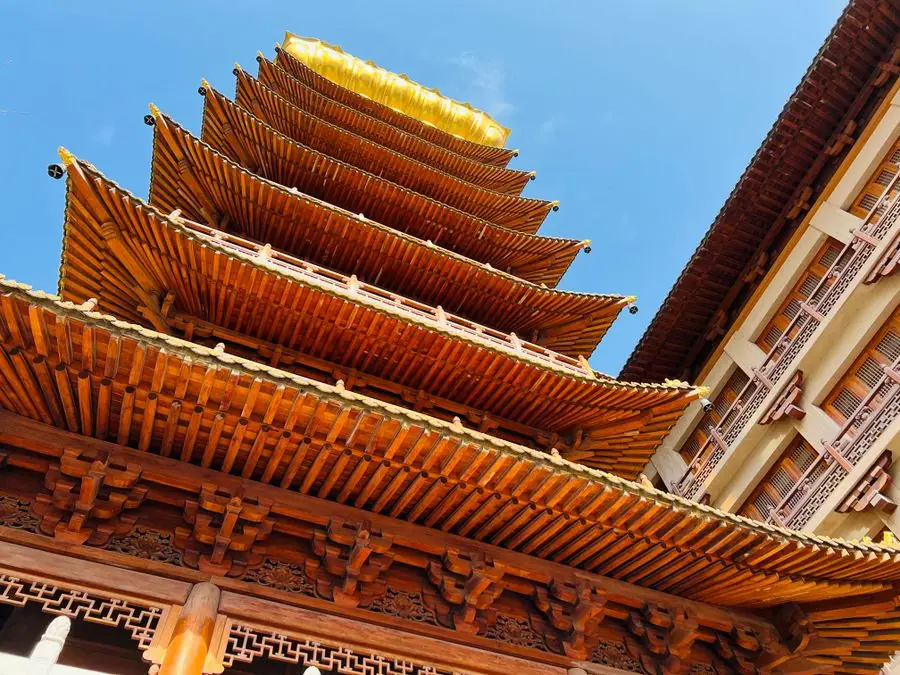
Jin'an, ~4–5 km from the old town
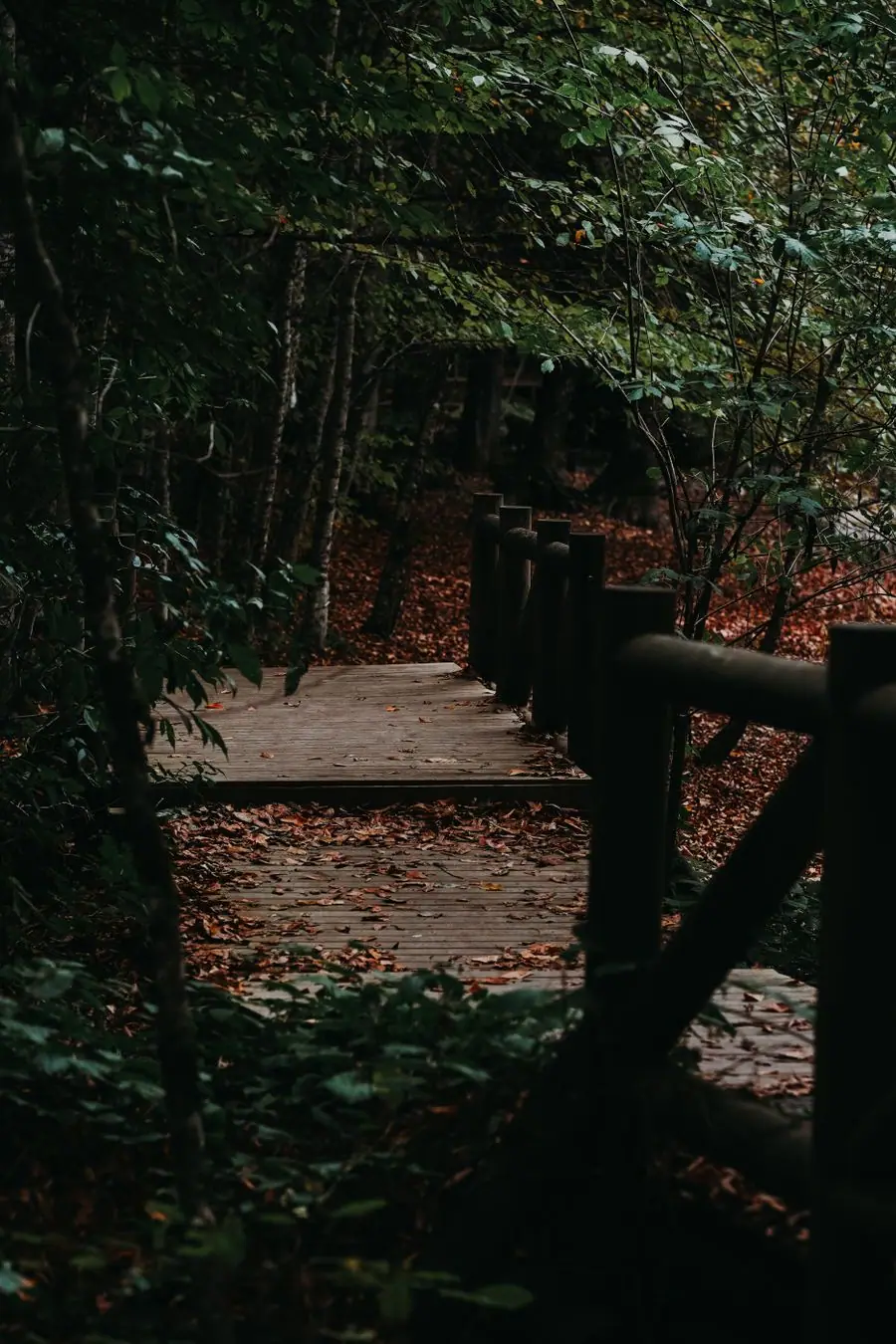
Pingtan island, ~120 km S (HSR 35 min + 15 km)
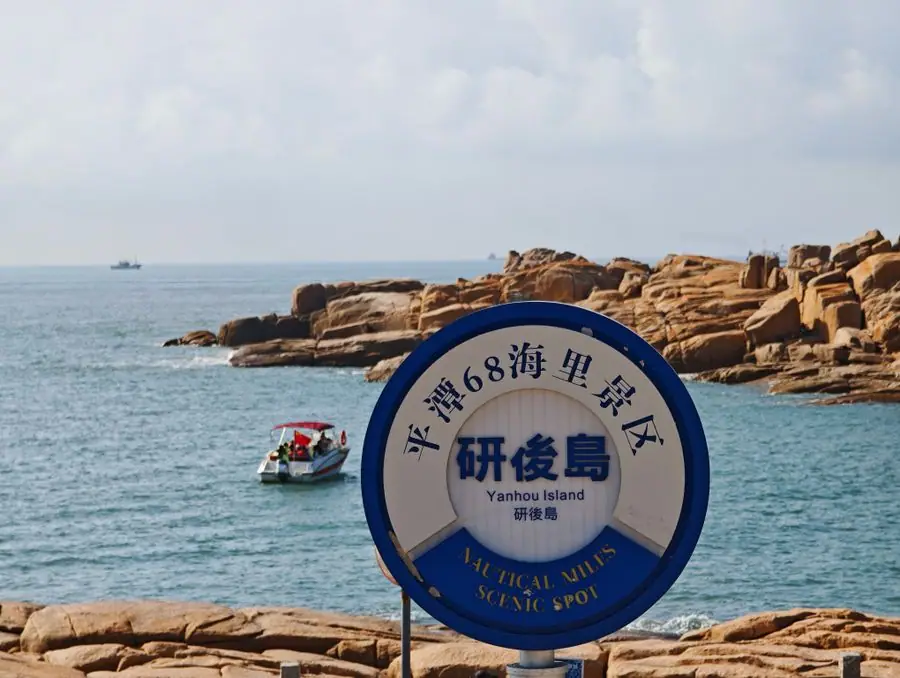
Pingtan island, ~120 km S (HSR 35 min + 20 km)
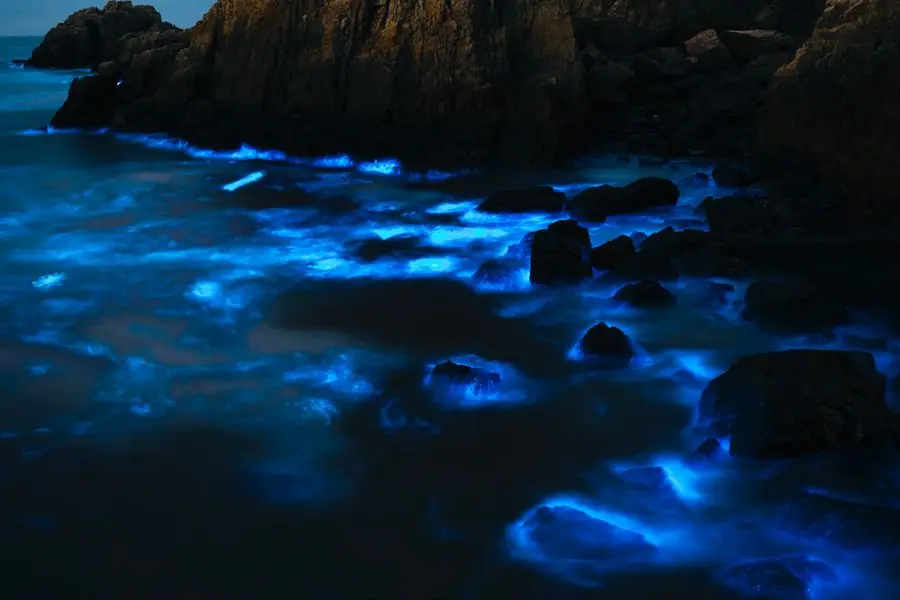
Pingtan island, ~120 km S (HSR 35 min + 10 km)
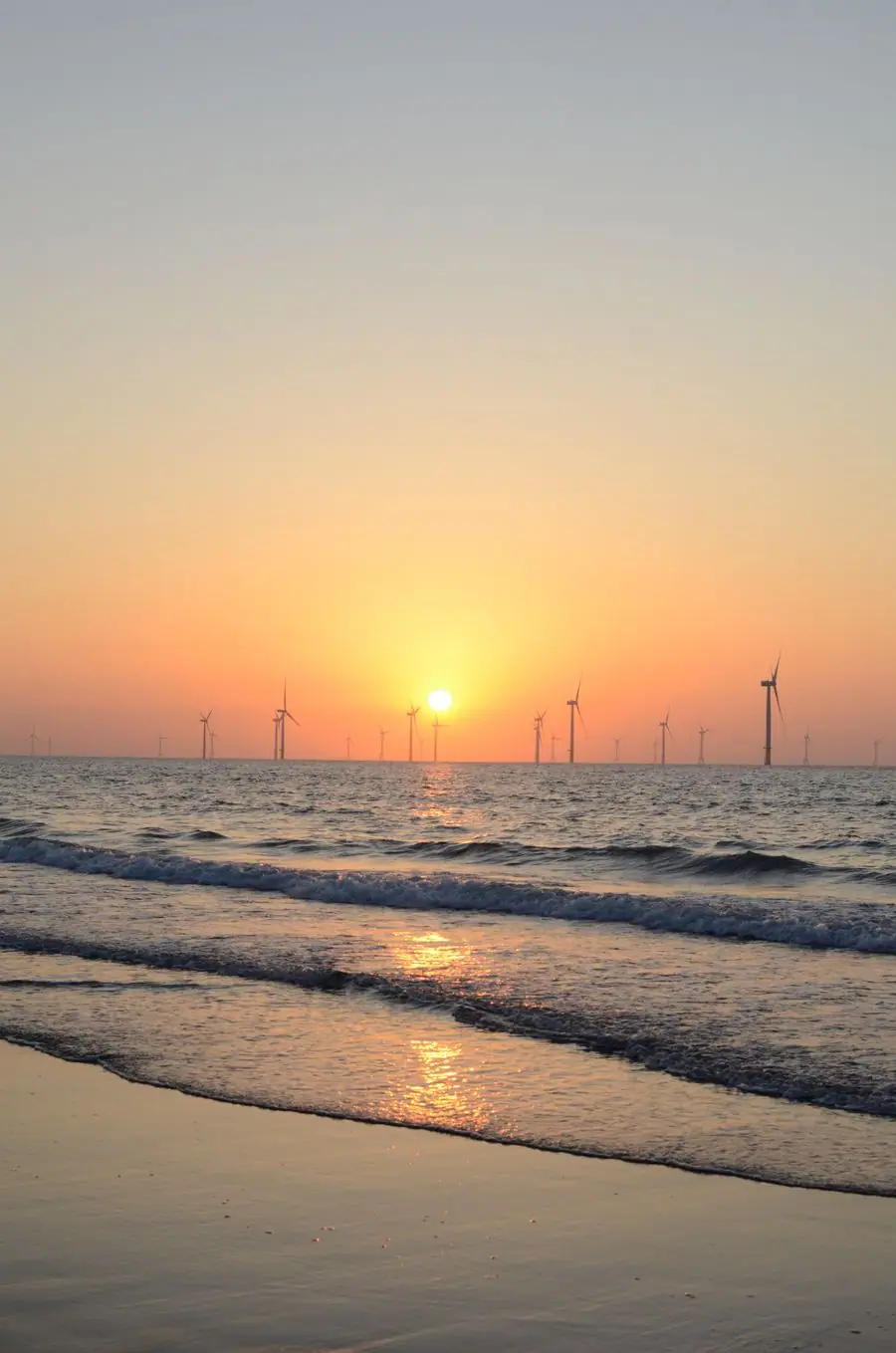
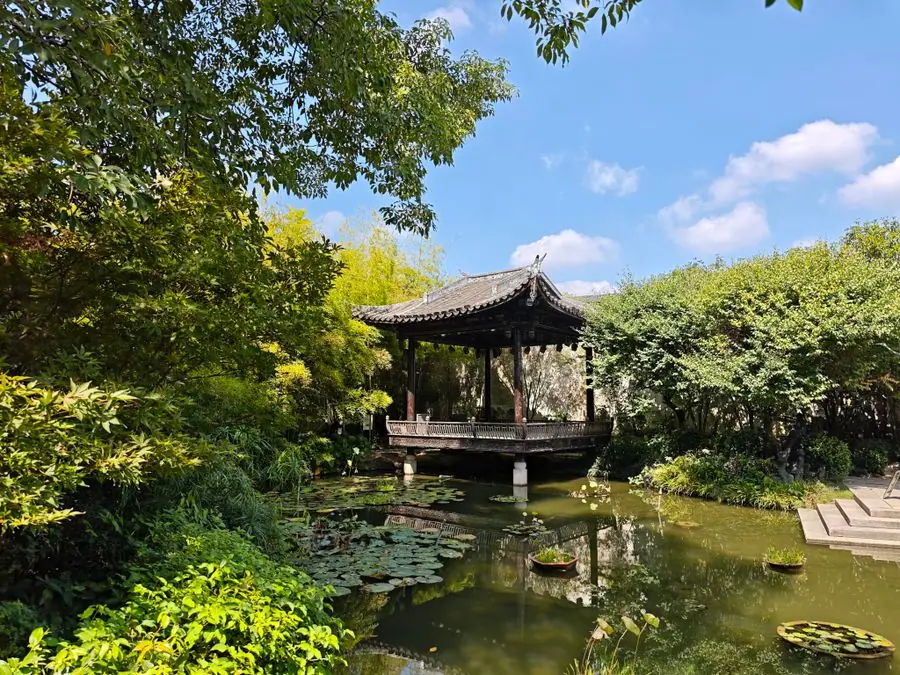
Where to stay in Fuzhou
Stay in the old town around Dongjiekou and the Three Lanes — the heritage sights, the metro and the food streets are all walkable. Taijiang (by the Min River) puts you next to the Shangxiahang lanes and the night cruise; Cangshan (across the bridge) is the young, café-and-bars district around Yantai Hill; Pingtan has the beach hotels if you are doing the island properly.
Budget
$16–30 / nightChain hotels (Hanting, JI, 7 Days) around Dongjiekou and the lanes, plus guesthouses in the old town; clean doubles and foreign-passport registration is routine at the chains.
Mid-range
$39–78 / nightJI Hotel, Vienna and local full-service hotels in the old town and Taijiang — the sweet spot, walkable to the lanes and the food streets.
Splurge
$92–184 / nightThe international chains in the CBD and the riverside hotels — pools, river views and the most comfortable beds in the city.
Souvenirs & local crafts
Easy to pack, easy to explain at customs — and far cheaper at a supermarket than at a scenic stall.
-

Bodiless lacquerware (Tuo tai qi qi)
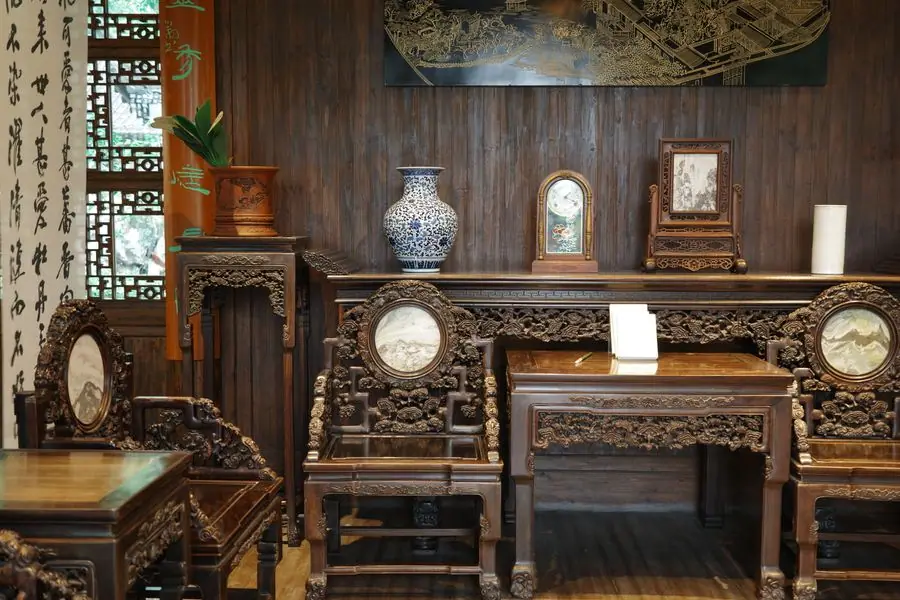
One of Fuzhou's three treasures: objects built up from cloth and lacquer with no wooden core, gilded and polished — vases, screens and Buddha figures from the old-town lacquer workshops.
-

Shoushan stone carving (Shou shan shi diao)
Fujian's other treasure: carving in Shoushan stone from the northern hills — the warm, greasy-lustre stone Chinese seal cutters prize, sold as seals, figures and trinkets in the old-town shops.
-
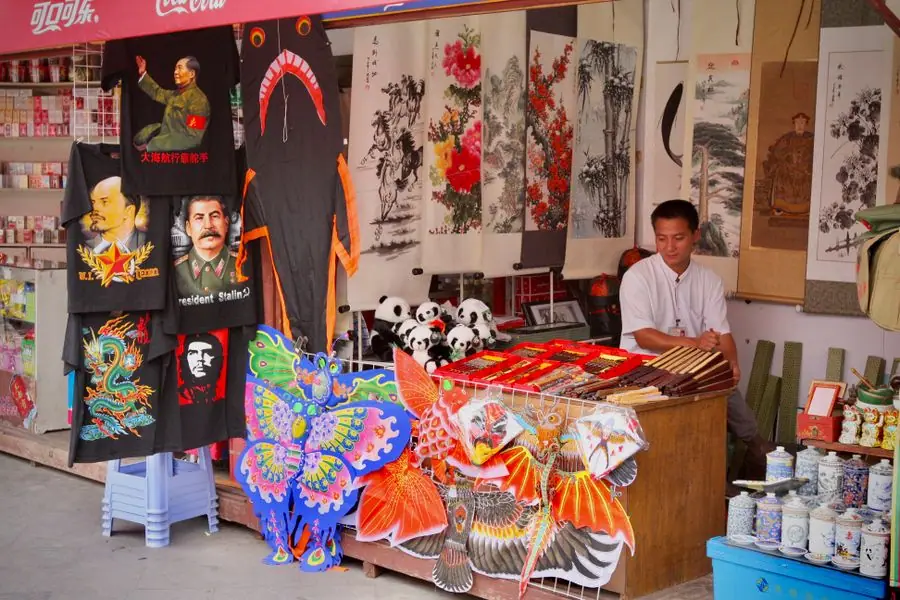
Ox-horn combs (Niu jiao shu)
The third Fuzhou treasure: combs carved from ox horn, said to be good for the hair and the scalp — a traditional gift, sold in graded sets.
-
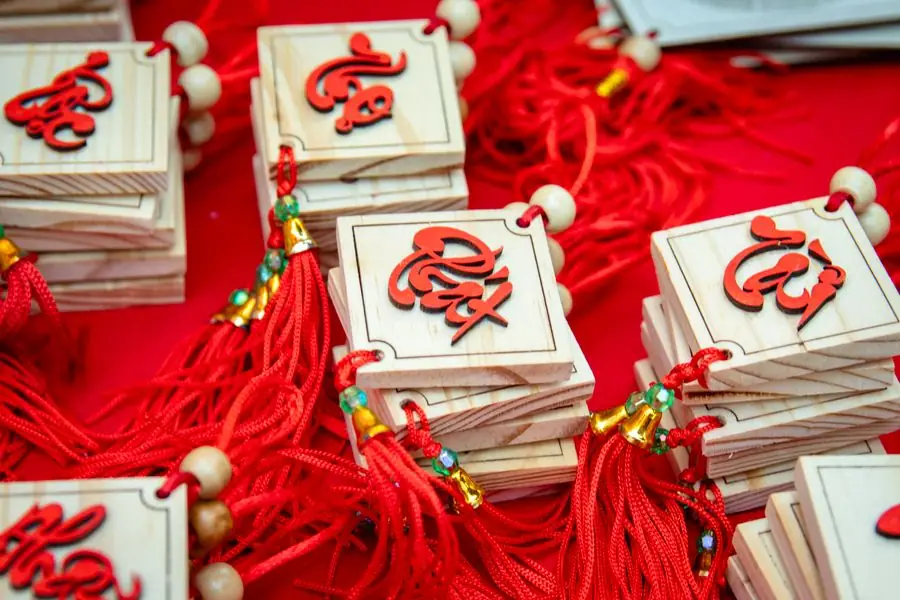
Fujian jasmine tea (Mo li hua cha)
The jasmine-scented green tea Fujian is famous for, scented over fresh flowers through repeated layers — the province's classic tea gift, sold by the jin in the old tea houses.
-
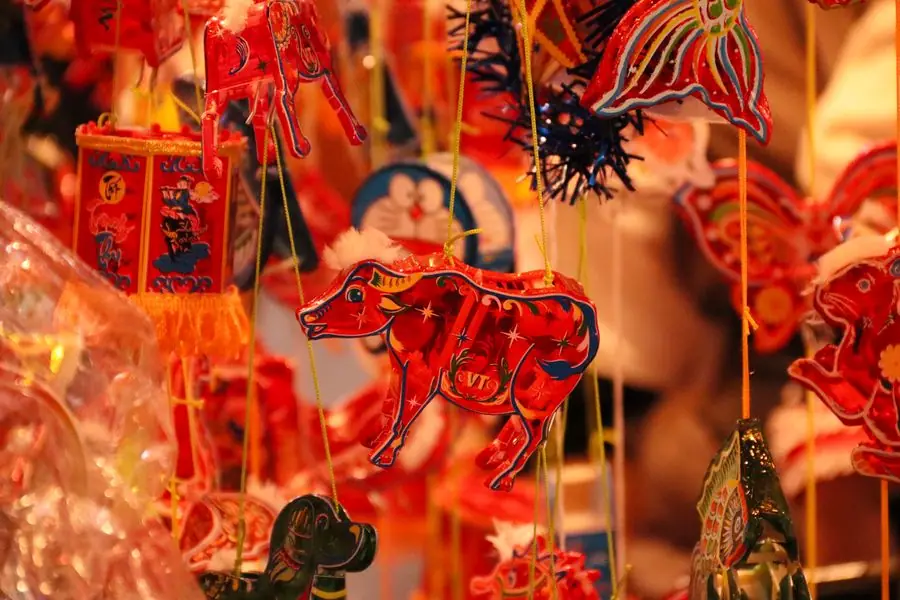
Pingtan shell carving (Ping tan bei diao)
Shell-inlay pictures and objects made on Pingtan island from its beaches' shellfish — coastal scenes and landscapes inlaid in iridescent shell.
Getting around Fuzhou
Fuzhou is a hub: Changle airport, two HSR stations and a six-line metro all sit within an hour of the old town.
- High-speed rail
- Fuzhou station is the closest to the old town — metro line 1 reaches Dongjiekou in two stops. Fuzhou South station is the bigger HSR hub and the transfer for Pingtan (about 35 min). Wenzhou is about 1.5–2 h, Xiamen about 1–1.5 h, Quanzhou about 40 min and Shanghai about 4.5–5 h by high-speed train.
- Long-distance bus
- City buses are cheap (about $0.15–0.30 / RMB 1–2) and cover the whole city; airport buses link Changle airport to the old town. Long-distance buses run to Pingtan and the county towns.
- Metro & bus
- Six lines operate (1, 2, 4, 5, 6 and the Binhai express), fares from about $0.30 (RMB 2). Line 1 serves the Three Lanes and Shangxiahang, line 2 runs to Gushan, and the Binhai express links Fuzhou station to Changle airport in about 30 minutes.
- Taxis
- Taxis are metered with a low flag fall (about $1.40 / RMB 10); the airport is about $14–21 (RMB 100–150) to the old town, Fuzhou station about $3–4 (RMB 20–30).
- Ride-hailing
- DiDi is the default for cross-town runs, the airport and the mountain sights; it is the practical way to reach Guling and the Gushan gates.
- Shared bikes
- Shared bikes and e-scooters cover the flat old town and the riverfront; the mountain and island sights need a vehicle.
- Intercity carpool
Plan your 1, 2 or 3 days in Fuzhou
Pick the length of your stay. Each plan is its own page, anchored at the city centre and written from real traveller itineraries — including splits for sightseeing, shopping, landscape, families and older travellers.
Fuzhou in one day: the old town core
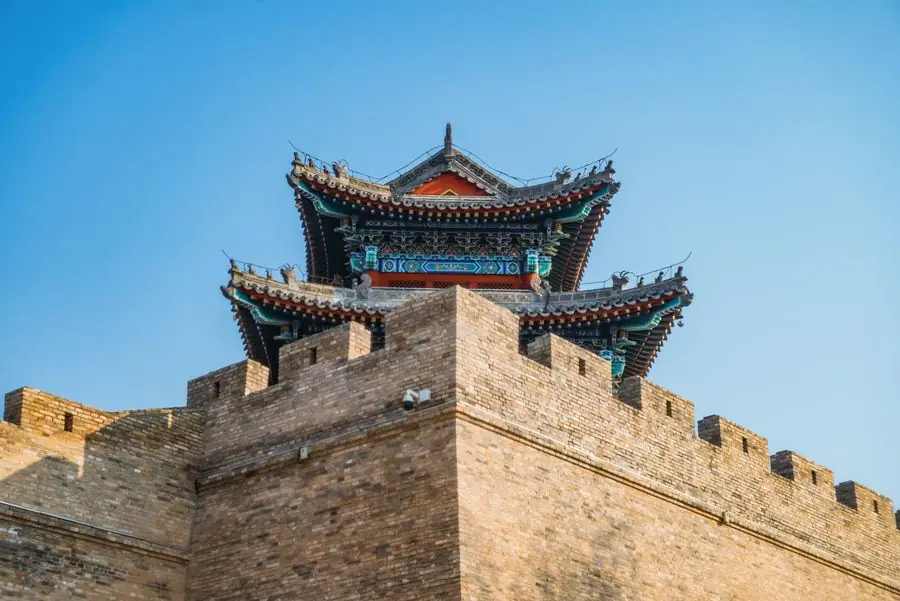
Dawn fish balls on the lanes, the Three Lanes and Seven Alleys, Hualin Temple's Song hall and the Zhenhai Tower; finish with a Min River night cruise.
Read the plan → 2-dayFuzhou in two days: old town + the river hills
Day two runs the river: Yantai Hill's old consulates and the Shangxiahang lanes in the morning, the Fudao forest trail at dusk, with Gushan's temple for the fit.
Read the plan → 3-dayFuzhou in three days: + Pingtan island
Add a Pingtan day: the stone houses of Beigang, the windmills of Changjiang'ao at sunset and — in season — the blue tears on the night shore.
Read the plan →Frequently asked questions
- When is the best time to visit Fuzhou?
- March–May and October–November are warm and mostly dry. Summer is hot, humid and typhoon-adjacent — good for the indoor lanes and museums; winter is cool, quiet and the cheapest for rooms.
- Do I need a visa for Fuzhou?
- Good news: Fuzhou Changle Airport is one of China's 240-hour visa-free transit ports, so eligible nationals (57 countries, transiting to a third country) can enter visa-free and stay up to 10 days anywhere in Fujian province. Otherwise arrange a Chinese visa in advance; check the current qualifying list with a consulate before booking.
- Is Fuzhou walkable?
- The old town is: the Three Lanes, Hualin Temple, the Zhenhai Tower, Lin Zexu's museum and the food streets all sit within a 2 km core, and the metro (lines 1 and 2) covers the rest. The mountain, the bridge-side hills and Pingtan need the metro, buses or a taxi.
- How much do the sights cost?
- Almost nothing — the Three Lanes, Hualin Temple, the Zhenhai Tower, West Lake, the Fujian Museum, Lin Zexu's museum, Yantai Hill and the Fudao trail are all free (reserve the museums a day ahead). The paid ones are small: the Gushan lane houses are $7.75–9.15 (RMB 55–65) for a three- or four-house pass, Yongquan Temple $5.63 (RMB 40), the Gushan cable car $7.04 (RMB 50) each way, the Min River cruise $15.49 (RMB 110) and Pingtan's sights $3.10–9.58 (RMB 22–68).
- How many days do I need?
- Two days covers the old town and the river hills; add a third for Pingtan island, which is the city's coastal half and deserves a full day (or a night, in blue-tears season).
- How do I get to Pingtan?
- High-speed rail from Fuzhou South to Pingtan station takes about 35 minutes; from there taxis and buses reach the sights — Beigang village about 10 km, Xianrenjing about 15 km and Houyan island about 20 km. The last trains back fill up in season, so book ahead.
Page last reviewed: 2026-11-02.