Enshi 2026: Grand Canyon, Pingshan & the Tujia Karst — a 1–3 Day Plan
Enshi (Enshi Tujia and Miao Autonomous Prefecture) is the karst heart of western Hubei — the Enshi Grand Canyon's quartz-sandstone cliffs, Pingshan Canyon's glass-clear 'floating river', the huge Tenglong Cave, the Suobuya stone forest and a living Tujia culture of smoked bacon and embroidered brocade. It is cool, green and far less crowded than the famous karst of Guilin. Below: the best time, the history, the food, where to stay, every major sight with its own guide, and 1/2/3-day plans.
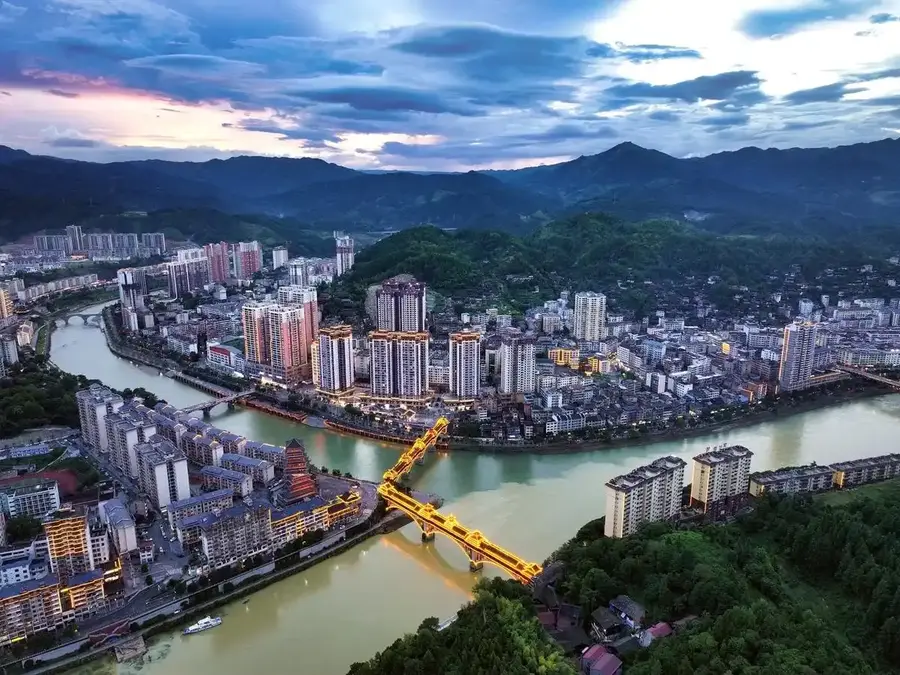
History & culture
Enshi is the core of the Tujia (Ba people) homeland in the Wuling mountains, a remote karst world that stayed outside direct imperial administration for most of Chinese history. The Tujia developed their own chieftain (tusi) system, and the great stone Tusi Castle in Enshi city is a reconstruction of that autonomous chieftain architecture.
The region was a frontier of the Ming and Qing, absorbed slowly through the 'return of land to the court' (gaitu guiliu) reforms that abolished native chieftains. Its deep valleys and the Qingjiang river made it a natural refuge and a corridor between the Yangtze plain and the Sichuan basin.
Enshi's modern identity is built on two things: scenery and selenium. It is one of the few selenium-rich belts on earth, marketed as the 'selenium capital of China', and its cool, misty climate made it a wartime refuge — during WWII the provincial capital of Hubei was moved here.
Today Enshi is a tourism prefecture first: the Grand Canyon and Pingshan draw domestic crowds, while the Tujia language, brocade (xilankapu) and smoked-meat cuisine survive as a living culture rather than a museum piece.
Best time to visit Enshi
Enshi is subtropical mountain karst — warm, wet and very green, with mist that fills the canyons most mornings. Spring and autumn are the clear, comfortable windows; summer is lush but hot and prone to afternoon storms; winter is cold and the canyon walks can ice over.
Budget for Enshi: hotels from $14 a night, average ticket $$20.12 — see the full cost breakdown, or start from a ready-made route.
Cuisine of Enshi
Signature dishes worth seeking out — prices are typical per-person or per-dish ranges, not fixed quotes.
-
Hezha (fermented soybean stew)
The signature Tujia staple — broad beans or soybeans fermented into a thick, tangy paste, cooked with greens and a little chilli; cheap, comforting and everywhere in Enshi.
-
Tujia smoked bacon (larou)
Pork smoked over pine and fruitwood for weeks until the fat turns amber — sliced and stir-fried with garlic sprouts or steamed with rice; the defining flavour of the mountains.
-
Kang potatoes (kang tudou)
Small potatoes cracked and pan-crusted in a wok (kang) until blistered, dusted with chilli and cumin — the mountain snack sold at every canyon stop.
-
Youcha soup (oil-tea)
Tujia 'tea' — tea leaves fried in oil with rice, peanuts and scallions, then boiled into a savoury broth; an acquired, salty-savoury wake-up drink served with puffed rice.
-
Enshi Yulu green tea
One of China's few steamed green teas (like Japanese sencha) — sweet, umami and famous; the terraced tea hills around the city produce it, and a cup costs almost nothing.
Every major sight — with its own guide
Right after the food above, here are the sights — each one links to its own full guide (what to see, how to get there, facilities and the best season). Names follow each sight's official English signage.
Enshi city
Enshi Tusi Castle 恩施土司城
A reconstruction of a Tujia chieftain's (tusi) fortress — the Wooden Drum Hall, the nine-entry gate tower and the carved stelae that show how the Tujia autonomous chieftains ruled these mountains for centuries before the Qing 'return of land to the court'. The best place in the city to understand Enshi's Tujia identity, with folk performances on some days.
Tujia Daughter City 土家女儿城
A rebuilt Tujia 'daughter town' — a night-market and performance quarter of timber halls, folk-song stages and food stalls where the Tujia coming-of-age and matchmaking festivals are staged. Free to wander, with the best cheap eats in the city (smoked bacon, youcha, kang potatoes) and evening dance performances. The easy, fun intro to Tujia culture.
Where to stay in Enshi
Stay in Enshi city (the rail and air hub) for the Tusi Castle, Daughter City and easy canyon day trips; Lichuan (on the rail line, ~1 h west) is the base for Tenglong Cave and the Qingjiang; for Pingshan, bed down in Hefeng county or return to the city. Mountain air means cheap, comfortable hotels — foreign-passport registration is routine.
Budget
$14–28 / nightChain and guesthouse hotels in Enshi city and Lichuan — clean, heated, foreign-passport registration routine; the best value in the mountains.
Mid-range
$35–60 / nightThe better city hotels near the rail station and the canyon-area resorts — the sweet spot for comfort after a day of walking.
Splurge
$75–130 / nightThe top canyon-view resorts and the international-brand hotels in Enshi city; book ahead in the October colour season.
Souvenirs & local crafts
Easy to pack, easy to explain at customs — and far cheaper at a supermarket than at a scenic stall.
-
Enshi Yulu tea
The prefecture's famous steamed green tea — buy loose from the hillside farms or the city tea market; packs light and travels well.
-
Xilankapu (Tujia brocade)
The geometric hand-woven Tujia brocade — belts, bags and wall hangings in bold diamond patterns; the real thing is woven on a traditional loom.
-
Smoked bacon & mountain cured meats
Vacuum-packed Tujia smoked bacon and air-dried sausages — the edible souvenir of the mountains, available at the Daughter City market.
-
Selenium-rich products
Enshi markets itself as the 'selenium capital' — selenium tea, rice and supplements fill the gift shops; buy the food versions, not the pills.
-
Kiwi & mountain fruit
Enshi's cool climate grows excellent kiwi, peaches and the local 'guoyuan' citrus — sold fresh at the roadside and the city markets in season.
Getting around Enshi
Enshi Xujiaping Airport (ENH) has flights from Wuhan, Chongqing, Beijing, Shanghai and Xi'an. By rail, the Yiwan line (Yichang–Enshi–Wanzhou–Chongqing) runs D/G-class trains: Wuhan ~4.5 h, Chongqing ~2.5 h, Yichang ~1.5 h. Within the prefecture, the sights are spread along mountain roads, so a booked car or the tourist shuttles are the practical way between canyons.
- High-speed rail
- Enshi is on the Yiwan railway (Yichang–Enshi–Wanzhou), served by D/G-class trains — Wuhan ~4.5 h, Chongqing ~2.5 h, Yichang ~1.5 h, Lichuan ~1 h. It is a mixed-speed mountain line rather than true 350 km/h HSR, but the trains are fast and comfortable.
- Long-distance bus
- Long-distance and scenic-area buses run from Enshi bus station to Lichuan, Hefeng, Badong and the canyon gates; tourist shuttle buses link the rail station to the Grand Canyon scenic area.
- Metro & bus
- None — Enshi is a mountain prefecture.
- Taxis
- Metered taxis in Enshi and Lichuan are cheap; the canyon gates are too far for a city taxi, use the shuttle or a booked car.
- Ride-hailing
- DiDi works in Enshi city and Lichuan; coverage thins out toward the remote gorges.
- Shared bikes
- Pleasant along the Qingjiang riverside paths in the city, not practical between distant canyons.
- Intercity carpool
- Shared vans (pinche) run from the bus station to the county towns; scenic-area shuttles cover the last leg to the canyon gates.
Plan your 1, 2 or 3 days in Enshi
Pick the length of your stay. Each plan is its own page, anchored at the city centre and written from real traveller itineraries — including splits for sightseeing, shopping, landscape, families and older travellers.
Enshi in one day: Grand Canyon & Tusi Castle
The classic hit: the quartz-sandstone cliffs of the Grand Canyon, then back to the city for the Tusi Castle and the night market at Daughter City.
Read the plan → 2-dayEnshi in two days: + Pingshan floating river
Day two drives south to Pingshan Canyon for the glass-clear 'floating river' boats — the shot that made Enshi famous — and the Suobuya stone forest on the way.
Read the plan → 3-dayEnshi in three days: + Tenglong Cave & Lichuan
Give the third day to Lichuan's Tenglong Cave — one of the largest cave systems in China — plus the Qingjiang river gorge, or a deeper Pingshan/Luyuanping loop.
Read the plan →Frequently asked questions
- When is the best time to visit Enshi?
- April–May and September–October. Spring has clear air and green terraced tea hills; autumn is the most comfortable and the most colourful. Skip the July–August heat and storms and the National Day week (Oct 1–7), when the canyons crowd. Winter is quiet and cheap but cold, and some gorge walks ice over.
- How do I get to Enshi?
- Fly to Enshi Xujiaping Airport (ENH) from Wuhan, Chongqing, Beijing, Shanghai or Xi'an; or take a D/G train on the Yiwan line — Wuhan ~4.5 h, Chongqing ~2.5 h, Yichang ~1.5 h. The prefecture's sights are spread along mountain roads, so a booked car or tourist shuttles bridge the gaps.
- Is Pingshan Canyon worth the trip?
- Yes — its calm, glass-clear river makes small boats look like they float in mid-air, and it is the image that put Enshi on the map. It is ~50 km south at Hefeng; go early for the still water and the best light, and wear shoes that can get wet at the boarding plank.
- How much do the sights cost?
- The Grand Canyon is about $30–47 (RMB 210–335) with the cable car and shuttle (the walking route alone is cheaper); Pingshan about $28 (RMB 200) including the boat; Tenglong Cave about $21 (RMB 150); Suobuya about $11 (RMB 78); the Tusi Castle about $7 (RMB 50); Daughter City is free. Verify on site.
- How many days do I need in Enshi?
- Two days covers the Grand Canyon and Pingshan comfortably; three lets you add Tenglong Cave at Lichuan and the Qingjiang, or a deeper loop to Luyuanping. Base in Enshi city and do the canyons as day trips.
- Is Enshi foreigner-friendly?
- Yes — there are no special permit restrictions for foreign visitors in Enshi itself; carry your passport for real-name ticketing at the scenic areas. English signage is limited, so have your hotel write the destination in Chinese for drivers.
Page last reviewed: 2026-11-02.