Sakya Monastery 2026: Tickets, How to Visit & Tips
The grey fortress-monastery of the Sakya school — the 'second Vajrasana' of Tibetan Buddhism, founded in 1073, whose grey-and-red walls look more like a fortress than a temple because the Sakya rulers were both abbots and kings. Its great scripture halls hold one of the largest collections of Buddhist texts in Tibet, including the Sanskrit manuscripts that made Sakya a medieval centre of learning; the murals and the massive pillars are the icon. The school's history — the Mongol alliance, the Yuan-dynasty rule of Tibet — is written on these walls.
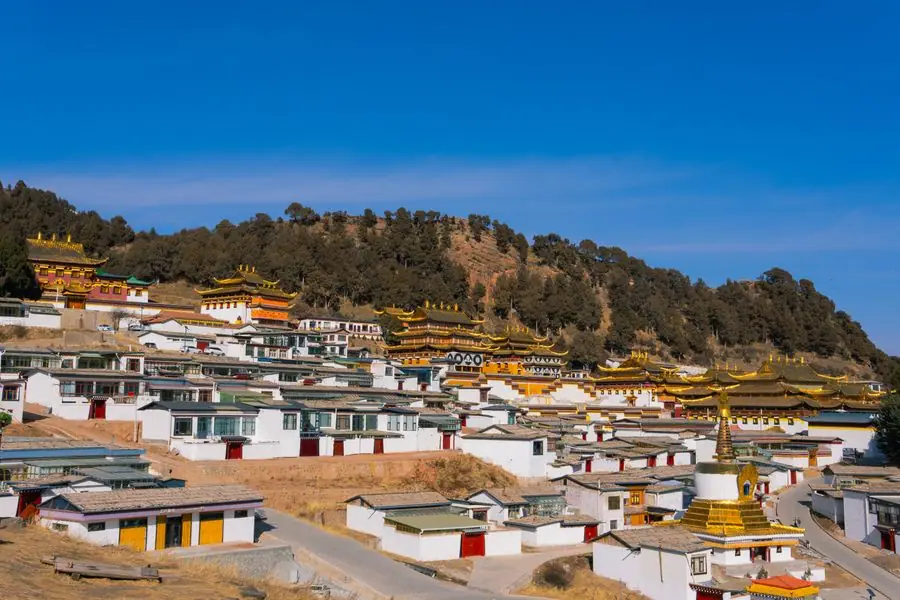
Sakya Monastery (萨迦寺) is one of the headline sights in Shigatse. The grey fortress-monastery of the Sakya school — the ‘second Vajrasana’ of Tibetan Buddhism, founded in 1073, whose grey-and-red walls look more like a fortress than a temple because the Sakya rulers were both abbots and kings. Its great scripture halls hold one of the largest collections of Buddhist texts in Tibet, including the Sanskrit manuscripts that made Sakya a medieval centre of learning; the murals and the massive pillars are the icon. The school’s history — the Mongol alliance, the Yuan-dynasty rule of Tibet — is written on these walls.
Intro: why go
It is the grey fortress-monastery of the Sakya school.
Tickets & booking
About $6 (RMB 45); verify on site.
How to visit
See the great assembly hall, the scripture library and the murals, then the old town’s grey walls.
Facilities
Halls, library, murals, courtyards, toilets; dim and solemn.
Best season
Year-round; the halls are the point in any season.
Getting there
About 160 km south of Shigatse on the G219, on the Everest road.
Tips
- The grey walls are the icon
- One of Tibet’s great libraries
- On the Everest road
- Dim interiors — allow time
Page last reviewed: 2026-11-02. Ticket seasons and crowd seasons are different things — this page states both where they differ.