Kaiyuan Temple & the Twin Pagodas 2026: Tickets, How to Visit & Tips
Fujian's largest Buddhist temple, founded in the Tang and rebuilt over the Song-Yuan centuries, fronted by a pair of 800-year-old stone pagodas — the East and West towers, the tallest pair of ancient stone pagodas in China — and shaded by a 1,300-year-old mulberry tree.
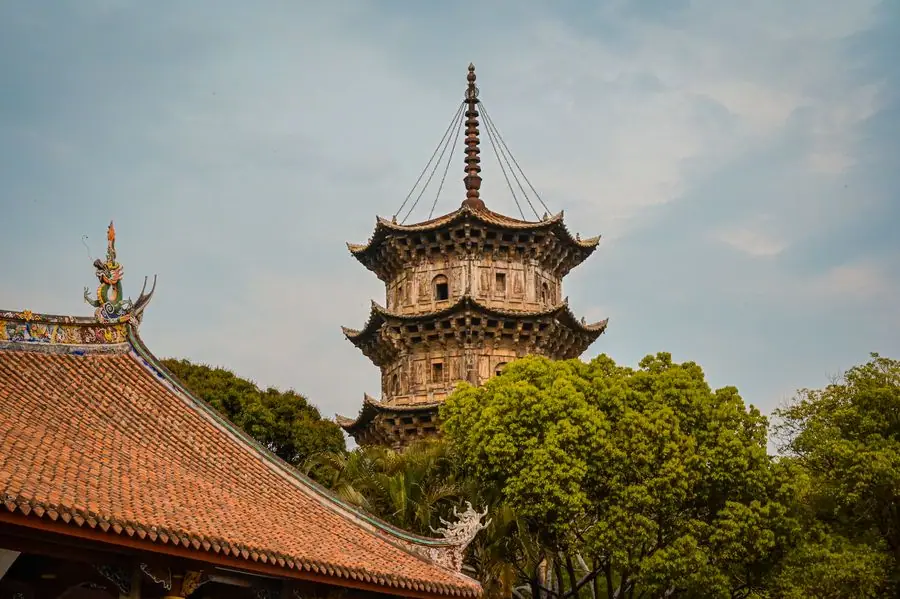
Kaiyuan Temple & the Twin Pagodas (开元寺·东西塔) is one of the headline sights in Quanzhou. Fujian’s largest Buddhist temple, founded in the Tang and rebuilt over the Song-Yuan centuries, fronted by a pair of 800-year-old stone pagodas — the East and West towers, the tallest pair of ancient stone pagodas in China — and shaded by a 1,300-year-old mulberry tree.
Intro: why go
It is the anchor of the UNESCO listing and the most complete Song-Yuan temple complex in the city — the pagodas, the hall with its Indian-influenced musical carvings, and the Hongyi memorial all in one courtyard.
Tickets & booking
Free; reserve a day ahead on the temple’s WeChat mini-program (foreign passport holders book the general visit). Verify the exact price on site before you go.
How to visit
Enter from West Street, walk the main axis past the mulberry tree and the Daxiong hall to the twin pagodas, then the Hongyi memorial hall and the side courts.
Facilities
Toilets, a tourist centre and tea stalls by the gate; the memorial hall needs the same reservation.
Best season
Year-round; the temple opens early (6:30) — go first thing for empty courtyards and soft light on the pagodas.
Getting there
About 1 km west of the Bell Tower in the old-town core — walk or take a little-white shuttle.
Tips
- Reserve the free visit a day ahead on WeChat; the memorial hall stops entry at 16:30
- Photograph the pagodas from the West Street rooftops for the classic twin-tower frame
- No flash inside the halls — the carvings are protected
Frequently asked questions
- Why are there two pagodas?
- The East (Zhenguo) and West (Renshou) towers were built in the 1200s as a pair flanking the temple axis — the East in wood-and-stone, the West in stone; they survived the region's earthquakes and are the tallest ancient stone pagodas in China.
Page last reviewed: 2026-11-02. Ticket seasons and crowd seasons are different things — this page states both where they differ.