Wudang Zhao (Five Pagoda Temple) 2026: Tickets, How to Visit & Tips
A 1732 temple whose rear hall is a five-storey diamond-throne pagoda of glazed brick — five small stupas on a tall base, covered in Mongolian, Tibetan and Sanskrit inscriptions, with three rare celestial-map engravings on the rear wall.
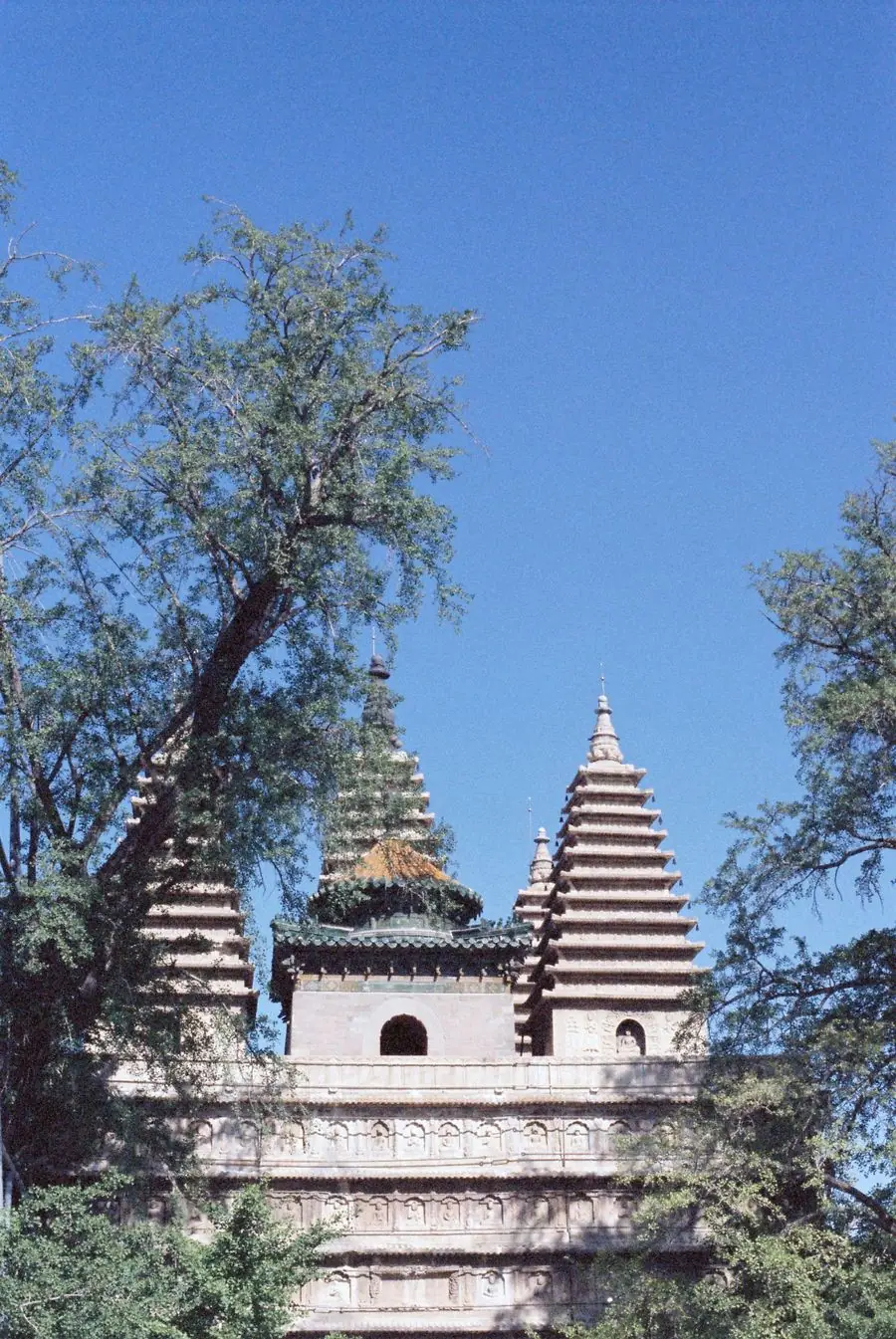
Wudang Zhao (Five Pagoda Temple) (五塔召) is one of the headline sights in Hohhot. A 1732 temple whose rear hall is a five-storey diamond-throne pagoda of glazed brick — five small stupas on a tall base, covered in Mongolian, Tibetan and Sanskrit inscriptions, with three rare celestial-map engravings on the rear wall.
Intro: why go
It is the most unusual building in Hohhot — a Mongolian-style diamond-throne pagoda unique in the region, and the celestial maps on its back wall are the only ones of their kind in China.
Tickets & booking
About $4–6; verify at the gate
How to visit
Enter through the front halls to the pagoda platform, circle it for the inscription panels, then study the star-map engraving on the rear wall; one hour including the small exhibition room.
Facilities
A small visitor centre and toilets; the site is compact and quiet, with little shade — bring water in summer.
Best season
Year-round; the glazed bricks are at their best in low winter light.
Getting there
8 km south of the old town — a 20-minute DiDi, easily combined with Zhaojun Tomb on the same southern run.
Tips
- Ask at the office to see the celestial-map panel — it is the temple’s hidden treasure.
- Combine with Zhaojun Tomb 2 km further south for a half-day.
- There is no English signage on site; read up before you go.
Frequently asked questions
- Why is it called the Five Pagoda Temple?
- Its rear hall is a single diamond-throne pagoda carrying five small stupas on one base — a form brought from India through Tibet and Mongolia.
- What are the star maps on the wall?
- Engraved Mongolian celestial maps from 1732, the only known star charts of their kind in China.
Page last reviewed: 2026-11-02. Ticket seasons and crowd seasons are different things — this page states both where they differ.